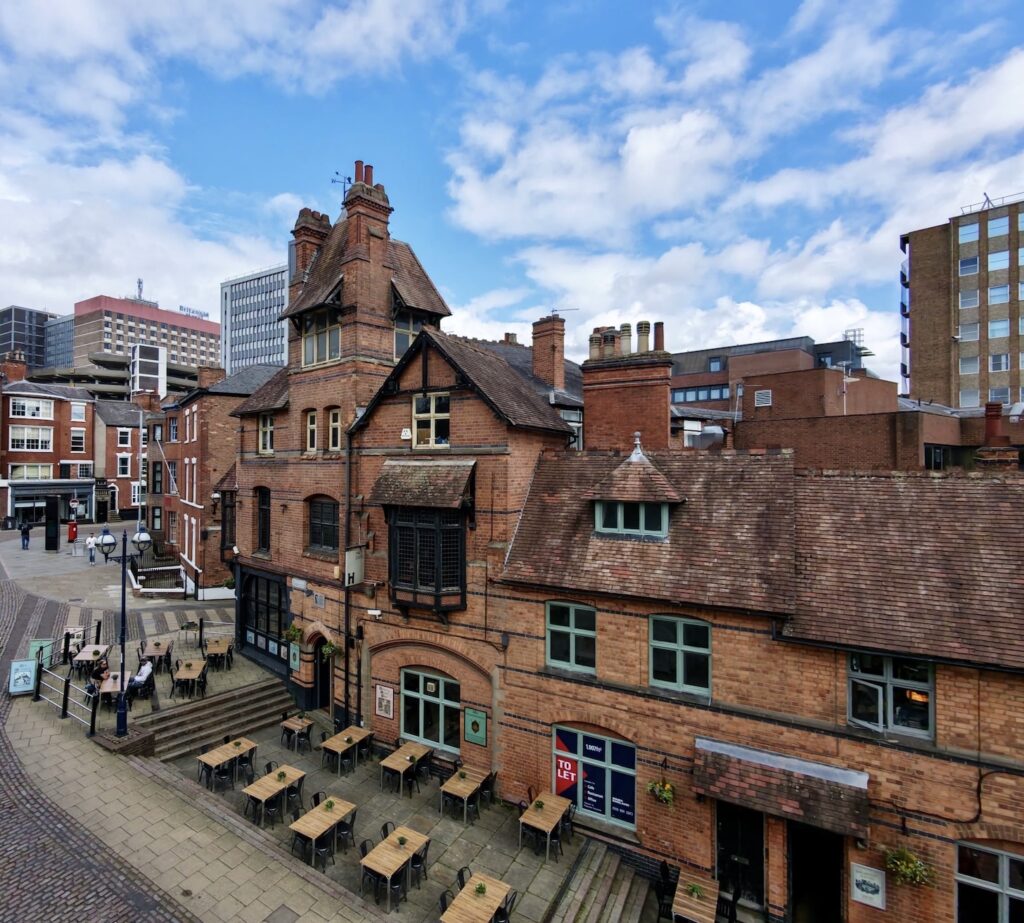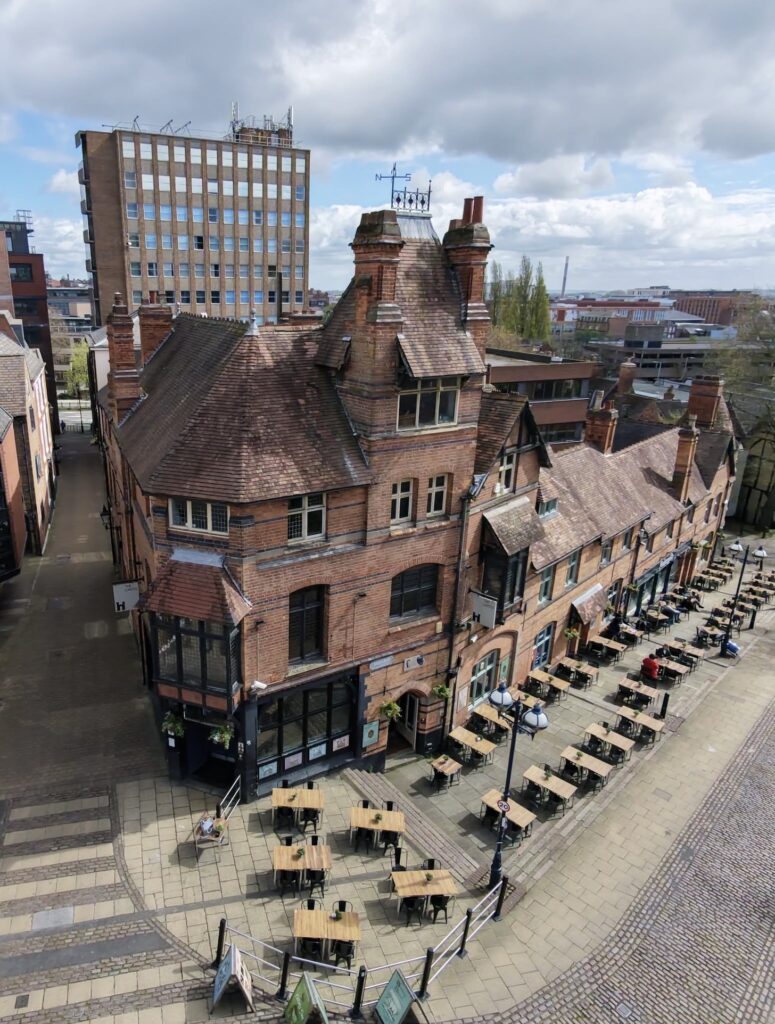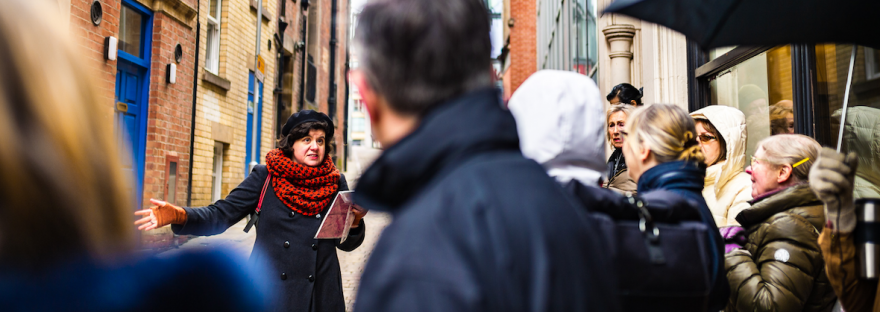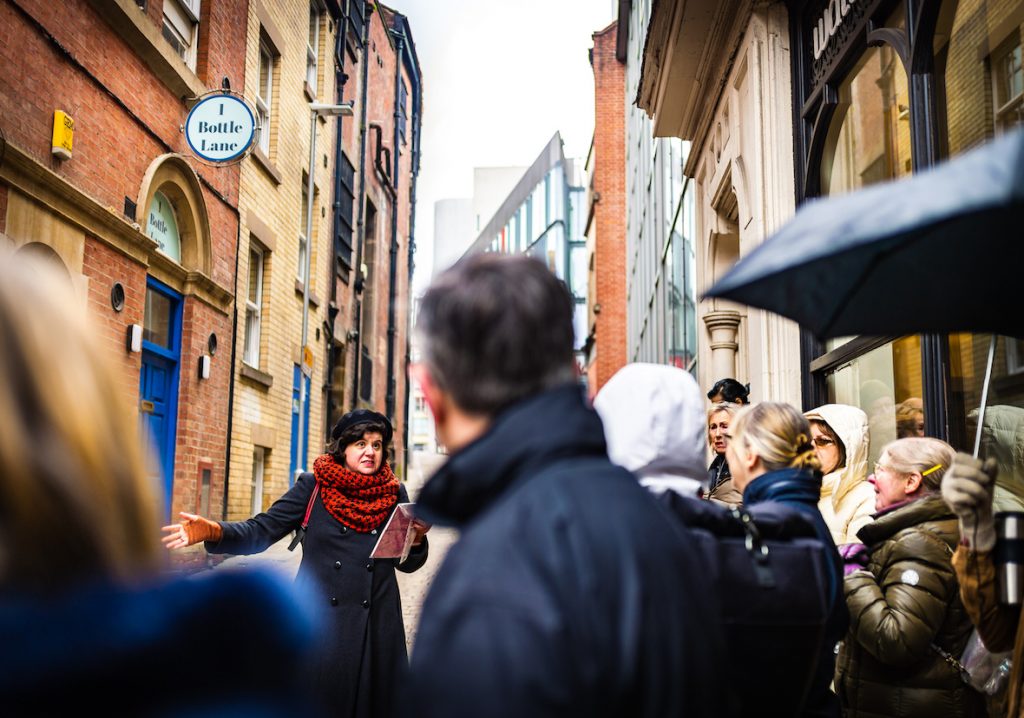
I also have some weekday availability, if you’d like to make a group booking (minimum 6 people, maximum 20 people). Drop me a line to find out more.
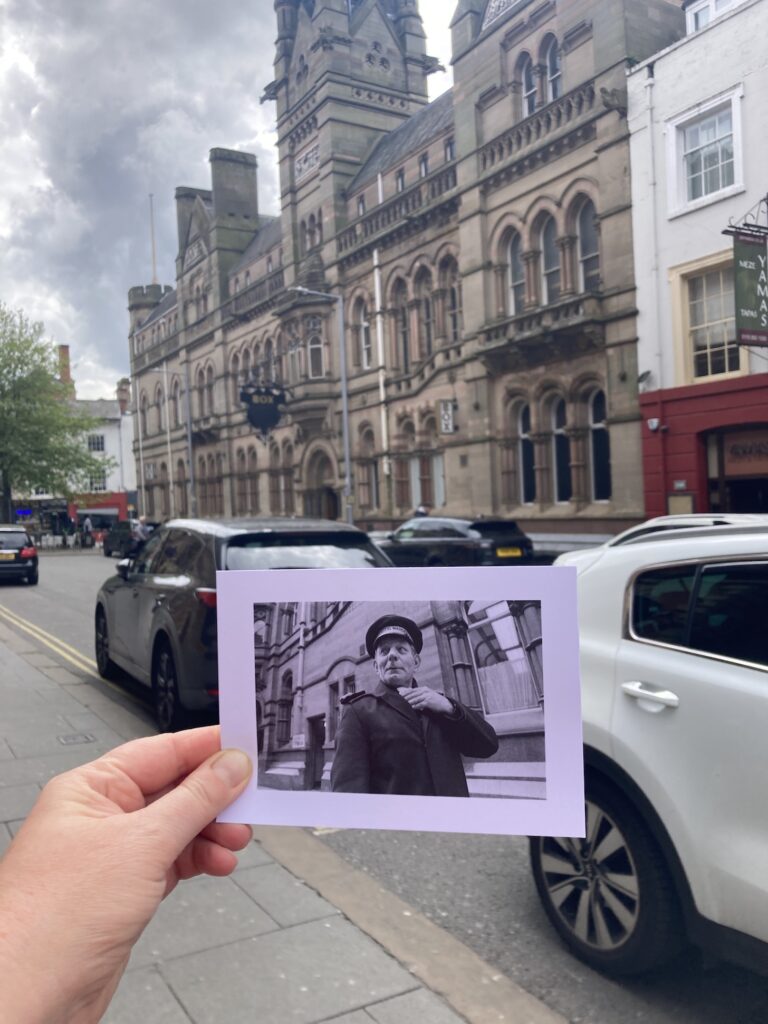
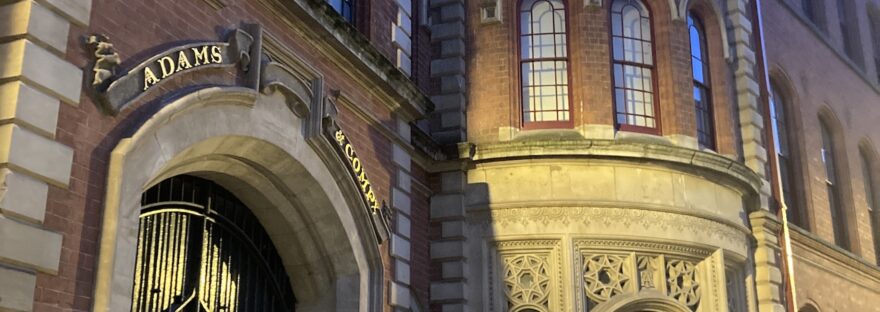
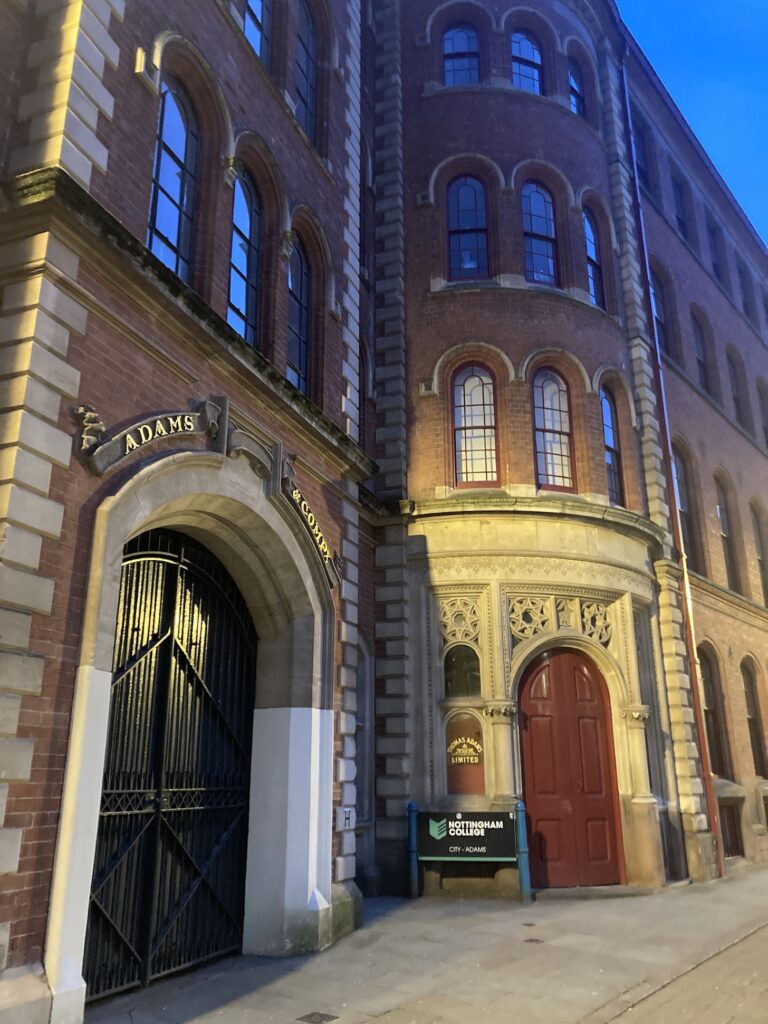
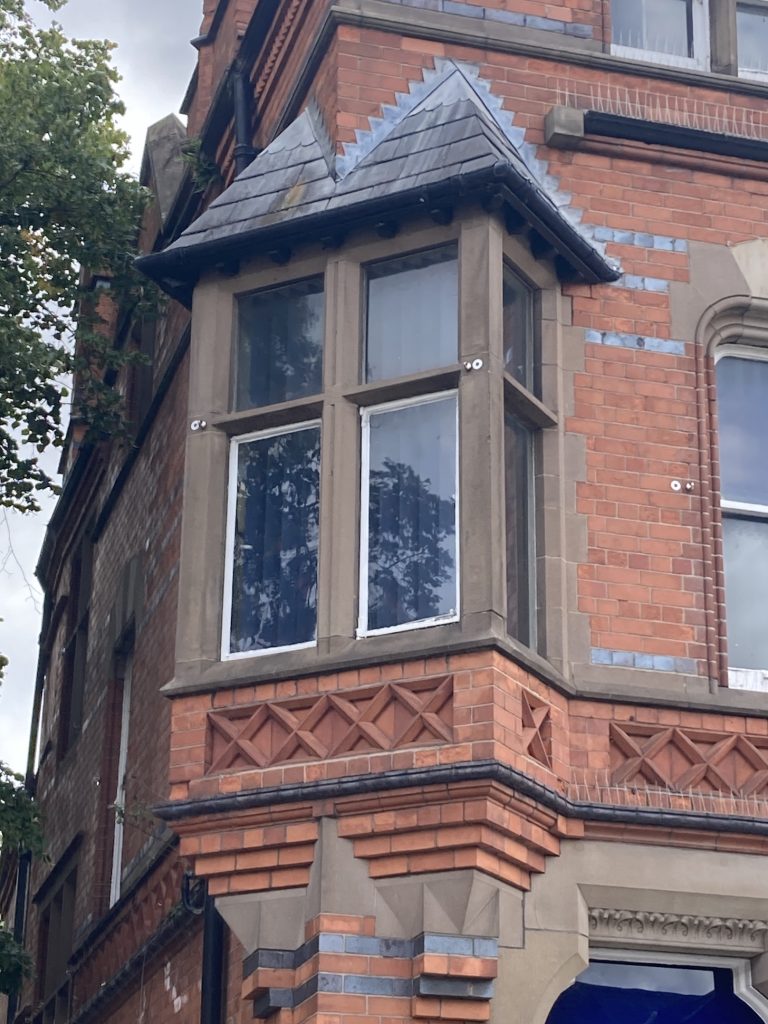
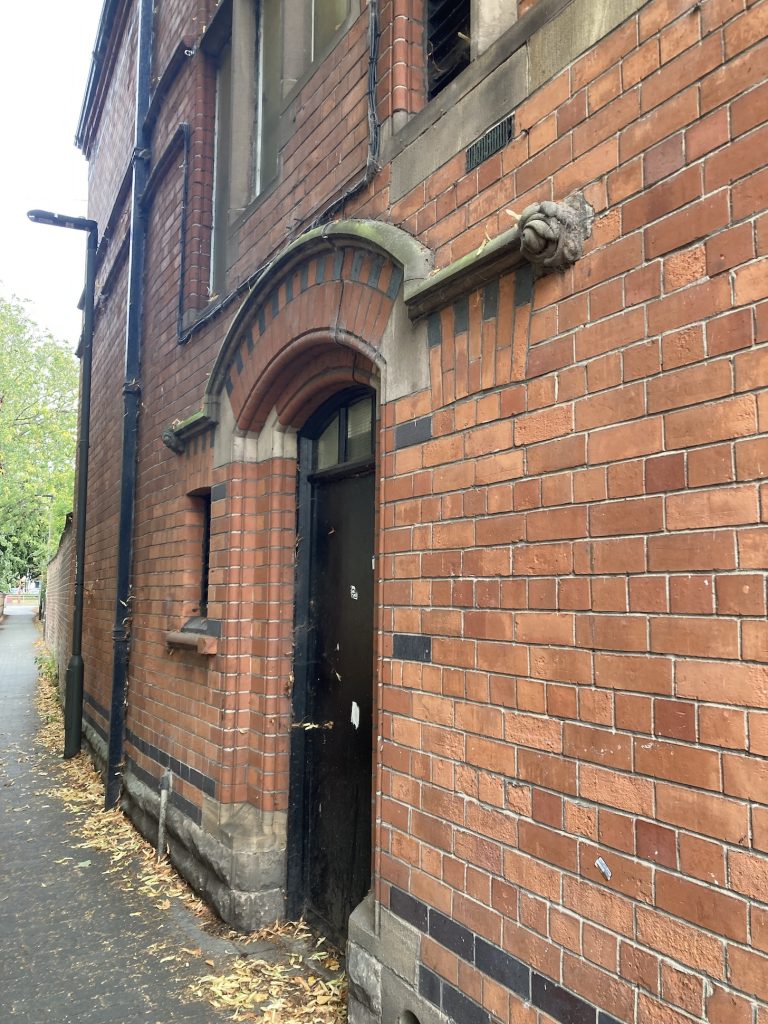
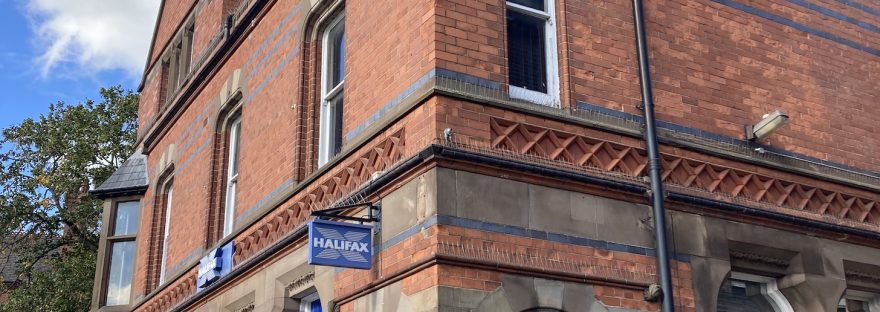
Did anyone else make it to Bonnington Gallery at NTU for John Dean, A Semester in Nottingham 1976? Some fantastic photos, including this one… I worked out where it was taken and realised that the door had been swapped for two windows. Fothergill’s Thurland St Bank is slowly revealing itself!
I’ve decided to pause the Deco in the Details tours until later in the year. These walks are still available for group bookings, so if you have a few folks who would like a tour – let me know!
Do you follow me on Instagram? For more Fothergill and Architecture-related, goings on you can find me @watsonfothergillwalk
I was a guest on my favourite architecture podcast + May tour availability.
Keep reading for exciting news of my podcast appearance… First of all, a shout-out for my upcoming tours. This is basically my job now, and I really appreciate the support and wonderful feedback that I’ve received from so many of you. Hopefully, the weather is going to start behaving itself so, it’s the perfect time to join me and discover even more of Nottingham’s architecture.
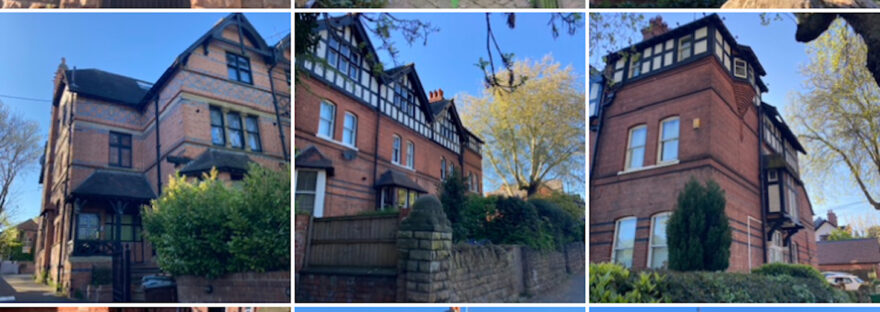
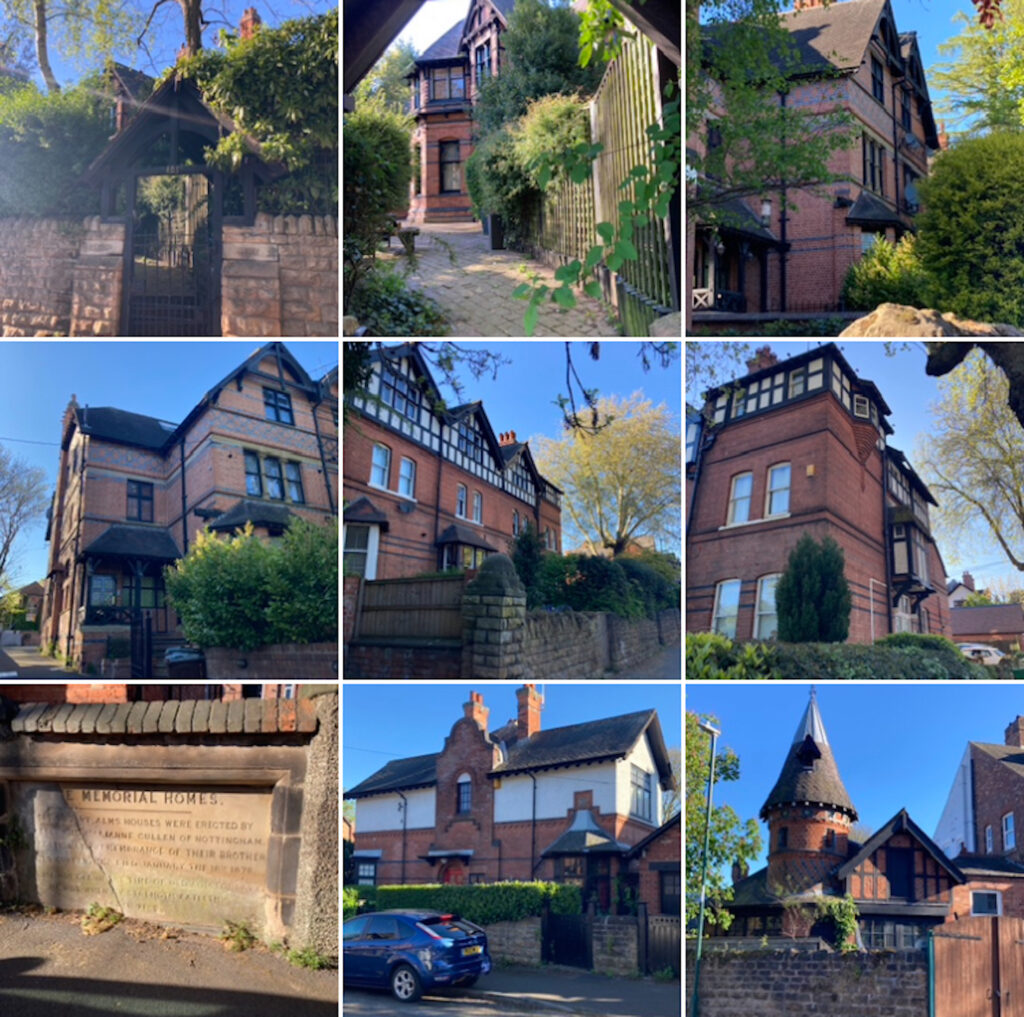
Some of the buildings you can learn more about on The Carrington Crawl. Photos: Lucy Brouwer.
More Watson Fothergill, this time his domestic architecture and the work of his Chief Assistant, L.G. Summers, plus a few surprises. Starting at Mapperley Road, taking in Sherwood Rise and ending in Carrington, where we can explore inside the Ukrainian Cultural Centre at Clawson Lodge.
Not forgetting my original Nottingham city centre architecture tour:
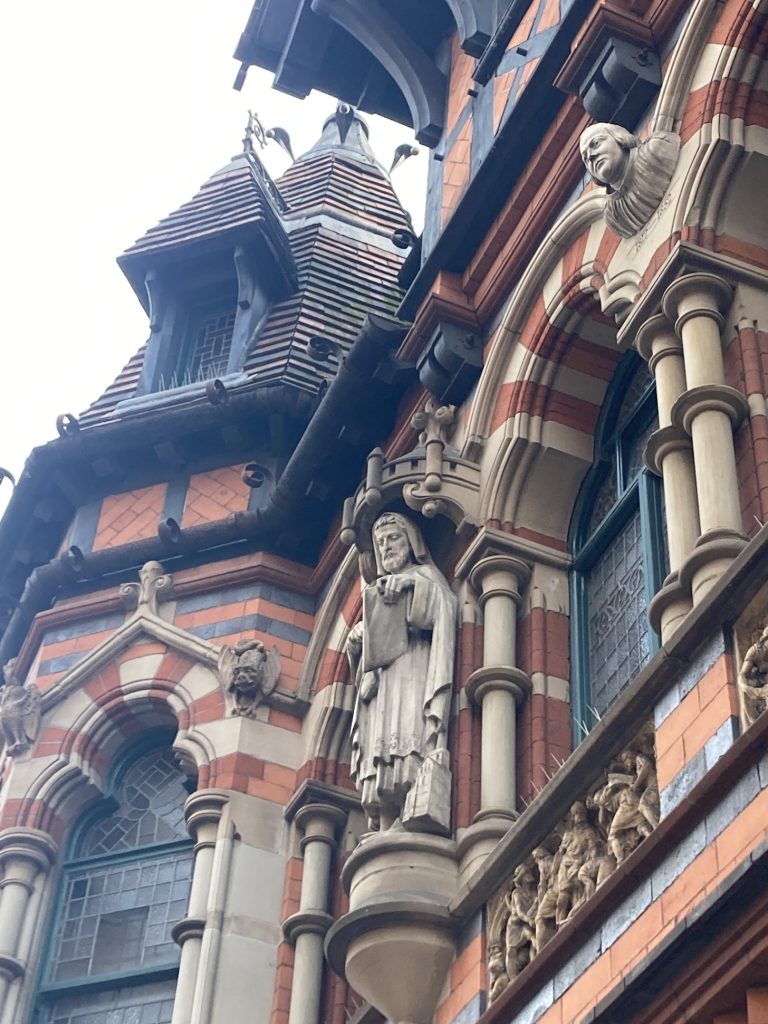
If you’ve already done it, tell your friends. If not, what are you waiting for? A rare afternoon outing for this tour of buildings by Victorian architect Watson Fothergill (aka Fothergill Watson). Recently called Nottingham’s Charles Rennie Mackintosh by a visiting London tour guide…(I’d argue that you could call him Nottingham’s Gaudi!). Join me to find out what all the fuss is about!
Monstrosities Mon Amour!
If you’re interested in architecture, like me, you may have read John Grindrod’s books – particularly Concretopia (which will change your preconceptions about Modern buildings) and IconIcon, which looks at landmark buildings in contemporary Britain.
Author John Gringrod on my tour of Nottingham’s architecture. Photo: Lucy Brouwer
Recently, John came to Nottingham’s Five Leaves Books to talk about his latest book, Tales from the Suburbs, on LGBTQ+ people’s experience of suburbia. Monstrosities Mon Amour is John’s podcast where he invites writers, tour guides and experts to talk about the architecture that other people love to hate. After taking John on a personalised tour of Nottingham, he asked me to contribute and here’s the result!
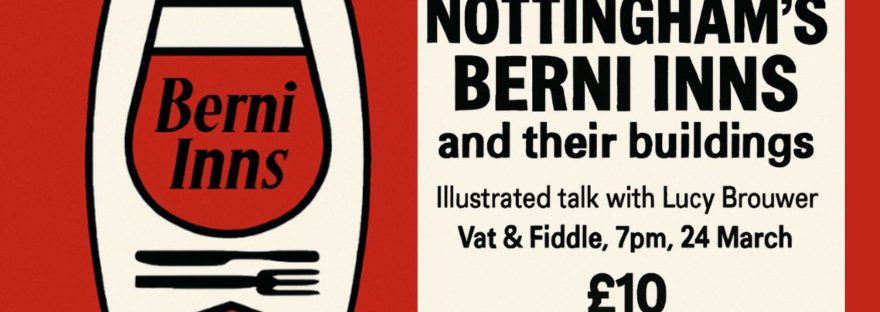
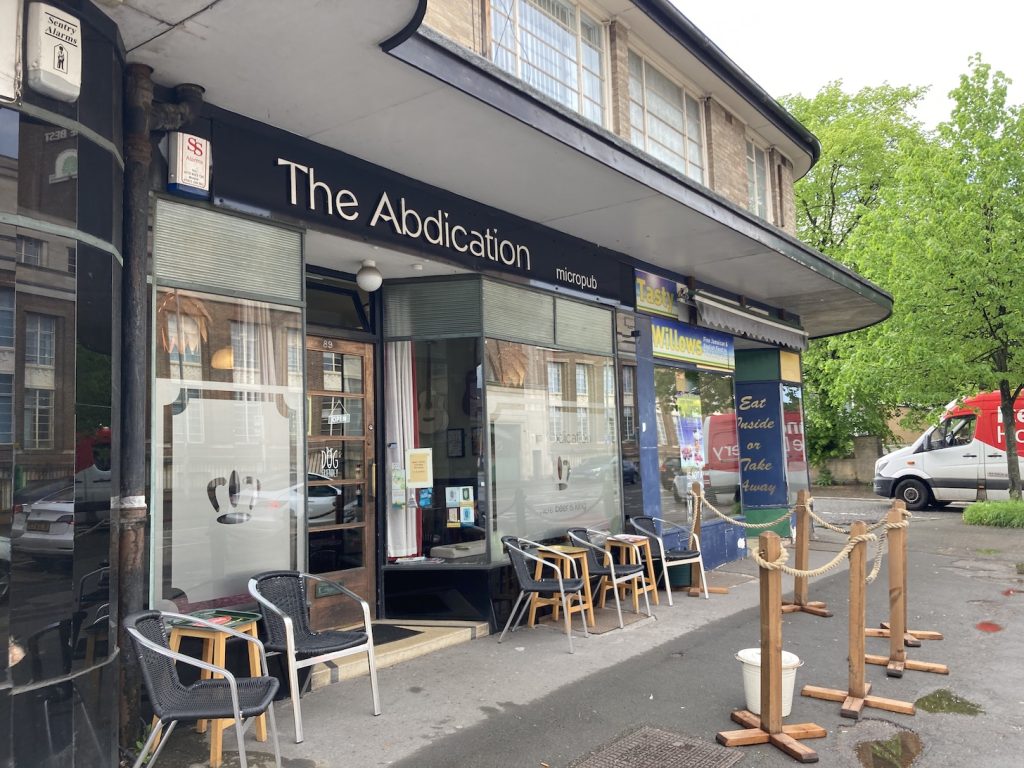
The talk in the pub at The Abdication, Nottingham’s Berni Inns and Their Buildings, is now just about sold out! If you’ve missed tickets, my talks in pubs will hopefully be back later in the year.
A new weekday slot for both parts of Nottingham: Deco in the Details. Discover the architecture of the 1920s and 1930s, how it was inspired by Art Deco style and changes to Nottingham in the inter-war period.
YMCA to Sneinton Market via Lower Parliament Street and Hockley.
The Carrington Crawl, my tour looking at the domestic architecture of Watson Fothergill and his chief assistant Lawrence George Summers, will be running again on Saturday, 9 May, 1 pm. Join me to explore Mapperley Park, Sherwood Rise and Carrington, just on the outskirts of Nottingham City Centre, with a chance to see the house from the garden, and stay for refreshments, at Clawson Lodge, the Nottingham Ukrainian Cultural Centre.
For St Patrick’s Day earlier in the week, I looked a little deeper into Watson Fothergill’s connection to Ireland and an object that was once in his collection. On the Carrington Crawl, when we visit the site of Fothergill’s home, 7 Mapperley Road, I talk about his great collection of art, glassware, pottery and other objet d’art.
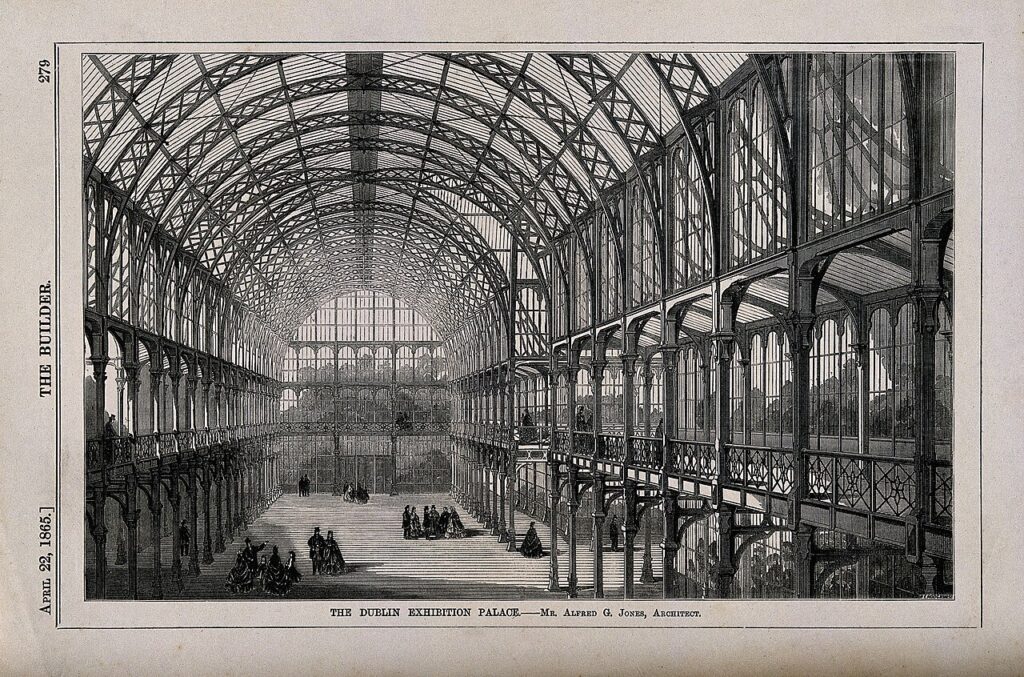
The interior of the Dublin Exhibition Palace, The Builder, 1865 (via Wikimedia)
Fothergill visited Ireland in 1865, to visit the Dublin International Exhibition of Arts and Manufactures, a world’s fair that had almost 1 million visitors. He became friends with members of the Russell family, who appear to have had a connection to the Fothergill family, as they later made a gift to Watson Fothergill of Dr Fothergill’s seal. Dr John Fothergill was a Quaker scientist born in 1712 at Carr End, Yorkshire, great uncle to Watson Fothergill’s Mother, Mary Ann Watson (nee Fothergill).
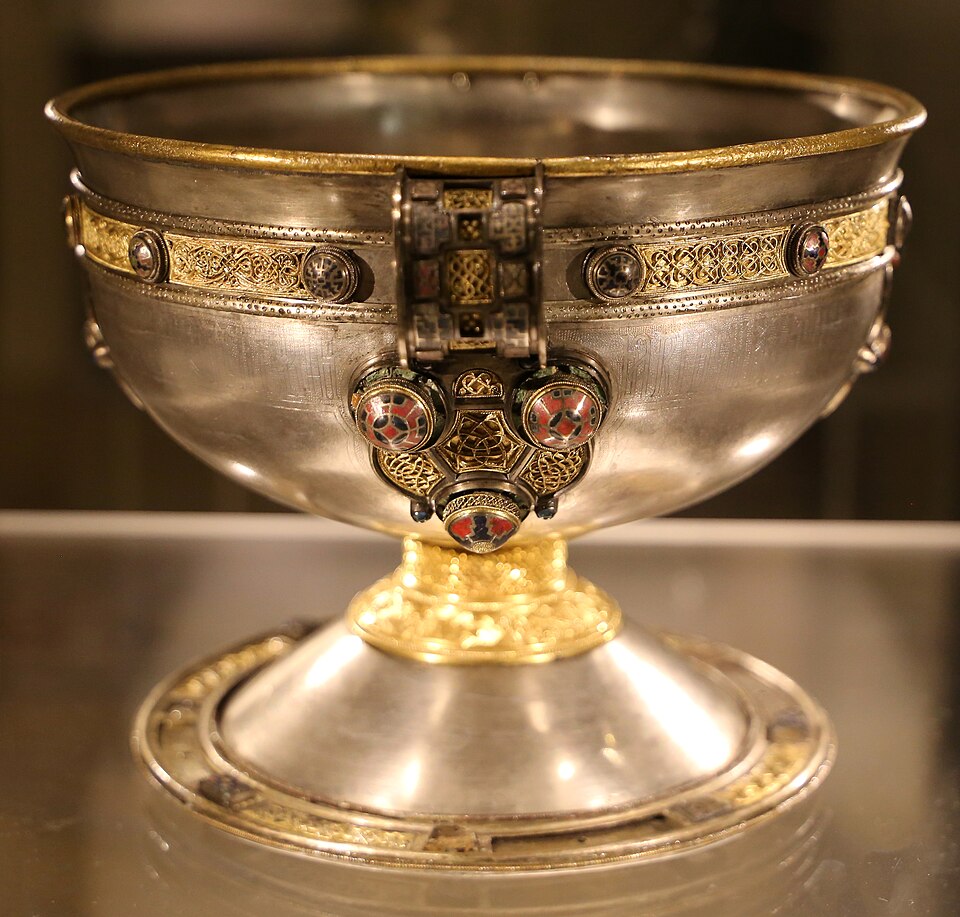
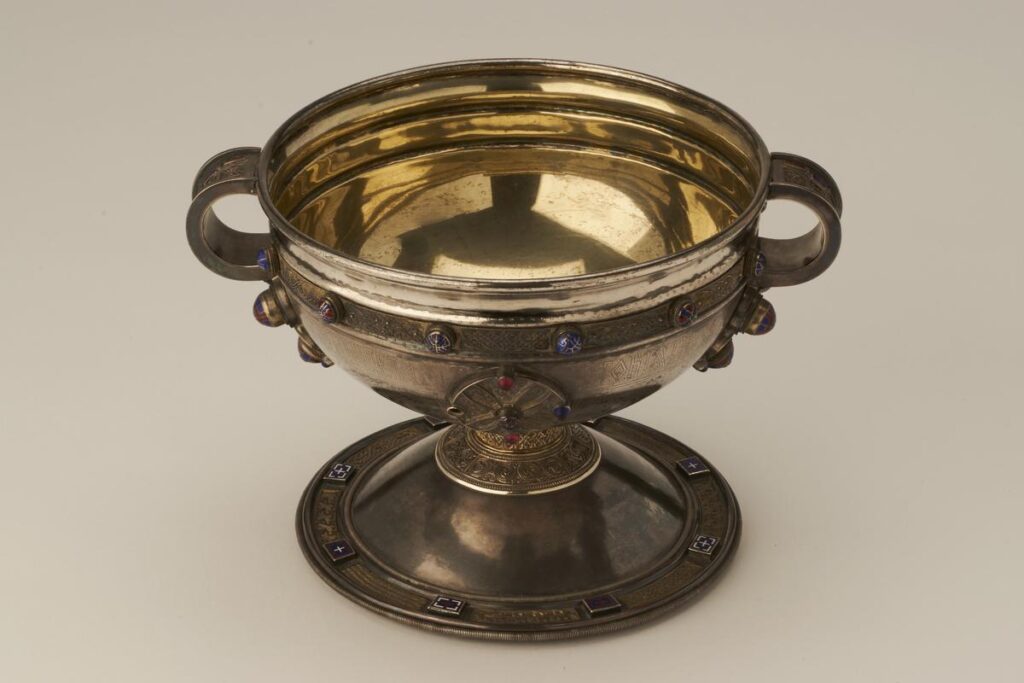
He visited the Russells again in 1891 (possibly at their home on Sandford Terrace, Ranelagh.) On this, his first visit to Dublin for 25 years, he purchased a replica of the Ardagh Chalice. The Ardagh Chalice was one of the finest examples of Celtic art ever found. It was part of the Ardagh Hoard, 8th and 9th century metal work, which was discovered in 1868 by two boys digging in a potato field in the village of Ardagh, County Limerick, Ireland.
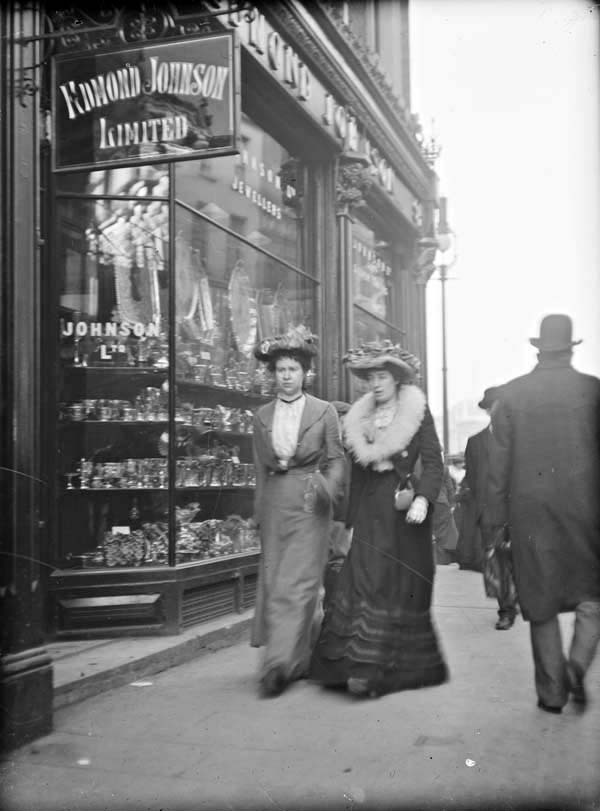
Replicas of the chalice were made by leading goldsmith and jeweller Edmond Johnson of Grafton Street, who had cleaned the original 8th century chalice when it was found. It’s likely that Fothergill’s chalice was sold after his death in 1928 and purchased by the Hunts, whose collection is held at the Hunt Museum.
Edmond Johnson Jewellers, Grafton Street, Dublin, circa 1894. Via Wikimedia
A similar replica Ardagh Chalice featured on Antiques Roadshow (click for video clip) not so long ago!
More insights into Fothergill’s career as an architect, as well as his art collecting habits, on my walking tours looking at his life and buildings.
New walk dates, researching talks and return of The Hine Hike
Thanks to everyone who braved the weather for Deco in the Details Part 1 last weekend, and to everyone who came down to The Vat & Fiddle for my Watson Fothergill in the Park Estate talk. Your continued interest in Nottingham’s buildings and my own unique and “entertaining” take on them is much appreciated! Read to the end for new walking tour dates for April 2026.
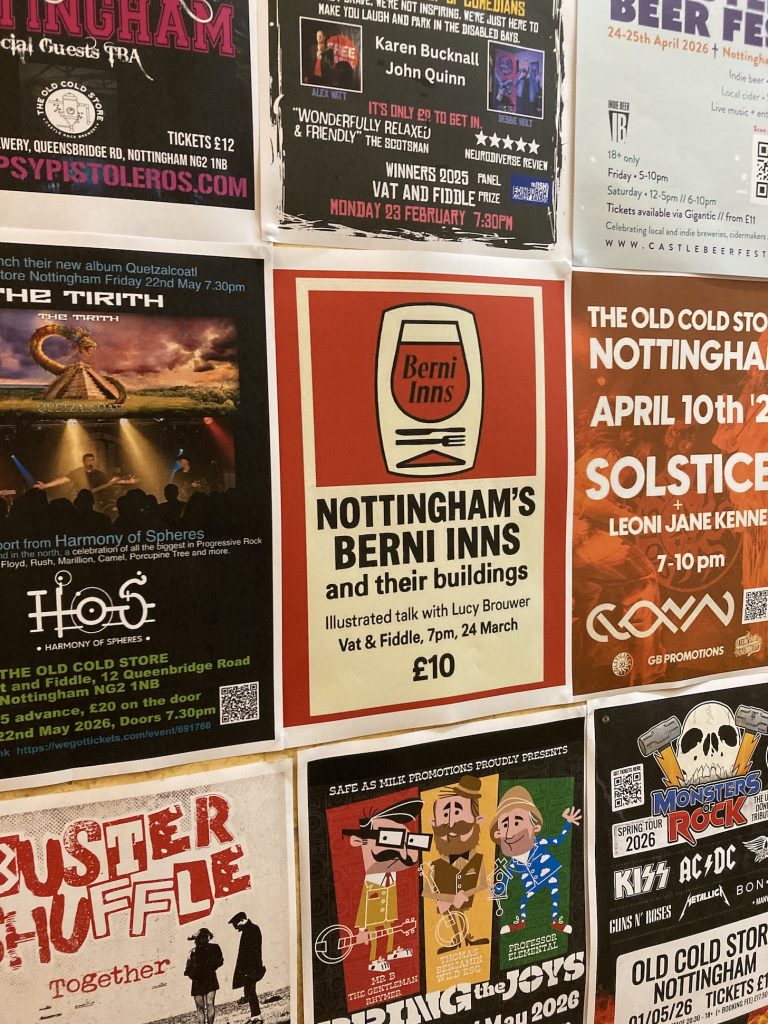
Poster at The Vat & Fiddle, February 2026
I’m deep into the research for my new Nottingham’s Berni Inns and their Buildings talk. Sometimes you just have to follow the idea and see where it leads… Expect tales of old buildings given new life, familiar menus, retro adverts and maybe a little misty-eyed nostalgia for nights out gone by!
There are still a few tickets remaining for the date at
There will be another date for the Berni Inns talk at The Abdication Micropub, Daybrook, on Tuesday 21 April, 7 pm – email the pub for tickets or drop in to pay cash. All talk tickets are £10 each.
The Abdication, Coronation Buildings, Mansfield Road, Daybrook.
All walk tickets are £20 each. Click the links for full information.
A reminder: well-behaved dogs on leads are welcome on the walks.
I’m now taking bookings for private tours with availability on weekdays into the summer. Please drop me a line to organise a walk for your group of 6 or more (maximum group size: 20 people). Versions of all my tours are available for private bookings. If you’d like a personal tour for a smaller group these can be arranged to suit your requirements. Talks are also available for groups. Email me via my website.
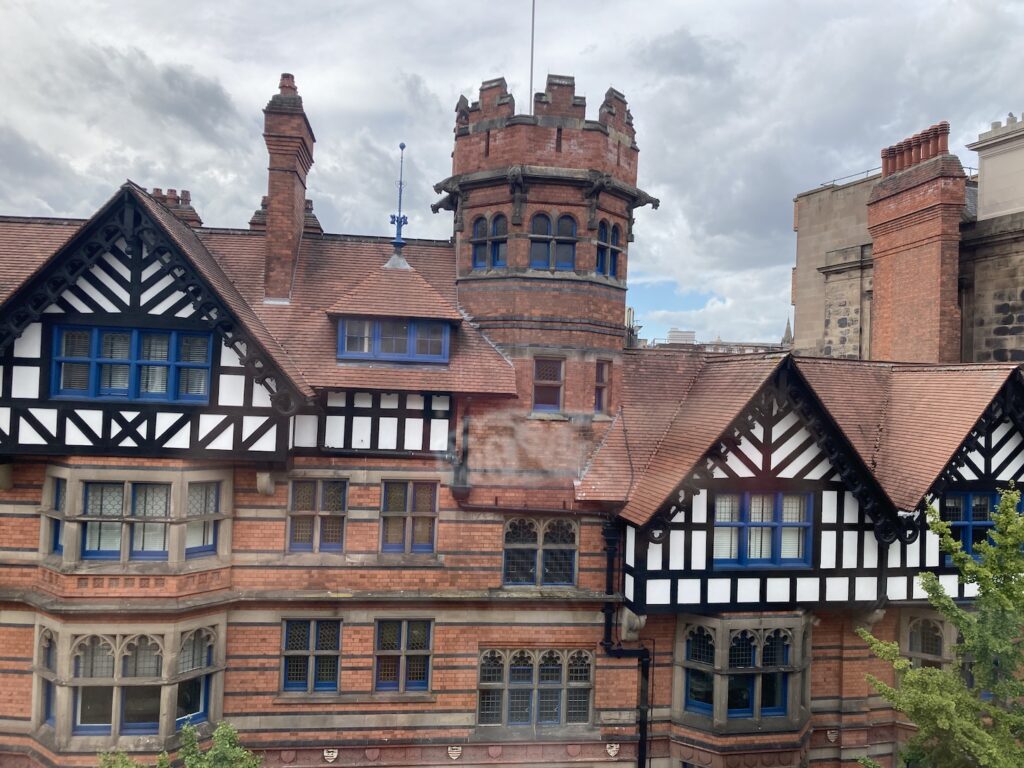
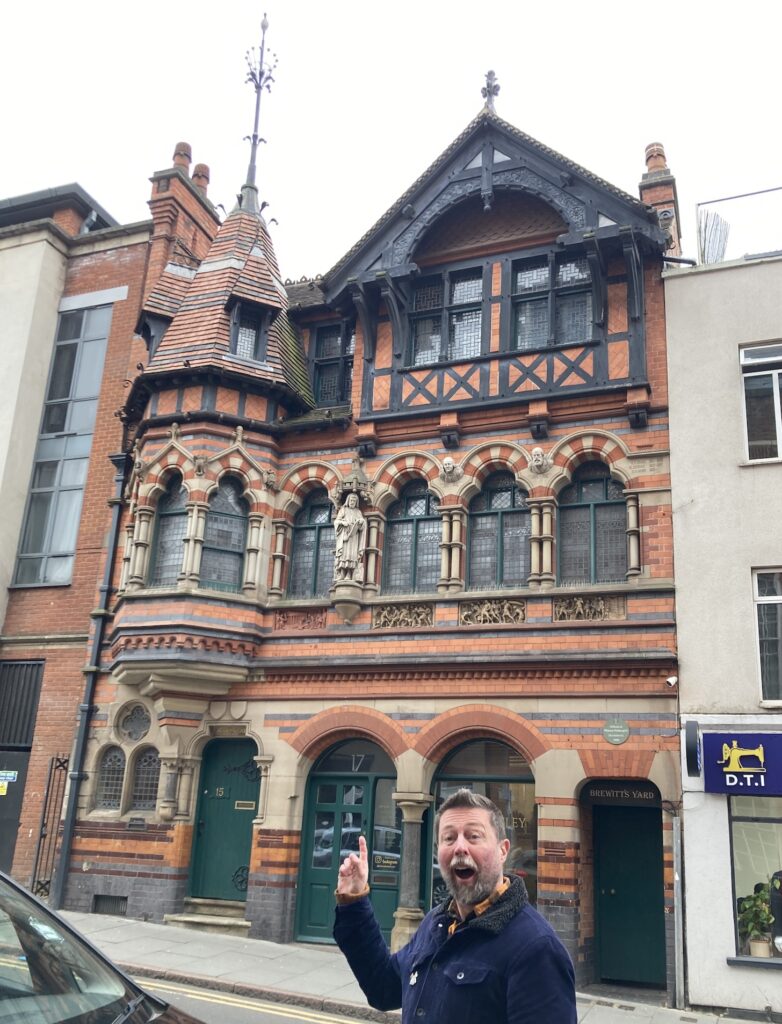
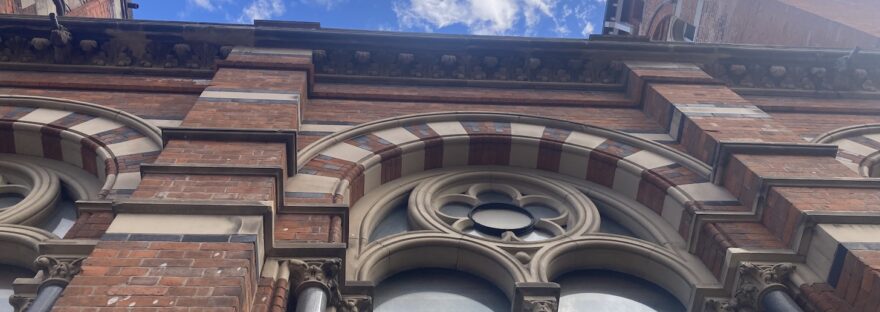
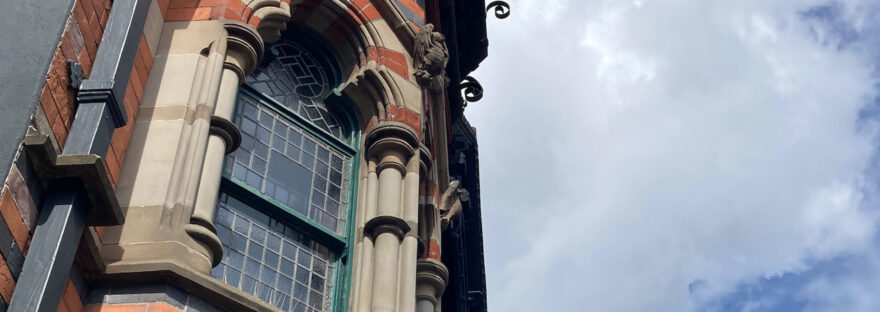
Keep looking up! Fothergill’s Office on George Street, Nottingham. Photo: Lucy Brouwer
Thanks for reading Watson Fothergill Walk – Lucy Brouwer! Subscribe for free to receive new posts and support my work.
My next Vat & Fiddle talk, on Watson Fothergill in the Park Estate, is now sold out. However, if you’d like to book me to give a talk to your group or club, please do not hesitate to contact me.
The weather has not been particularly conducive for tours this month, so I took a day off for a wander around Beeston. (This is not a guided tour, just something I do!)
Beeston’s history is well-documented, and the Beeston Civic Society have been doing great work. If you live there or visit, you’ll know that there are loads of cafes and bars, interesting shops and charity shops. A few buildings caught my eye…
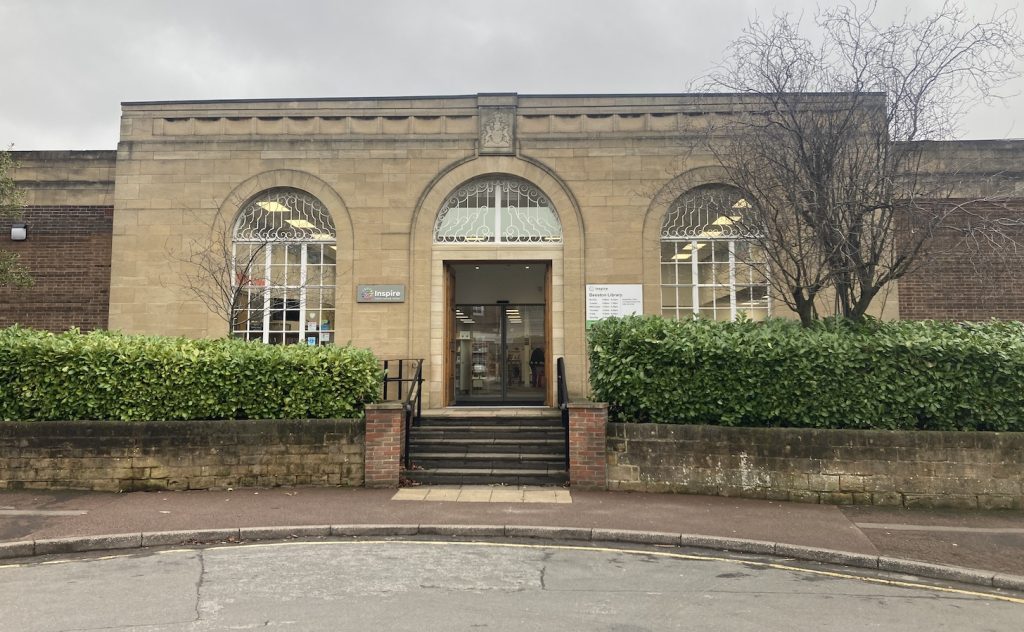
Beeston Library, Photo: Lucy Brouwer.
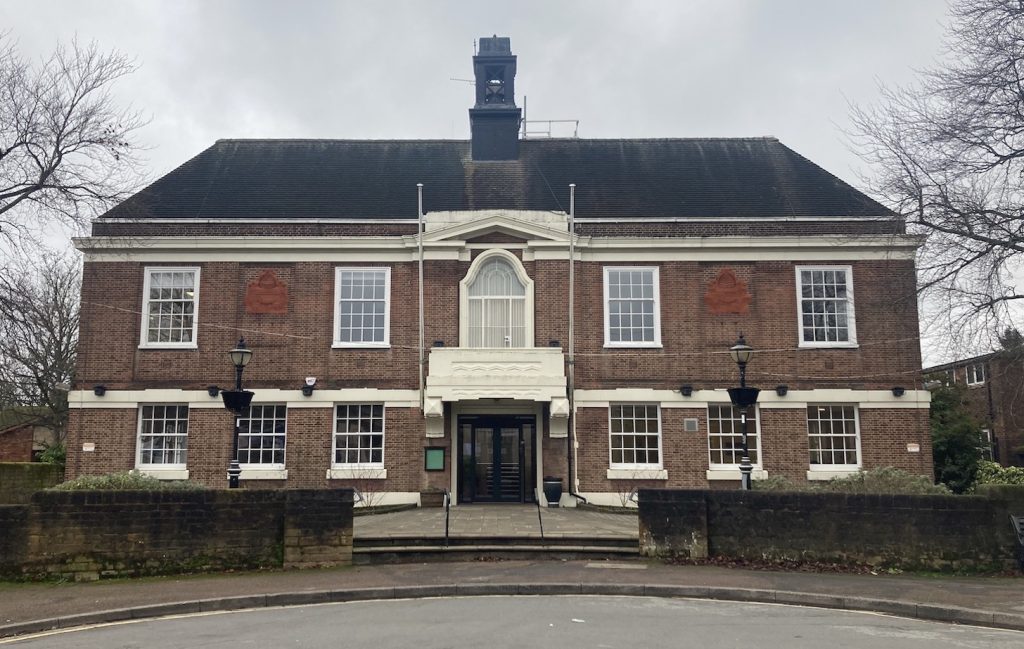
As a former Library Assistant and full-time bookworm, I made a beeline for Beeston Library. The building on Foster Avenue was designed by the County Architect E. W. Roberts in 1938. He was also responsible for West Bridgford Library. The builders of the Library, local firm Hofton & Son, also built Beeston Town Hall, which is now used as a church, and sits opposite. It opened in 1938 and was designed by the architects Evans, Clark & Wollatt with H.H. Goodall. It has a solid Neo-Georgian look with Art Deco details.
Former Town Hall, Beeston. Photo: Lucy Brouwer.
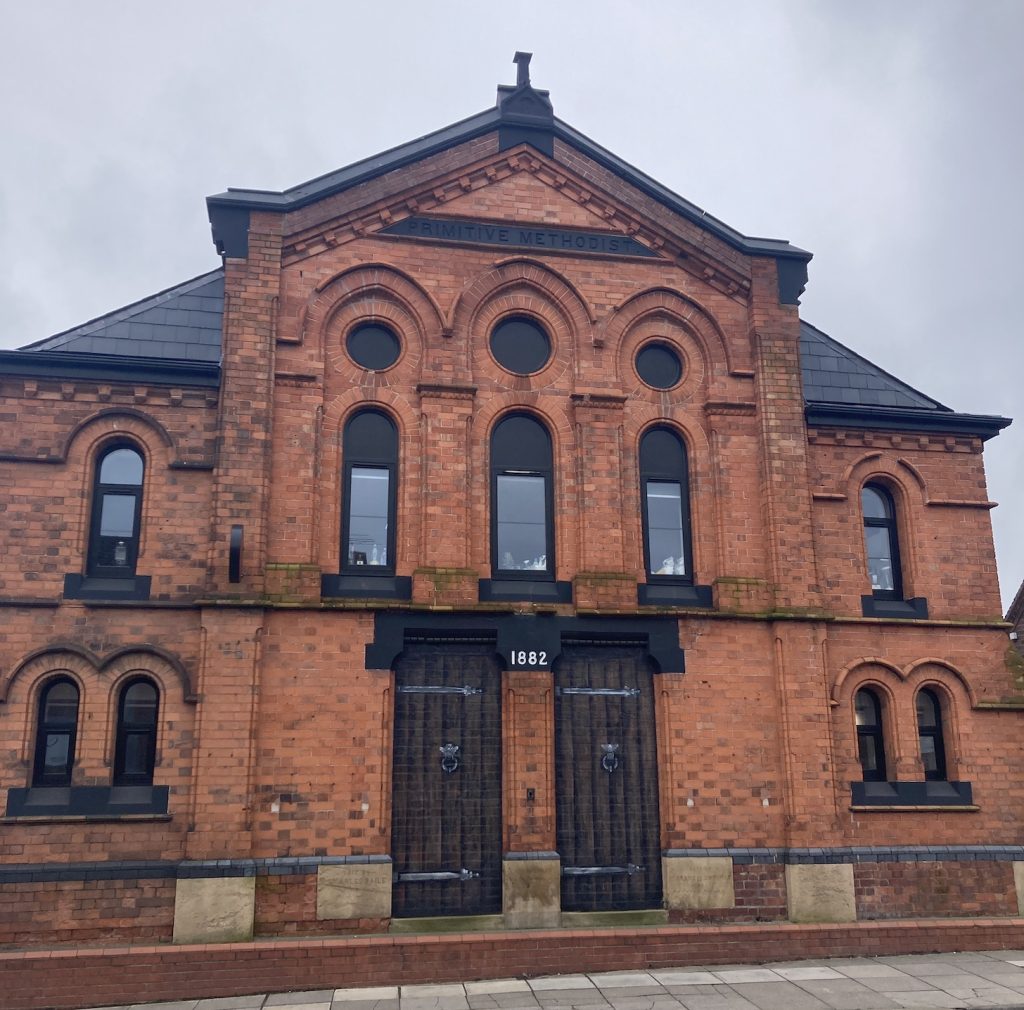
After a very nice coffee at Greenhood, itself in a former Birds the Confectioners shop on the High Road, our daunder** took us past the former Primitive Methodist Church on Wollaton Road. This 1882 building was one of many Victorian-era Methodist churches by Nottingham architect Richard Charles Sutton.
Former Primitive Methodist Church, Beeston. Photo: Lucy Brouwer.
R.C. Sutton was a very prolific architect in his day; his buildings can be found all over Nottingham and outlying areas. I’m hoping to explore his work and his connections to Bromley House Library, where he had his office, further this year.
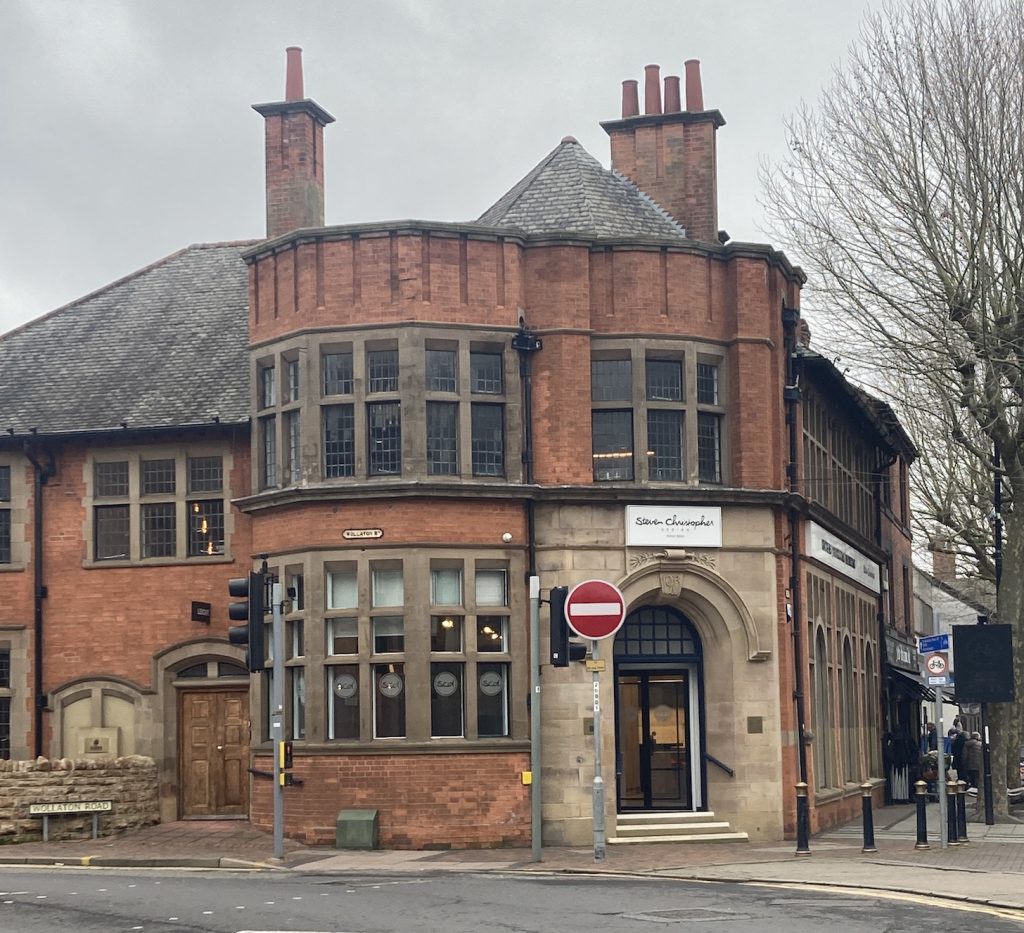
Back on the High Road, the former NatWest Bank stands out. It was originally built for the Nottingham and Notts bank, 1905-08, and was likely designed by the Coalville architect Thomas Ignatius McCarthy. The Pevsner guide describes it as “abstracted Neo-Tudor.” It ceased to be a bank in 2023 and is now a kitchen showroom.
Former Nottingham & Notts/ NatWest Bank, Beeston. Photo: Lucy Brouwer.
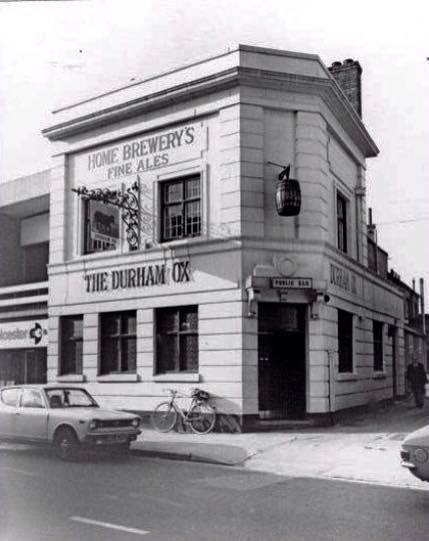
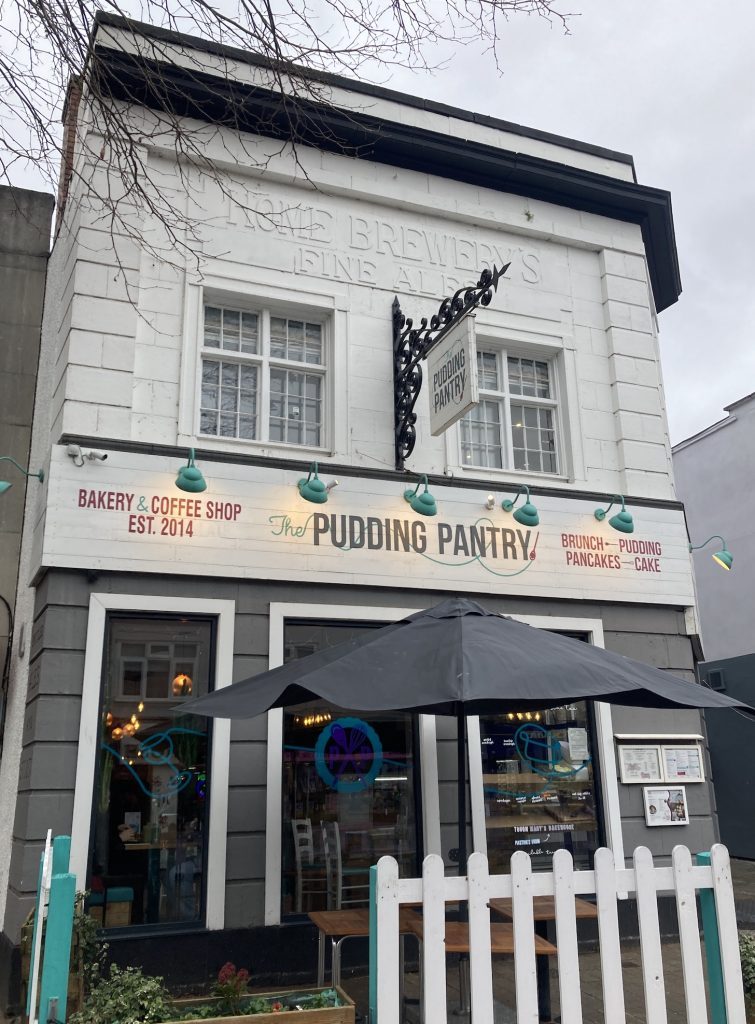
Further down the High Road, the familiar Home Brewery lettering on a white building caught my eye. The Pudding Pantry cafe was previously The Durham Ox pub.
A very detailed history of the pub can be found on David Hallam’s Beeston History website. The present building was built in 1925, and was one of many pubs rebuilt by the Nottingham architect Albert Edgar Eberlin, as mentioned in my Art Deco Pubs talk. Eberlin also worked on The Fox, The Royal Children, The Beechdale and many more pub buildings around Nottingham.
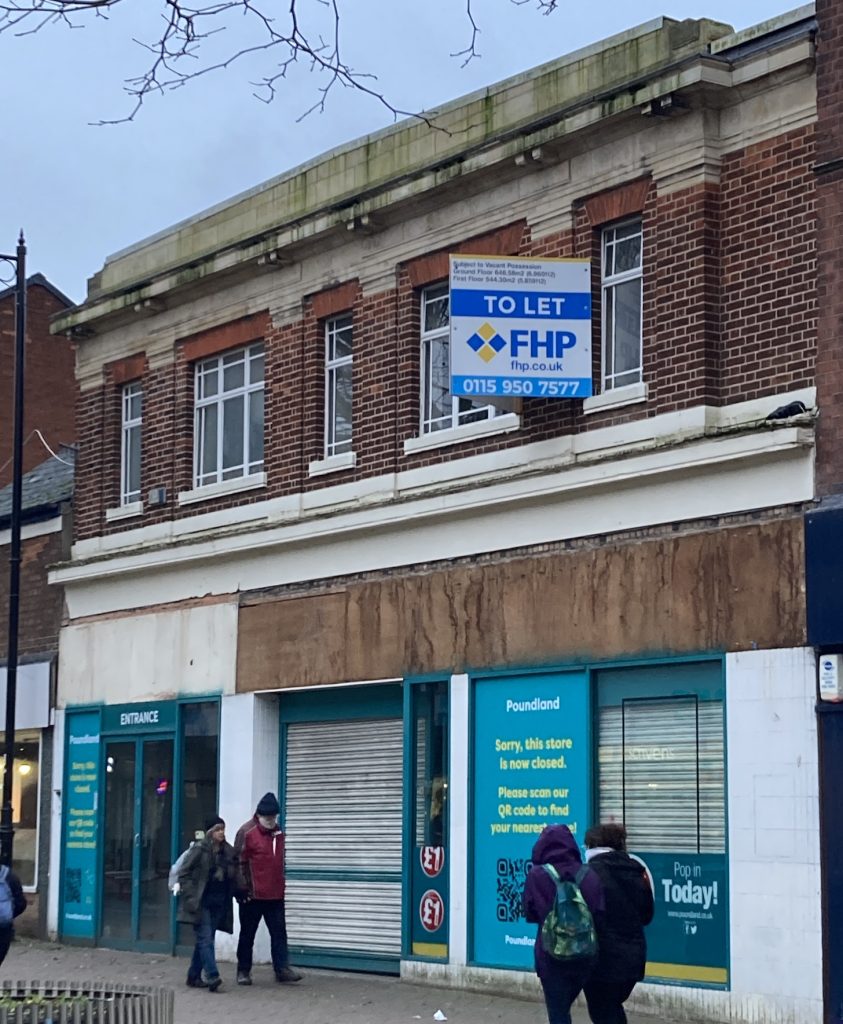
Another Deco-era building I noticed, the recently closed Poundland, was in fact a former Woolworths.
This was Woolworth’s store 578 and was completed in 1934 by their in-house architect, Harold Winbourne. I noticed the parapet and margin glazing in the metal-framed windows. Head over to the Woolies Buildings website for archive pictures of this one in its former glory and to Building Our Past for shop architecture historian Kathryn A. Morrison’s in-depth look at Woolworths and their architects.
Does your neighbourhood have any buildings that catch your eye? Look up and see what you can see next time you’re out. Or if you have a building you’d like me to research – get in touch.
* Bimble; English, informal: a leisurely walk or journey.
** Daunder; Scots: to stroll, saunter or wander aimlessly.
Thanks for reading Watson Fothergill Walk – Lucy Brouwer! Subscribe for free to receive new posts and support my work.
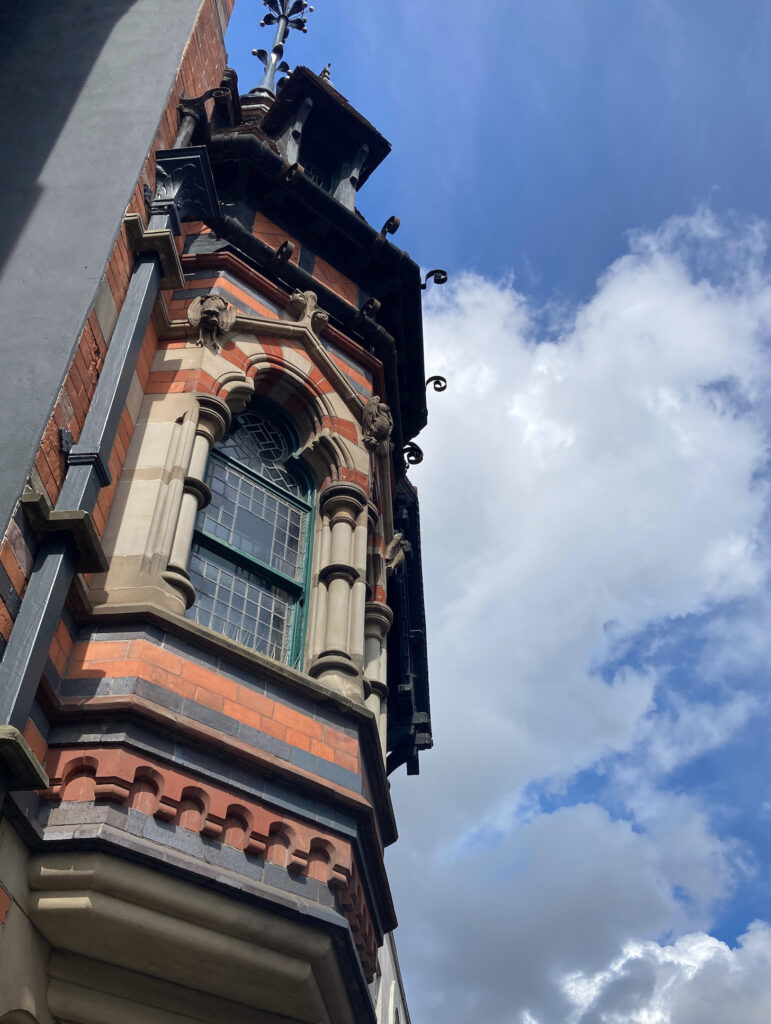
Thanks to Lamar Francois, Dan Simpkin, Louise Hunter & Lucy Simons for the photos.
Into the mix in 2026
Both my talks (Art Deco Pubs and Watson Fothergill in The Park Estate) at The Vat & Fiddle are now sold out, but I’m looking at doing some more later in the year.
Tickets are now available for my architecture tours Deco in the Details Parts 1 & 2 and Watson Fothergill Walk. I hope you can join me to explore the architecture of Nottingham city centre. My original tour looks at the work of Victorian architect Watson Fothergill. (Did I mention it has 5 star reviews on TripAdvisor?)
Deco in the Details is in two parts, each looking at a different side of Nottingham, exploring the history of the buildings of the 1920s & 1930s and looking at what makes the Art Deco style. (Do one, do both, it doesn’t matter in which order!)
The first tour dates of the year are as follows, with more info and ticket details via these links:
All tickets £20 each (plus relevant booking fees). There will be more tours coming up, including my other walks The Hine Hike, The Carrington Crawl, and hopefully some new ideas too.
If you have a gift voucher, please use the GIFT VOUCHERS ONLY section at checkout. Gift vouchers must be used one at a time – if you have any queries or would like to book directly, please drop me a message via my website and I can make the voucher booking for you.
I am also available for private tours. Any of my walks can be done for private groups and I’m often available on weekdays. Please send me a message to organise a tour for your group of up to 20 people.
Thanks for reading! Subscribe for free to receive new posts and support my work.
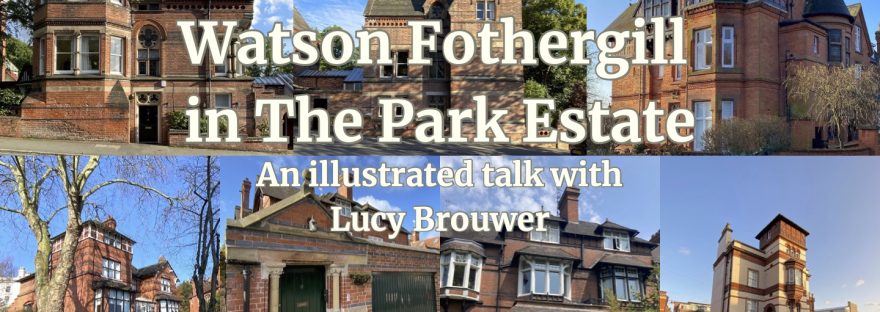
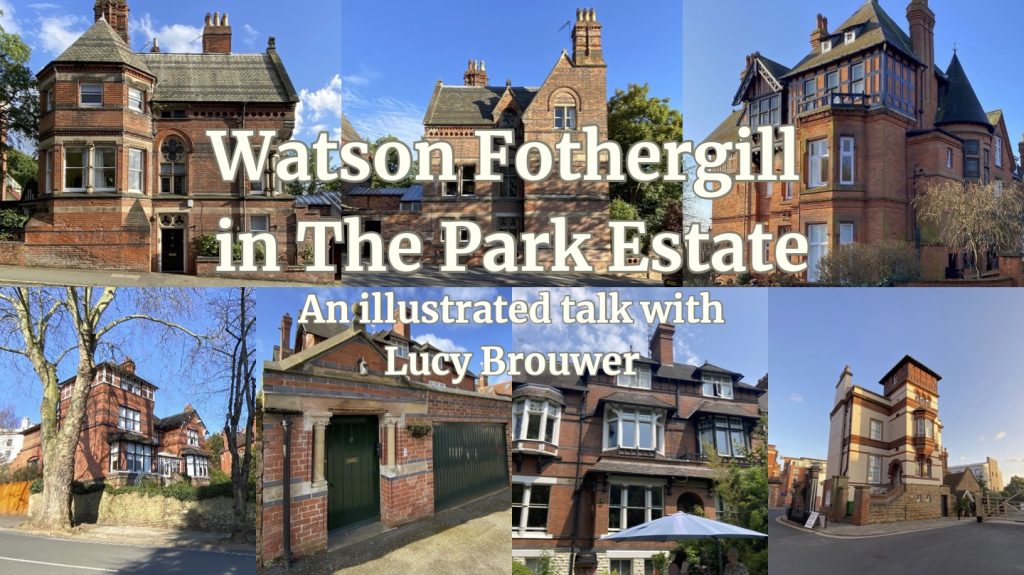
An illustrated talk on houses by Fothergill and some of the people who lived in them
People often ask me about the houses in Nottingham’s Park Estate. So far, I have not presented a tour of The Park, mainly because it is so large, walking there involves climbing several steep hills, and there aren’t quite as many houses by architect Watson Fothergill as people might imagine …
… However, I have put together an illustrated talk on houses in the Estate that Fothergill worked on, as well as stories of some of the characters who lived in them.
Join Lucy Brouwer, the creator of Watson Fothergill Walk, for a look at Fothergill’s houses in Nottingham’s Park Estate. Learn about the original owners and some of the residents of these distinctive Victorian buildings.
Nottingham’s Park Estate was home to some of Nottingham’s most illustrious Victorians and their families. The properties created by the architect Watson Fothergill represent some of the most outstanding houses in the development. Lucy, who is known for her popular Watson Fothergill Walk tour, has researched the histories of these houses and traced some of their original residents. Hear stories of some of Nottingham’s prominent Suffragists, Timber Merchants, Members of Parliament, and Scientists of the late Victorian era.
This is an illustrated talk with a duration of approximately 1 hour. Doors to the Golding’s Room open at 7 pm; the talk starts at 7:30 pm. The Vat & Fiddle will be open until 9 pm. Tickets £10 each
Another architect, Thomas Chambers Hine, was responsible for the layout and overall look of The Park Estate. I will be introducing Hine and his work for University of Nottingham Manuscripts and Special Collections on Thursday, 4 December. Details in the previous post.
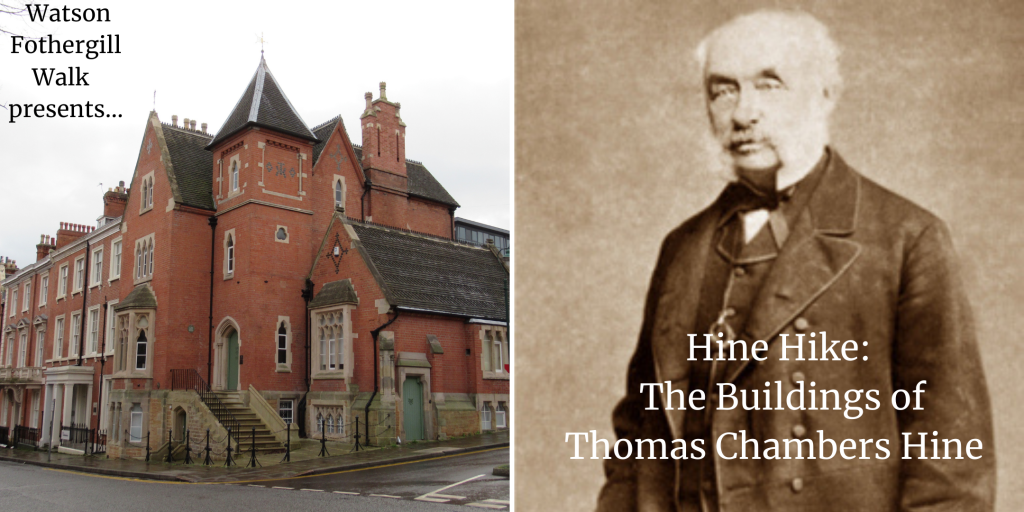
To accompany this event, I am staging a Hine Hike walking tour on Sunday, 14 December, at 11 am. This tour offers an introduction to Thomas Chambers Hine and his buildings in Nottingham city centre. Duration approx. 2 hours. Tickets £20 each.
Thank you for all the interest in my Nottingham Art Deco Pubs talk. I am looking at staging it again, so make sure you’re subscribed to this mailing list for news of all future dates.
Thanks for reading Watson Fothergill Walk – Lucy Brouwer! Subscribe for free to receive new posts and support my work.
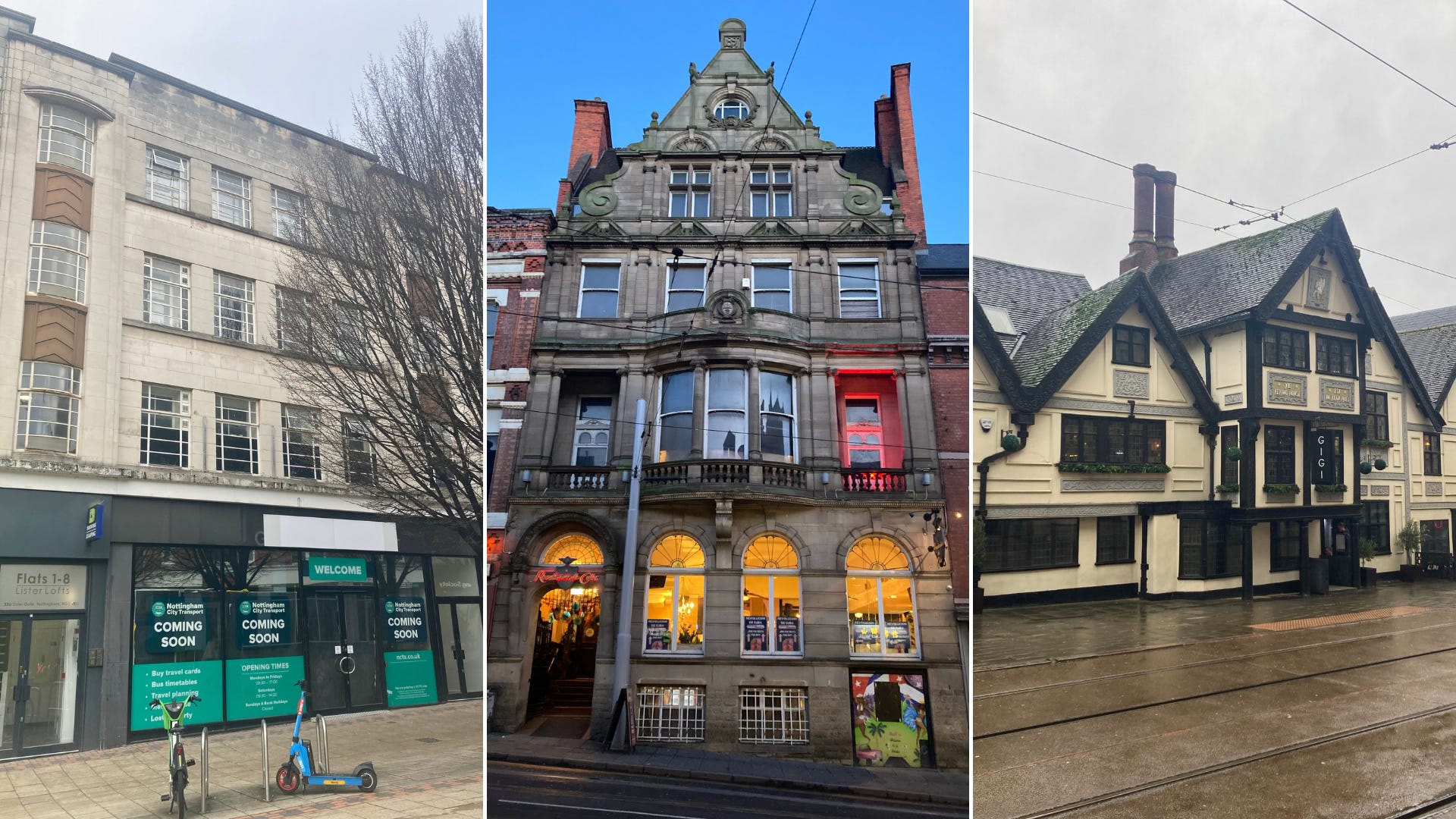
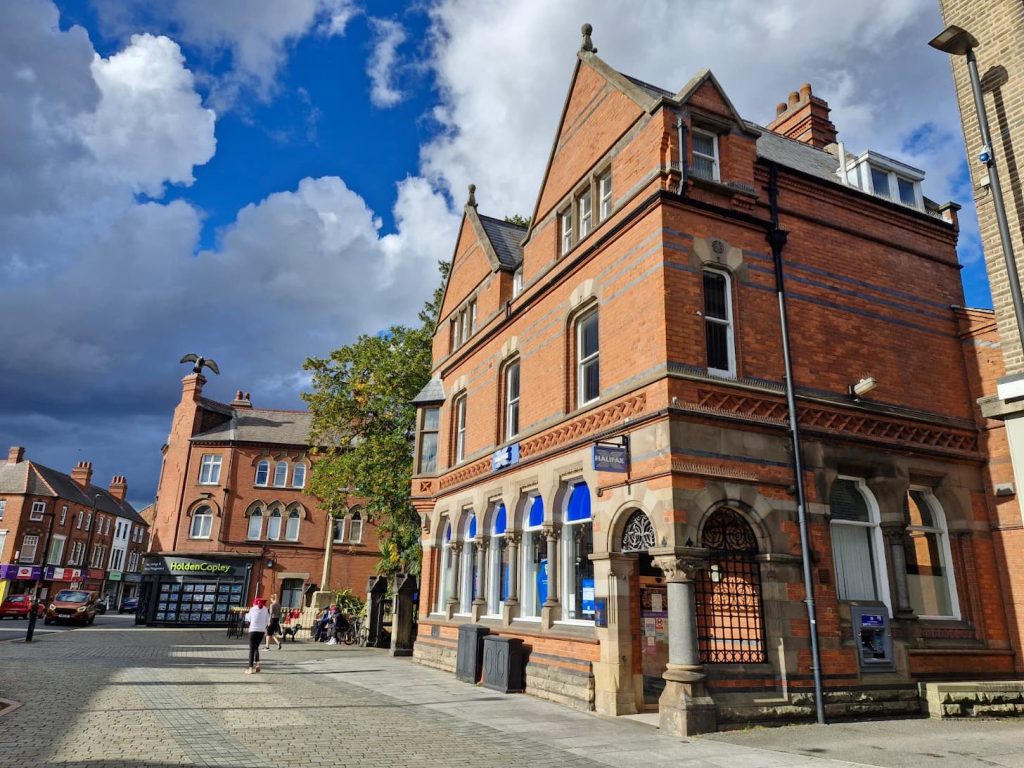
I finally made it to Long Eaton to see the building Fothergill designed for Samuel Smith’s Bank. Just over the border into Derbyshire, Long Eaton is a half-hour bus ride away from the centre of Nottingham (I caught the Sky Link airport bus and met up with my friend Louise on the way).
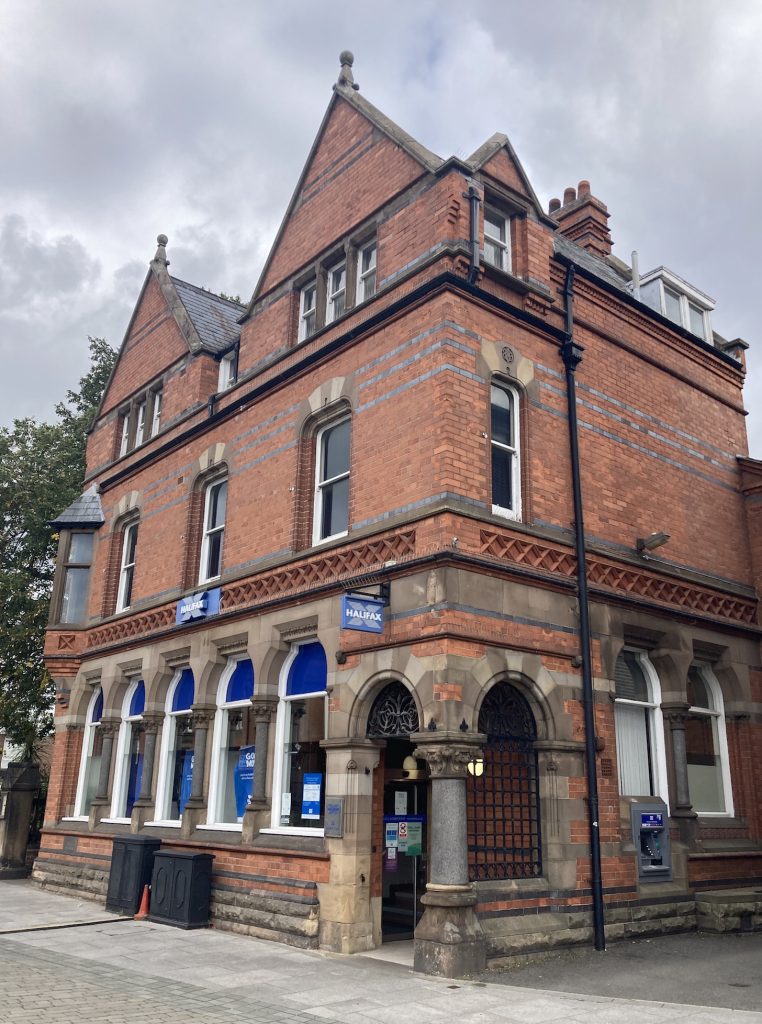
The Halifax (former Samuel Smith & Co, Bank), 24 Market Place, Long Eaton. Architect: Fothergill Watson, 1889. (Photo: Louise Hunter).
Halifax are closing this branch in September 2025, so we wanted to visit while it was still possible to go inside. However, the interior was fairly modern with the only evidence of the original detail being the coffered wooden ceiling. I didn’t take a photo, as by then the counter assistants were wondering if I was casing the joint.
In March 1889, Fothergill Watson (pre-name change) submitted plans, commissioned by Messrs Samuel Smith & Co, Bankers, but these do not survive in archives. There are several other Fothergill buildings linked to this association with Smiths Bank, including alterations to a house on Cator Lane, Chilwell, for Mr F.C. Smith (see blogs passim), Hucknall Institute & Coffee Tavern (memorial stone laid by Mrs F. C. Smith), and a branch in Bullwell (now demolished).
The Grade II Listed bank makes good use of its location, with both side elevations projecting into the street; there is a porch on the south corner with a typical polished granite column.
Smith’s Bank, Long Eaton. South Elevation. (Photo: Lucy Brouwer)
The building uses Fothergill’s favoured red brick with blue brick bands, stone dressing the terracotta dressings. Elaborately moulded chimneys and a slate roof are also typical.
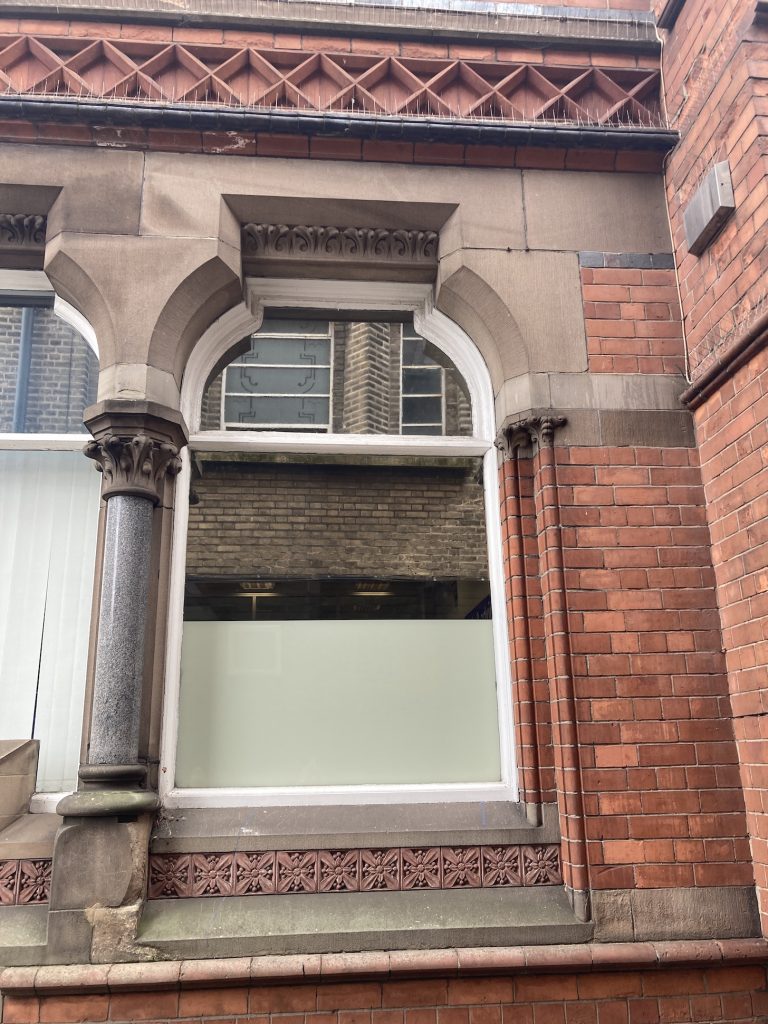
The front has five moulded Caernarvon arched windows with polished granite columns with foliage capitals. (Caernarvon arch is a term often used by Historic England and refers to an arch comprising a wide keystone resting on two corbels shaped to fit the keystone.)
Caernarvon arched window. (Photo: Lucy Brouwer)
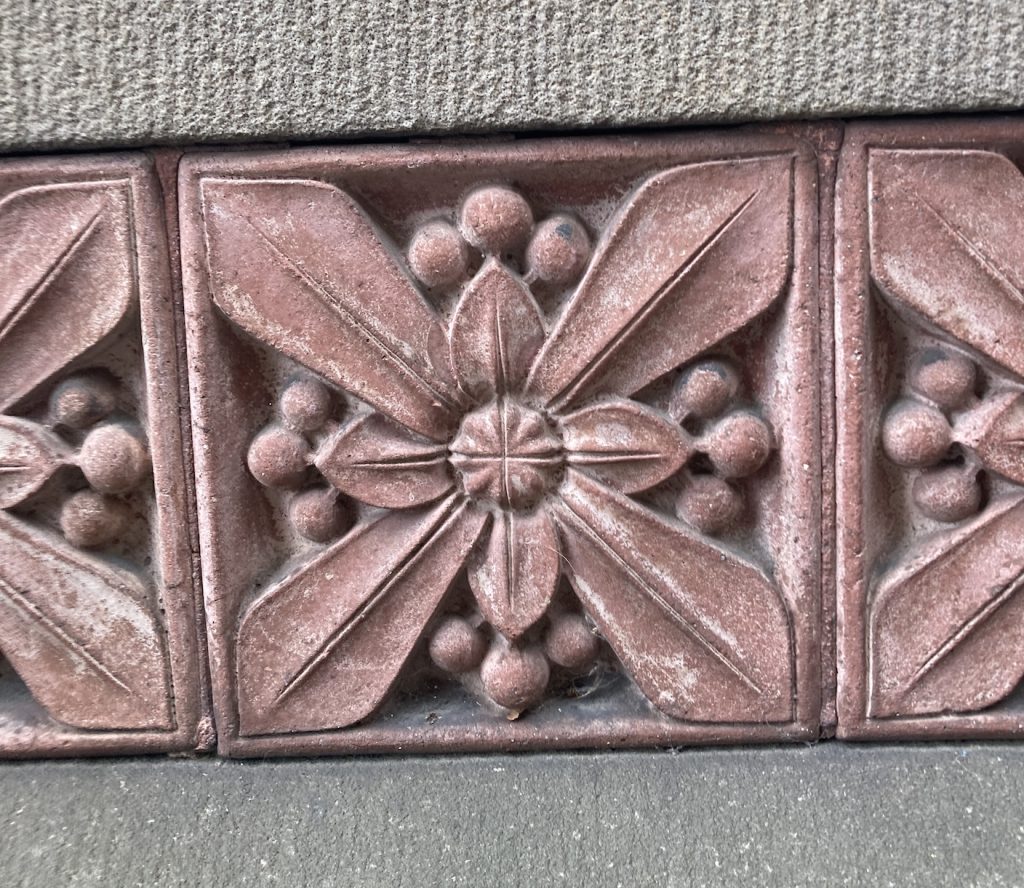
Below the windows is a continuous moulded sill band and above a moulded terracotta frieze (now mostly visible thanks to a smaller Halifax signboard).
Close up of the terracotta moulding. (Photo: Lucy Brouwer)
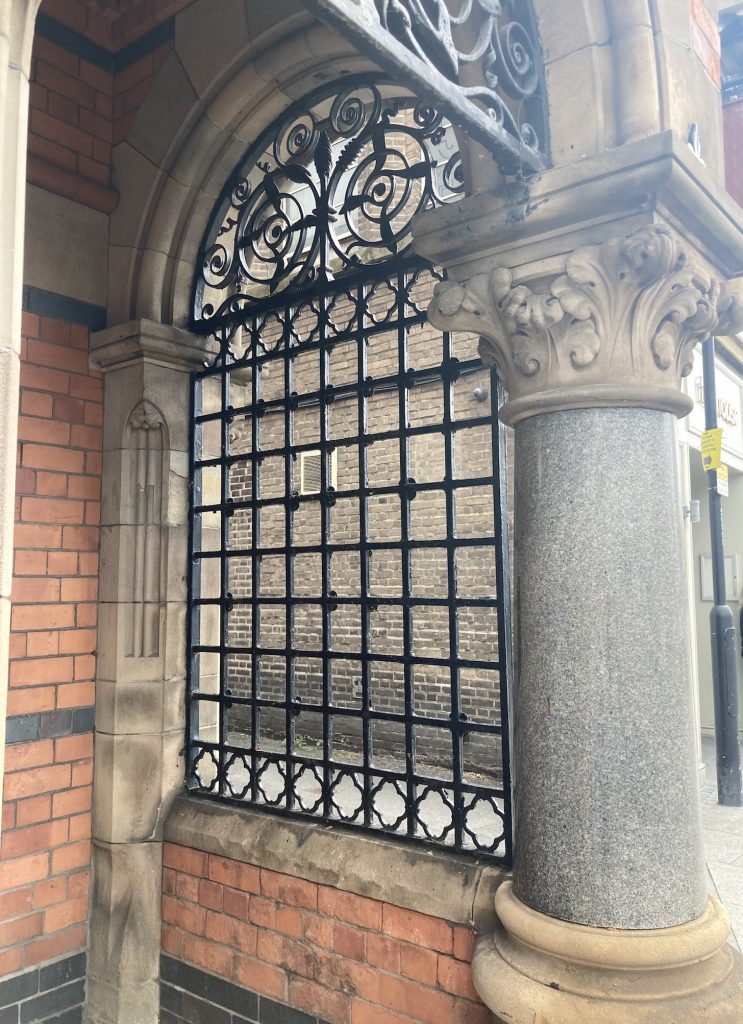
The porch has semi-circular headed stone arches supported by a large polished granite column with foliage capital. There is wrought ironwork in the tympanums and grid iron work below (it looks like originally there would have been another grid gate to close off the entrance).
Porch with wrought ironwork. (Photo: Lucy Brouwer)
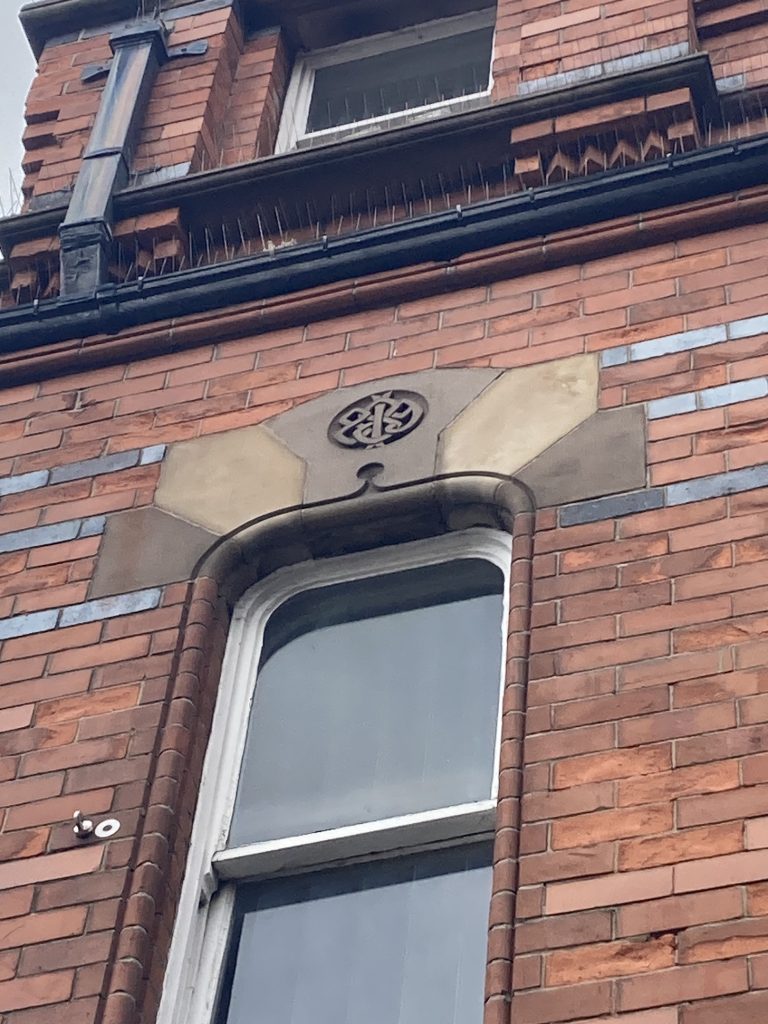
The date stone overlaps 1889 and is rather discreetly placed in the stone arch of the window.
Date stone in window arch. (Photo: Lucy Brouwer)
On the north corner, a canted oriel mullioned and transomed window with terracotta panels to the base and coloured brick corbels below.
Canted Oriel window. (Photo: Lucy Brouwer)
On the north side, facing into the church yard, a grand stair window with a stepped base and below a large moulded arch with a door and window.
North side door. (Photo: Lucy Brouwer)
While we were exploring Long Eaton, I was pleasantly surprised to discover there were several other buildings of note. More coming up…
If you’d like to learn more about the architect Watson Fothergill, why is swapped his names around, how to spot his buildings, and much more, then join me for The Watson Fothergill Walk, an architectural walking tour of Nottingham City Centre. Next date 7 September 2025.
Thanks to everyone who came down to The Vat & Fiddle for my Nottingham Art Deco Pubs talk. I’ve heard that a few of you have been visiting these fabulous buildings – here’s a recap if you’d like to find some Art Deco gems in the Nottingham area: A Guide to Nottingham Art Deco Pubs
Screenshot
There are still a few tickets remaining for Nottingham: Deco in the Details for Art Deco Society UK on 13 September, 2 pm. This is a version of Deco in the Details Part 2. It’s also open to non-members and the Deco-curious! We might even finish off with a look inside The Bath Inn.
Join me for my original tour looking at Nottingham’s Victorian Architecture by its most flamboyant architect. Last chances this year, so don’t put it off book today!
See what folks are saying about Watson Fothergill Walk in my TripAdvisor reviews – It’s 5-star rated doncha know!
This tour looks at some of the houses designed by Watson Fothergill, architect, and his chief assistant Lawrence George Summers in Mapperley Park, Sherwood Rise and Carrington. There’s lots more about their lives and work too. Plus a chance to take a closer look at Clawson Lodge, a large house on Mansfield Road, now home to the Nottingham Ukrainian Cultural Centre.
The Hine Hike, Sunday 27 July, 2 pm is just over half full so get your skates on if you’re thinking of joining us. Tickets for all these walks are £20 each including booking fees.
Look out for more dates coming up in July and August.
After much prevaricating, I’ve decided to organise a walk in Mansfield!
Introducing The Mansfield Meander! This walk will look at the remaining buildings built by Fothergill in his home town, and we will search for traces of some of his earlier work. There will also be a chance to look at Mansfield’s massive viaduct and to stay for a drink or a meal at Ciao Bella Italian Restaurant (booking required). More details and tickets at the special introductory rate of £15 plus fees via this link:
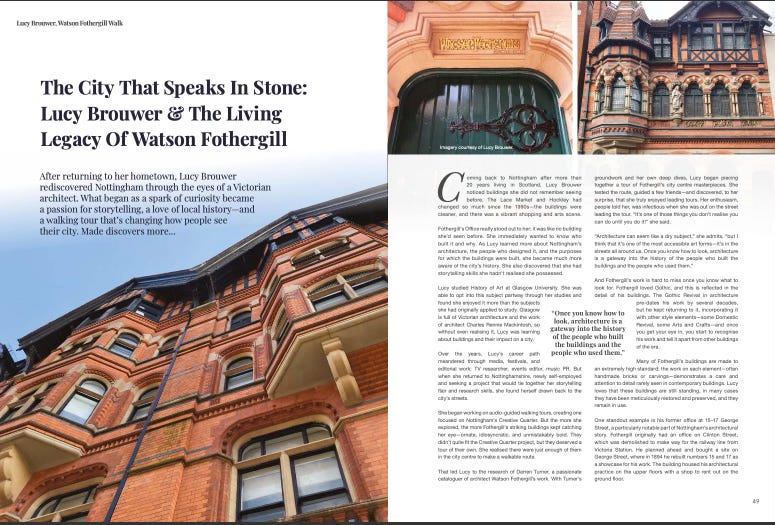
After an overwhelming response, there will now be two “performances” of my Art Deco Pubs talk at The Abdication in Daybrook (24 June & 22 July) These are now both full. If you’d like me to present my illustrated talk for your group or club then please get in touch via my website.
Thanks again to Lamar for collaborating on our Smartphone Photography Workshop Walk looking at some of Nottingham’s public art last week. Lamar knows so much about how to get the best out of even the smallest camera and we got some great shots. If you’re interested in taking part in one of these events in the future we’d like to hear from you – it might be possible to organise private sessions for small groups. Drop me a line to express an interest.
Nottingham Playhouse & Sky Mirror through filters… as taken on the Smartphone Photography Workshop Walk. Photo: Lucy Brouwer
Finally, Sunday 22 June is The Park Garden Trail – the best time to see the architecture (and gardens) in Nottingham’s Park Estate. Explore the heart of Victorian Nottingham and benefit a host of local charities… I will be there wandering around with my flyers, probably pointing out the Fothergill buildings… see you there!
The Park Garden Trail 2023, 5 & 7 Lenton Road, (1873, Fothergill Watson). Photo: Lucy Brouwer
The Carrington Crawl is my deep dive into the history and architecture of the houses built by architect Watson Fothergill and his chief assistant Lawrence George Summers in Mapperley Park, Sherwood Rise and Carrington, just outside Nottingham city centre. On this walk, you’ll find out more about Fothergill’s family home and his life there with his wife and seven children. You’ll also discover the two most complete known designs carried out by Fothergill’s talented Chief Assistant, a fine architect in his own right, L.G. Summers, FRIBA.
One of the houses that features on the tour is St Andrew’s House, on Mapperley Road which happens to be on the market at the moment.
A rare view of St Andrew’s House, Mapperley Road. On the market as we speak. Photo from the listing on Rightmove.
Fothergill actually added to an existing house and you can see his characteristic polychrome brickwork, tourelle with spire roof and squat attic floor with brick nogging, along with flourishes in the windows, stained glass and other features. The house was extended for Dr Stewart in 1886. Interestingly this building later served as the office for another architect, Thomas Cecil Howitt, who had gone into private practice after his work on Nottingham’s Council House. Several of his buildings from the 1930s feature on my Deco in the Details tours.
I’m only able to do the Carrington Crawl occasionally so don’t miss out on the next date: Saturday 7 June, 1 pm. Finishing up with a visit to Clawson Lodge, where we can have tea with the AUGB who use it as their Ukrainian Cultural Centre.
The return of Deco in the Details and another chance to do The Carrington Crawl
Dates coming up in May & June 2025
There is still some availability for Watson Fothergill Walk on 25 May, 10 am. (It starts early so we can enjoy Nottingham while it is slightly quieter than later on in the day – it’s worth getting up for!)
Deco in the Details
I’m trying out an evening version of Deco in the Details parts 1 & 2 – these tours look for traces of Art Deco in Nottingham’s architecture of the 1920s and 1930s.
This is a circular walk from Nottingham’s Council House down to the Broadmarsh area and back. You can do these tours in any order – I hope to stage them again later in the year.
This second part of the walk starts outside Victoria Centre and finishes at Snienton Market (where there is an opportunity to call at The Bath Inn).
Deco in the Details Architecture of the 1920s and 30s.
The Carrington Crawl
Lawrence George Summers, Fothergill’s talented chief assistant architect, was recently commemorated with a new grave marker in the Church Cemetery.
The young LG Summers and the new grave marker, commissioned by Andrew Paris. Church Cemetery Photo: Lucy Brouwer
On the Carrington Crawl, I tell Summers’ story, talk about Fothergill’s family home and search for the houses they designed in Mapperley Park, Sherwood Rise and Carrington.
This walk starts at the junction of Mansfield Road and Mapperley Road and ends at the Carrington end of Mansfield Road with a chance to explore Clawson Lodge (now the AUGB Ukrainian Cultural Centre) where you can enjoy a hot drink (for a small donation).
Father’s Day tour
And finally, for this newsletter, a Watson Fothergill Walk for Father’s Day.
There will be a Watson Fothergill Walk finishing up at Fothergill’s gastropub where you can enjoy the special Father’s Day menu. Book in early if you’d like a table after the tour. I’ll endeavour to finish on time but book for 12.15 pm to be on the safe side! A pleasant 2-hour stroll will build up your appetite.