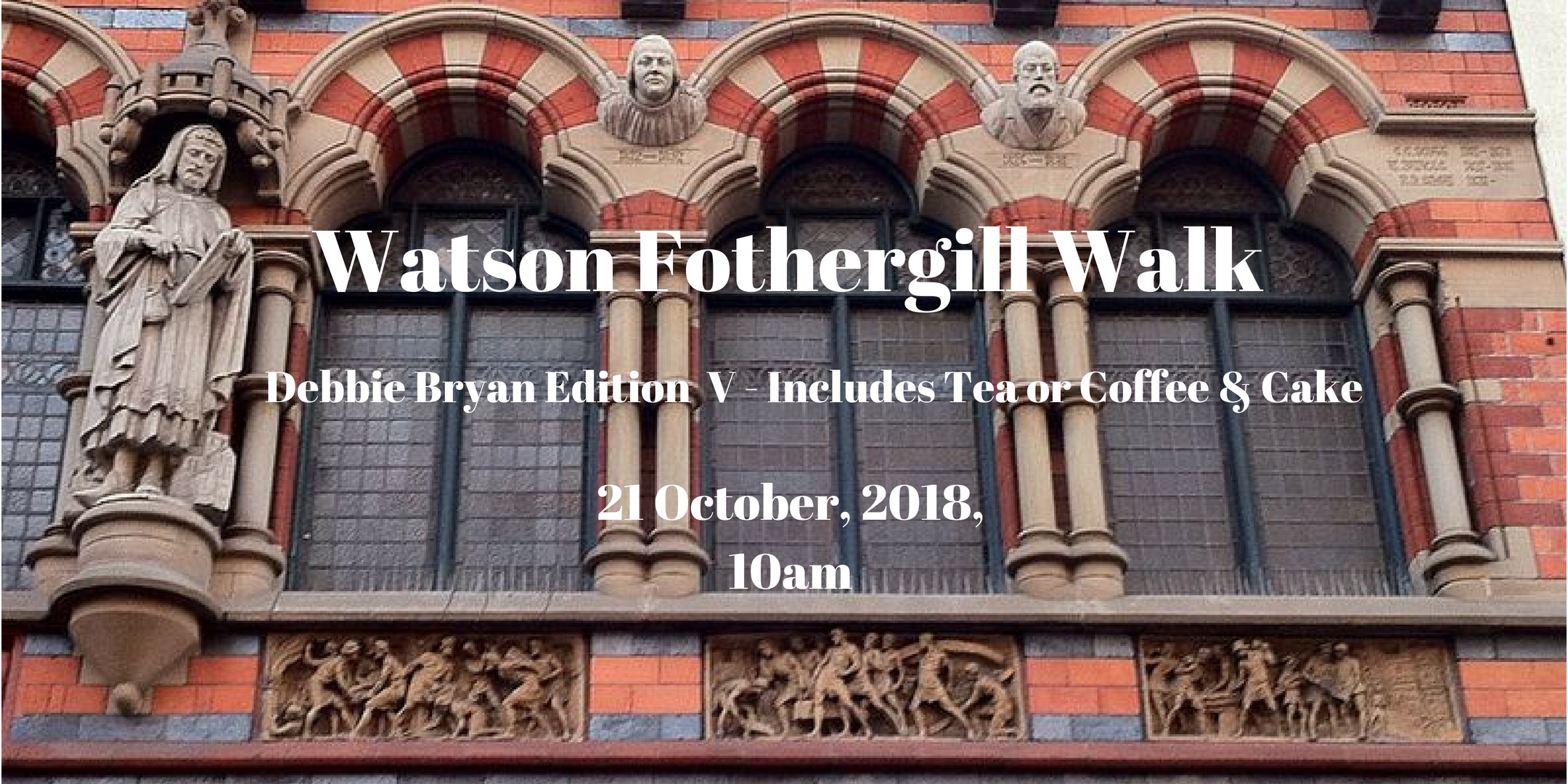
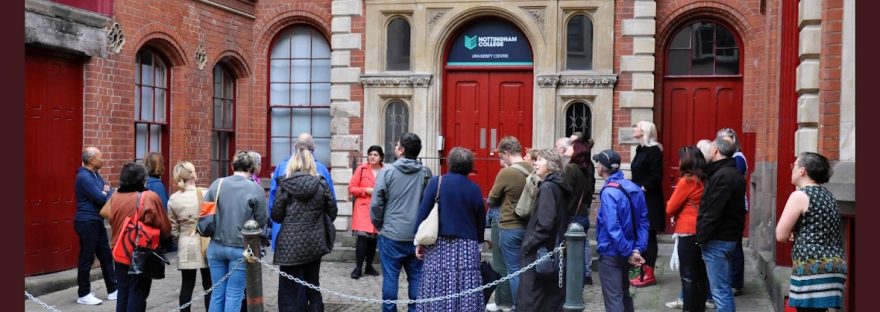
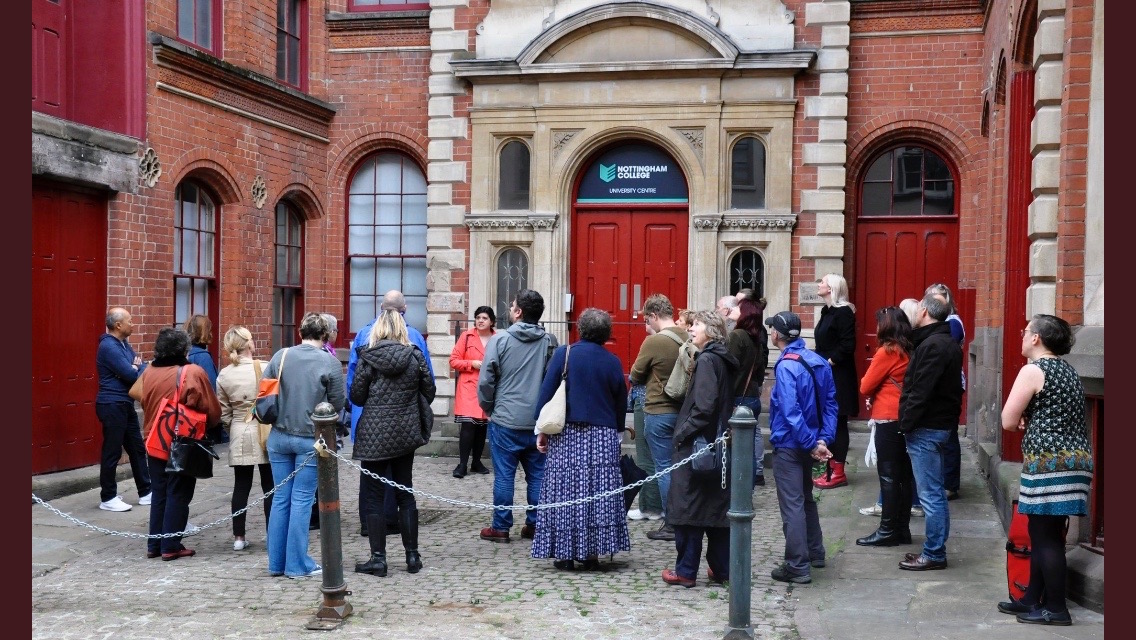
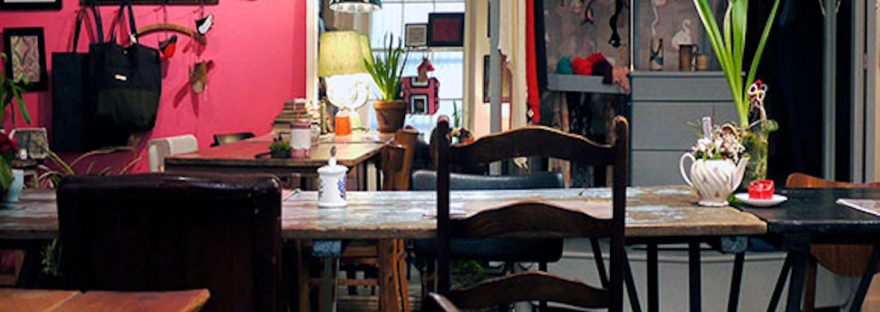
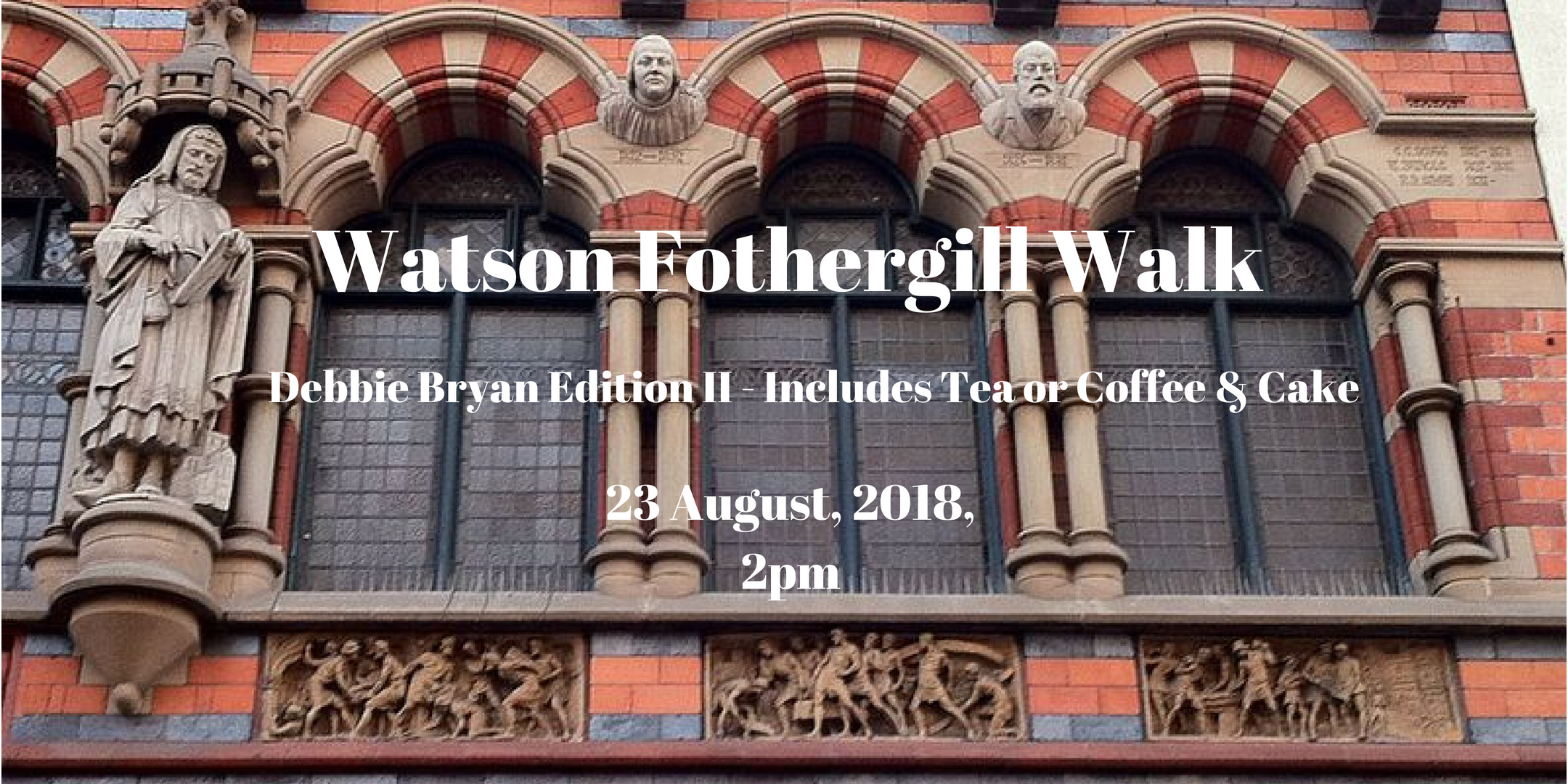
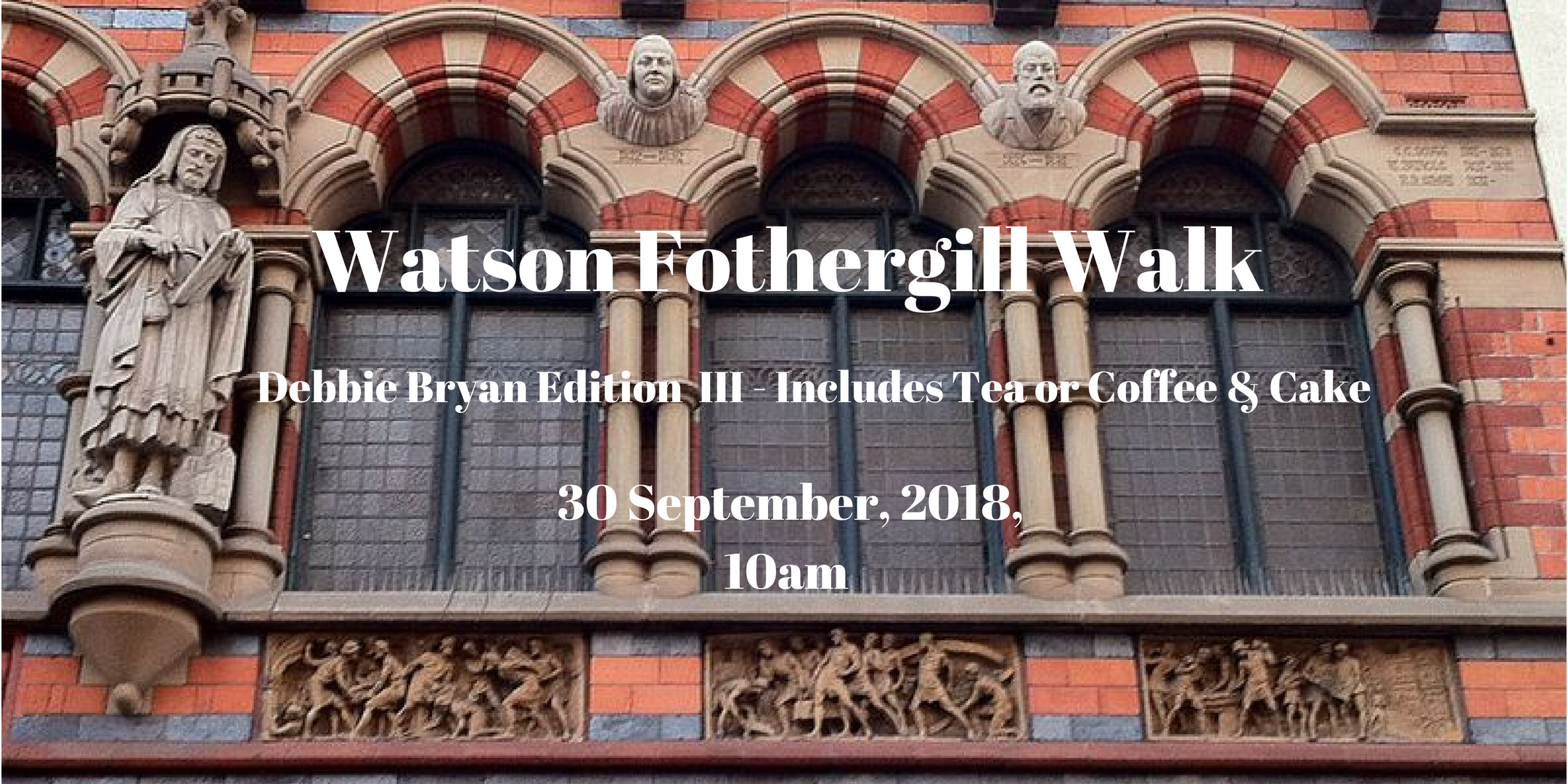
Once again the walk will conclude at Debbie Bryan with tea or coffee and cake included in your ticket. Debbie’s tea room also offers light lunches and other refreshments plus a wonderful gift emporium stocked with local crafts and unique homewares.
I am also going to be presenting an illustrated talk at Beeston Library, on 21 November at 2pm. The Watson Fothergill Virtual Guided Tour will be some highlights from the walk presented with photos in the library’s meeting room – so you can see Fothergill’s work without leaving your seat.
The last part of this search for some of Watson Fothergill’s buildings in Nottingham lead me to Mapperley Road (after a brief stop for much needed tea at Homemade Cafe in the Pavillion on The Forest Rec.)
Up on the corner of Mansfield Road and Mapperley Road is St Andrew’s House. (A48 in the Fothergill Catalogue.) Here Fothergill designed a three storey addition to the existing dwelling, plus a single storey waiting room and consulting room on the Mapperley Road side for a Dr Stewart in 1886. Fothergill had previously noted in his diary in July 1885 that the
“stucco house corner Mapperley Road Mansfield Road sold by auction to Stewart £2,600.”
As Fothergill himself lived a little further up Mapperley Road he would have been keeping a close eye on the developments in the neighbourhood. In 1886, Dr Stewart engaged Fothergill to add ‘Three Carriage Houses with hay loft over and harness room to the rear’ (MW23). The date stone bares the owner’s initials ‘IS’.
St Andrews House from Mansfield Road
In Fothergill’s work on the house you can see several features that he was to use in his buildings – brick nogging patterns, turrets, black woodwork and bargeboards (there’s a slight Arts and Crafts feel to the porch) and large chimneys. There’s no trace of the “stucco” he mentions in his diary.
A few inconsistencies arise: The Historic England listing for the building has the owner as Dr Smart (per Ken Brand) and “St Andrews House” is now the name for a sheltered housing project close by. After Dr Stewart (I’m going to stick with the name quoted in Fothergill’s diary by Darren Turner), this building was used as an office (from circa 1929) by Thomas Cecil Howitt (1889–1968) the Hucknall-born architect responsible for the design of Nottingham’s Council House, the Raleigh head office on Lenton Boulevard and the Home Brewery building in Daybrook. (Perhaps another blog about him later!).
Back to Mapperley Road and to the site of Fothergill’s own family home. 7 Mapperley Road (A3) was the first house Fothergill built, almost as the foundation of his architectural practice. The first brick was laid in 1871. Fothergill had carefully selected the site:
“This Autumn (1870) after searching all over town for a site we liked I bought a piece of land on the northern side of Mapperley Road in Mr Patchitt’s estate.”
The Watson Family, as they still were, moved in on 26th March 1872, though the workmen were not yet out of the house. Fothergill purchased adjacent land from Thomas Birkin in 1901, to extend as far as Chestnut Grove, where they laid out an ornamental garden and a tennis court.
Now the only trace of Fothergill here is his name and some rather ugly maisonettes with faux-classical porches.
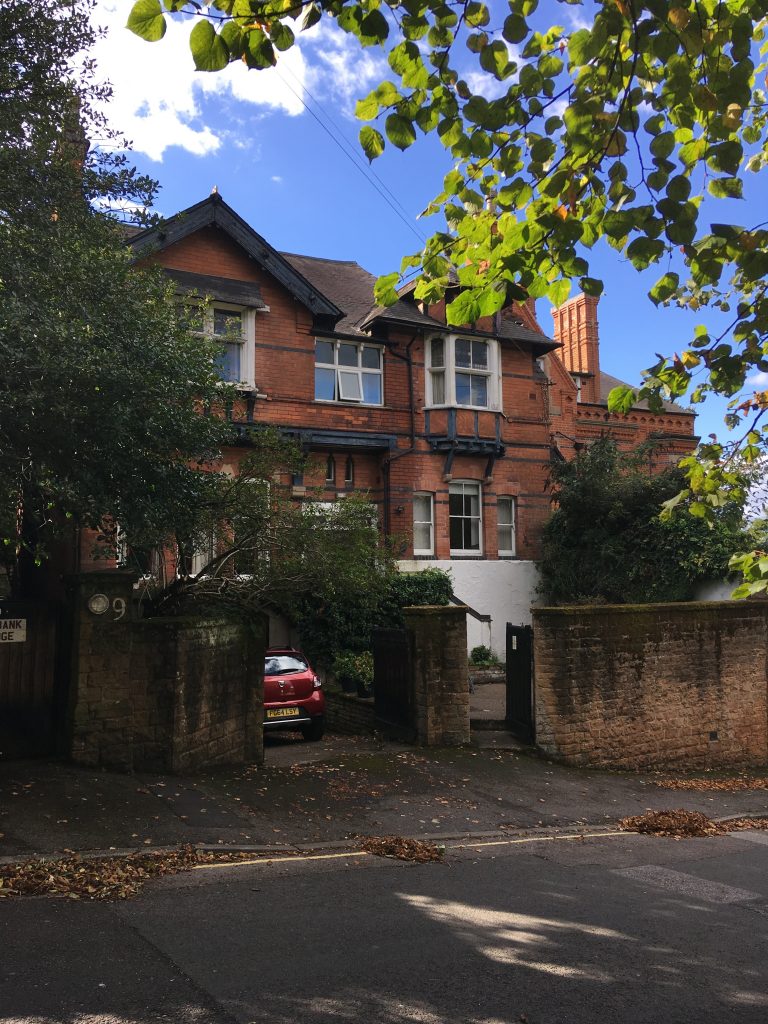
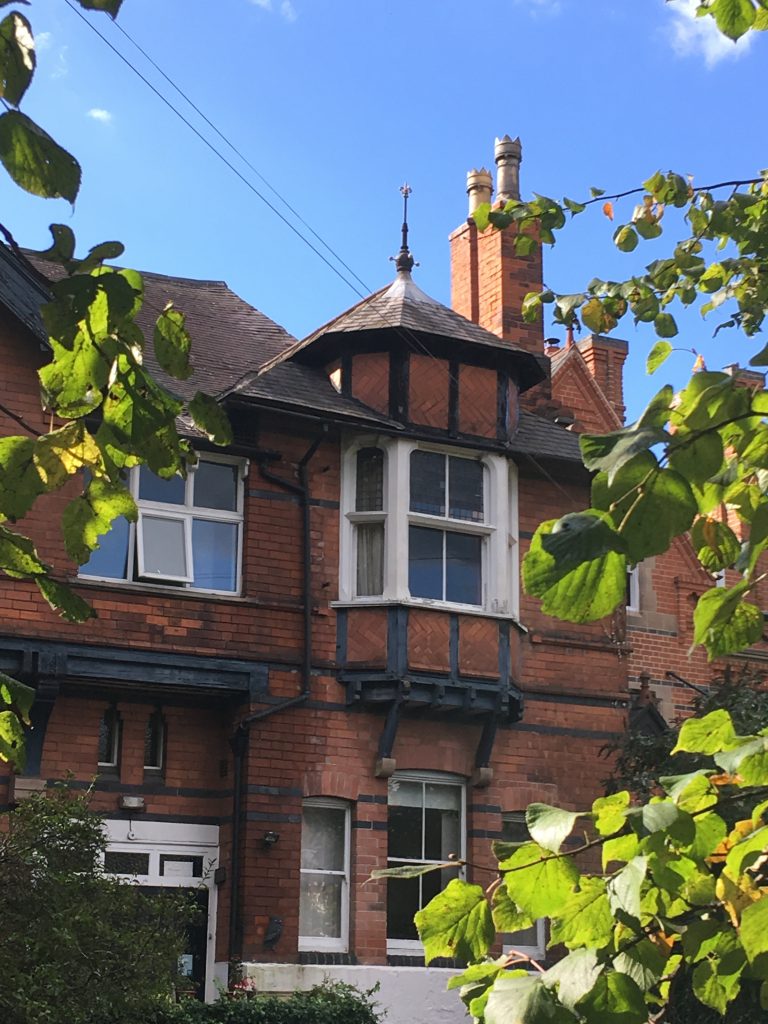
Round the corner into Elm Bank we can find one of Fothergill’s assistant Lawrence George Summers’ surviving projects. Alterations and additions to a villa, which was for a time Elm Bank Lodge Guest House (LGS9). Work was done in 1893 for a Mr Thomas Jopling. Summers added a breakfast room, kitchen and scullery with a bedroom over. Of all Summers’ sole works, says Darren Turner, this design is the closest in style to the other work coming out of Fothergill’s office. (More on Summers in future blogs.)
Elm Bank LodgeOriel Window, Elm Bank Lodge
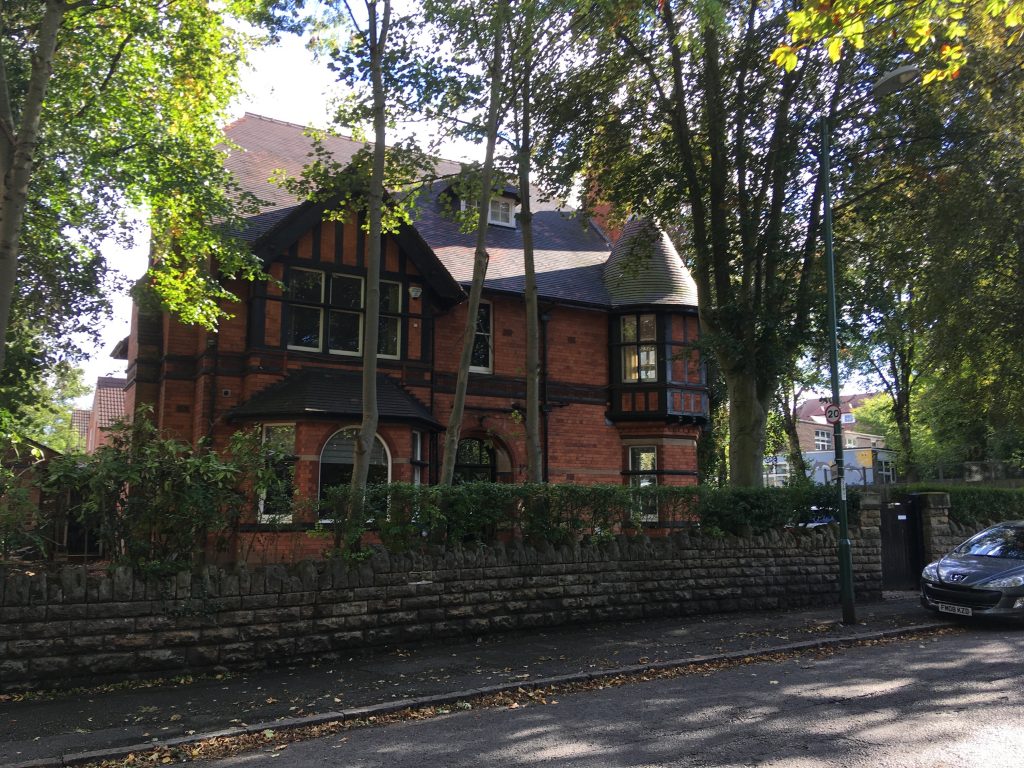
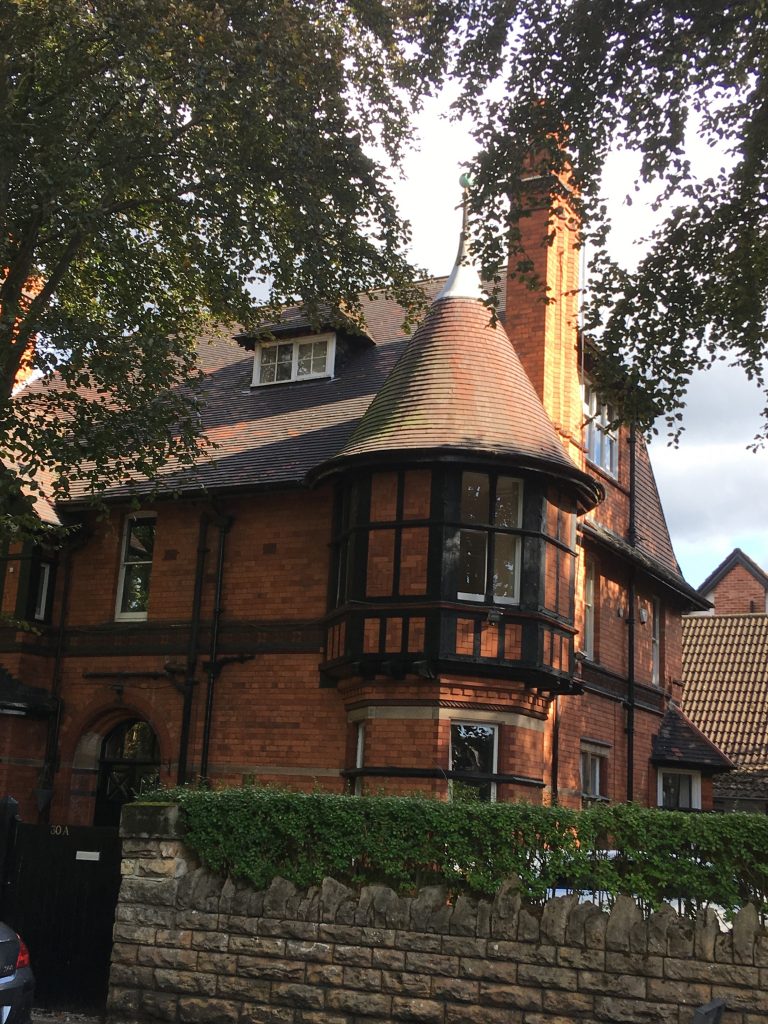
The hand of Summers can also be seen in the next house I looked at, back on Mapperley Road. ‘Beechwood’ 30A Mapperley Road (A76/ LGS20) was built for Mrs HA Wilkinson in 1905. Fothergill and Summers are listed as joint architects on the project and it is one of the last projects Fothergill would have worked on before he retired.
The three storey house employs recognisable Fothergill motifs, the turret, the nogging and black woodwork, but feels more domestic in scale than some of the early villas.
And there I started to get a blister on my foot… so this portion of the Fothergill safari is over for now. I hope to explore some other parts of Nottingham and bring you some more buildings soon.
Meanwhile the walks on 30 September are now full… Sign up to my mailing list or follow the Watson Fothergill Walk Facebook page for news of more events.
The next leg of my exploration of Nottingham’s lesser spotted Watson Fothergill buildings took me to Sherwood Rise, up from the roundabout where the Goose Fair goose is now installed for its annual roost.
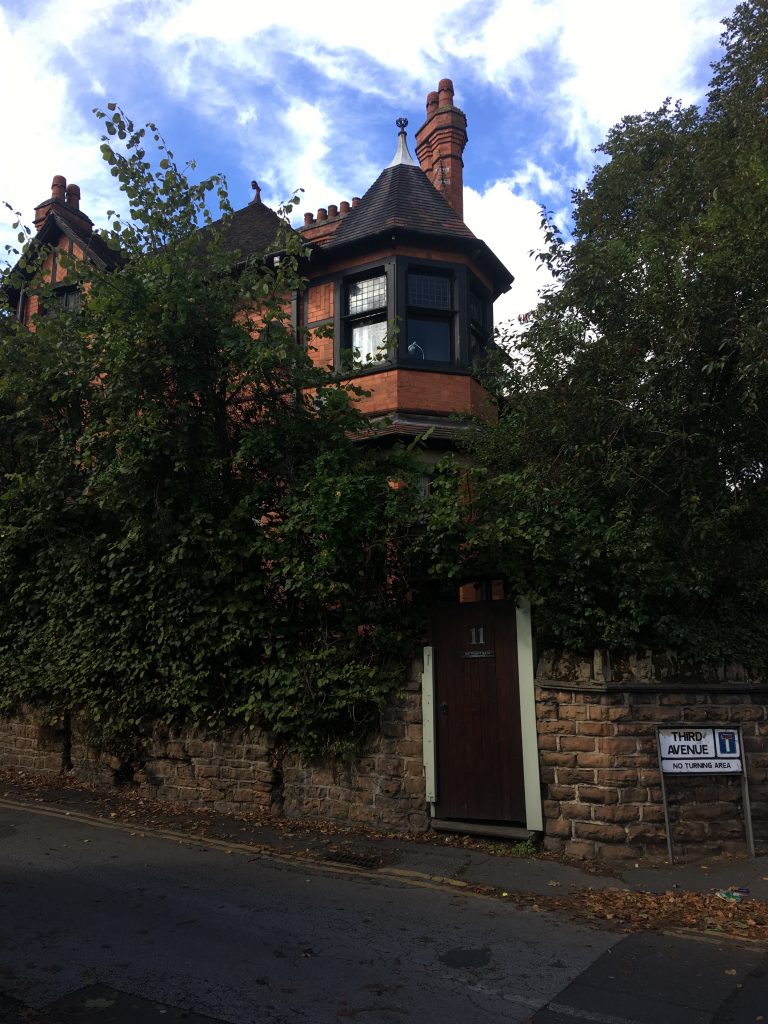
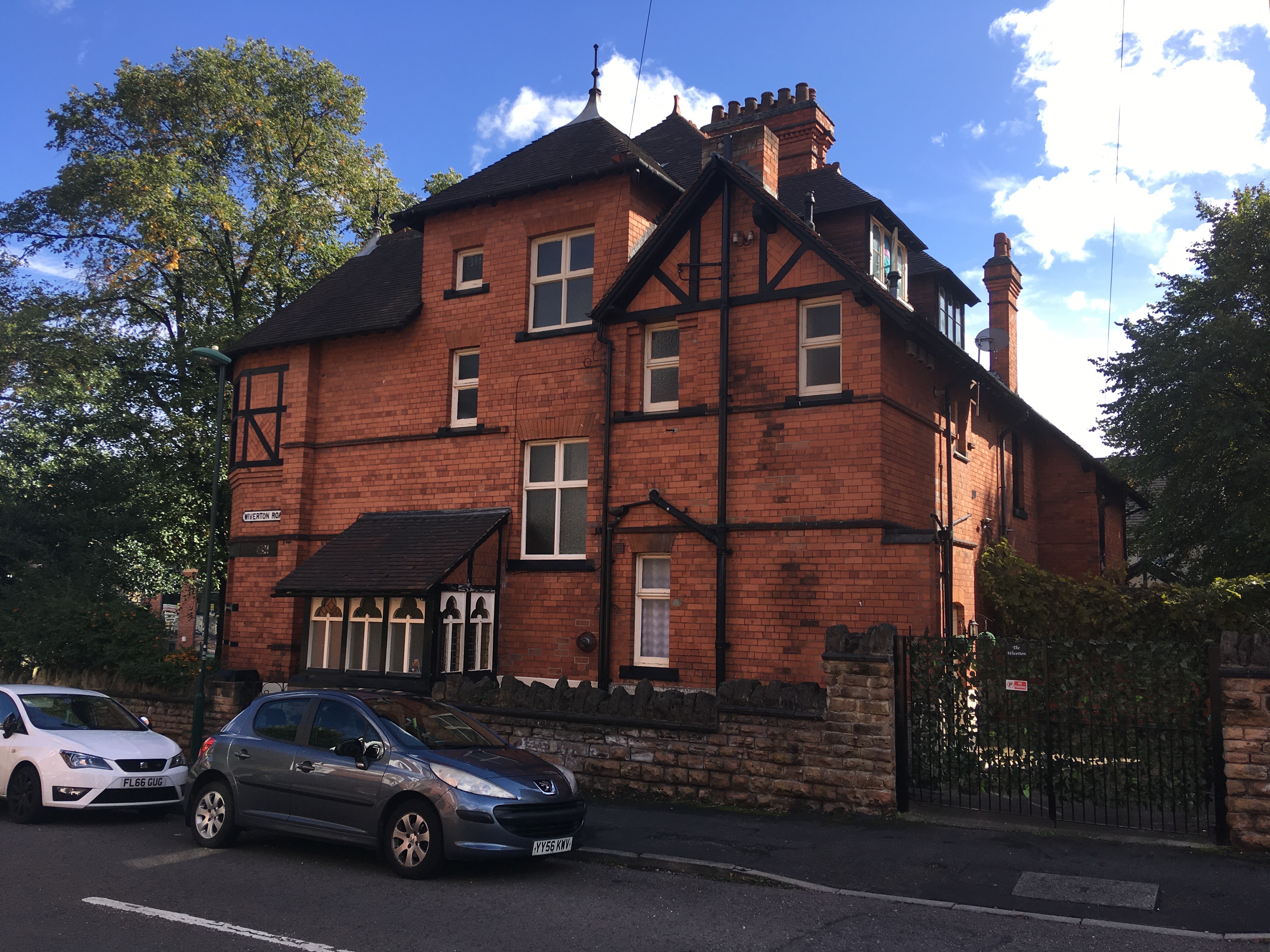
The first houses you come to walking up from the roundabout are a pair of semi-detached villas at 1 & 3 Sherwood Rise, between what is now Third Avenue and Wiverton Road. Fothergill designed these for Mr John Lindley in 1894, the plans being submitted in March, (A61 in Darren Turner’s Fothergill Catalogue).
1 Sherwood Rise (Photo: Lucy Brouwer)
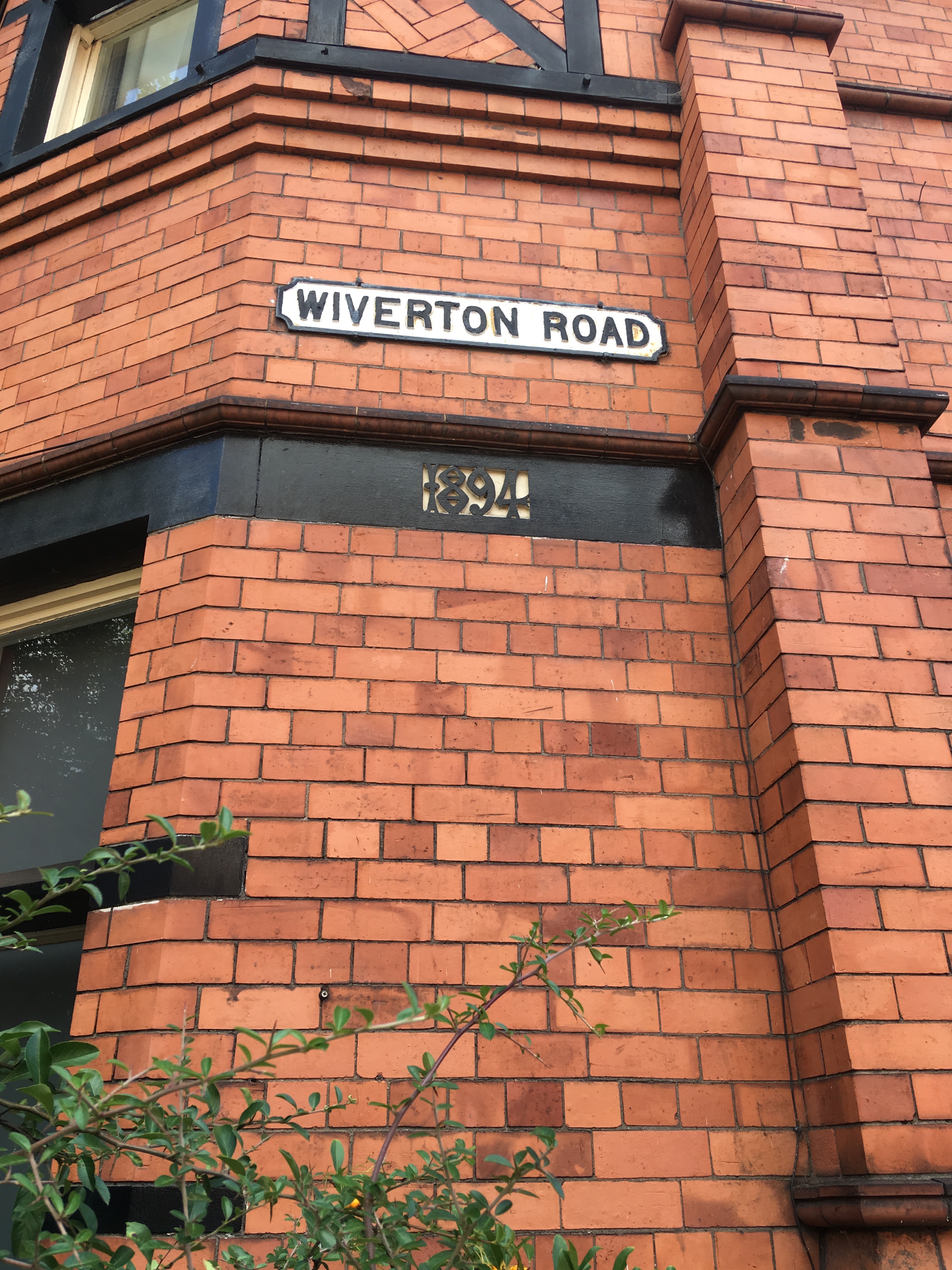
The houses are well sheltered by their gardens but are distinctively in Fothergill’s late style (his next project was his office on George Street). They were built by Messrs Bennet and Williamson between May 1894 and April 1895. The date stone reads 1894. Fothergill recorded in his diary in 1895:
“March 27. Death of John Lindley, Sherwood Rise for whom I was building 2 villas aged 62.” Then in May: “May 29th. The pair of villas (freehold) I have just built at Sherwood Rise sold by auction by John Lindley exors (executors) for £1,750. The total rental is £103.”
The properties were up for auction again in November 1898, with the advertisements making reference to Fothergill as the architect.
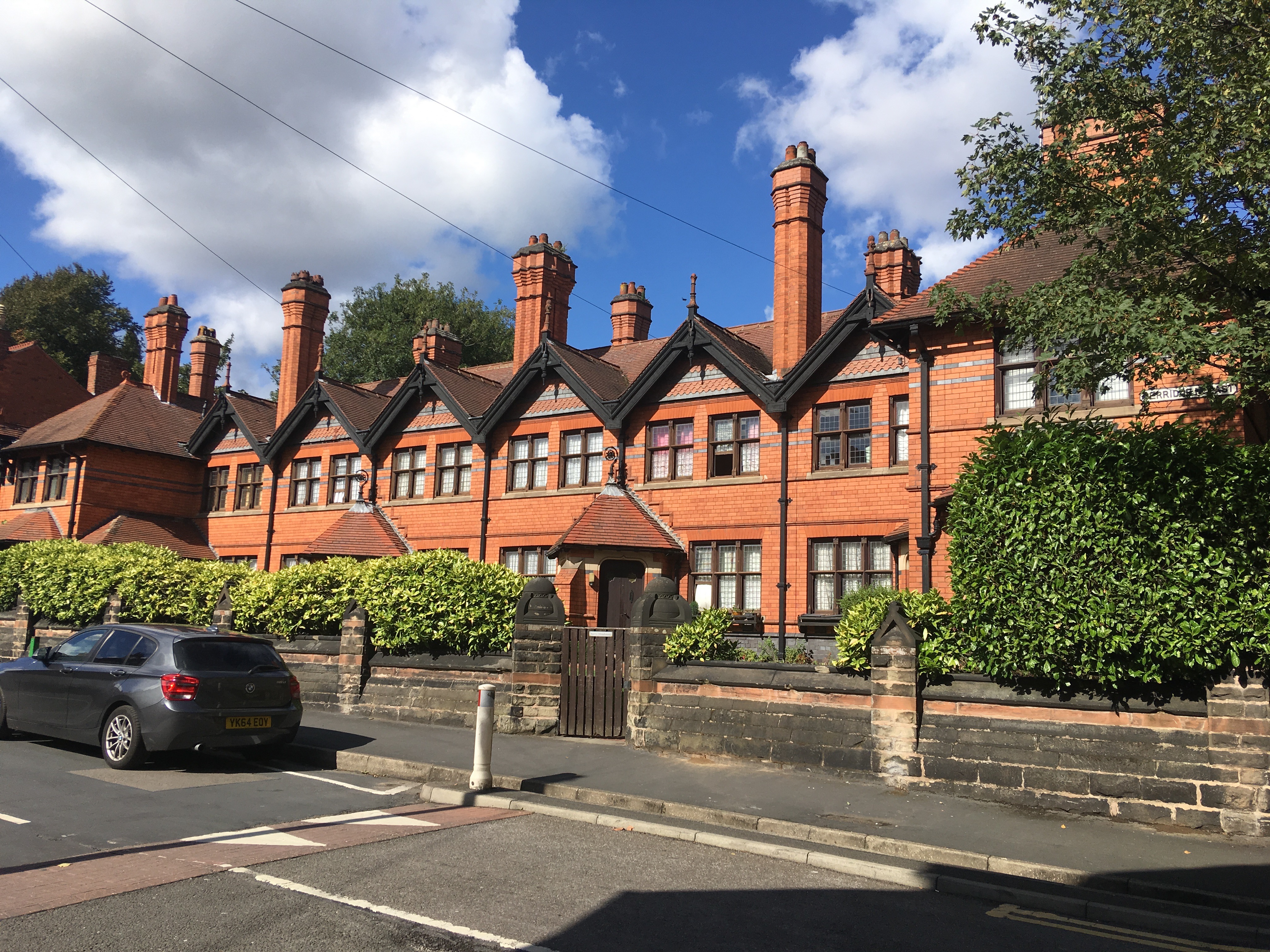
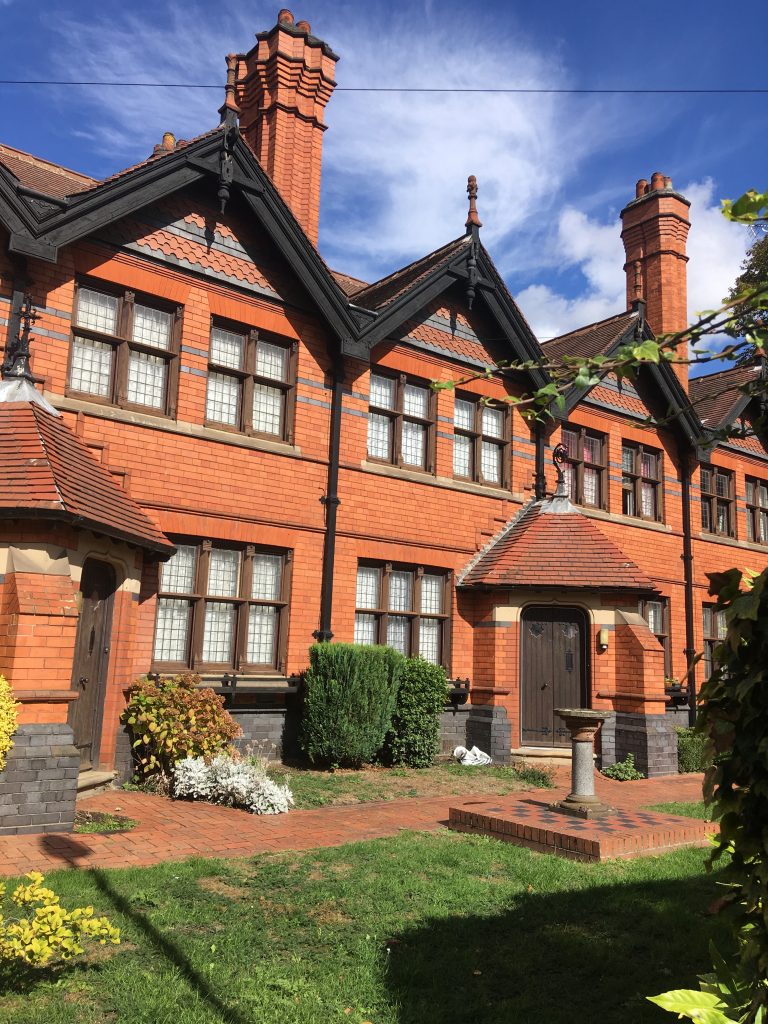
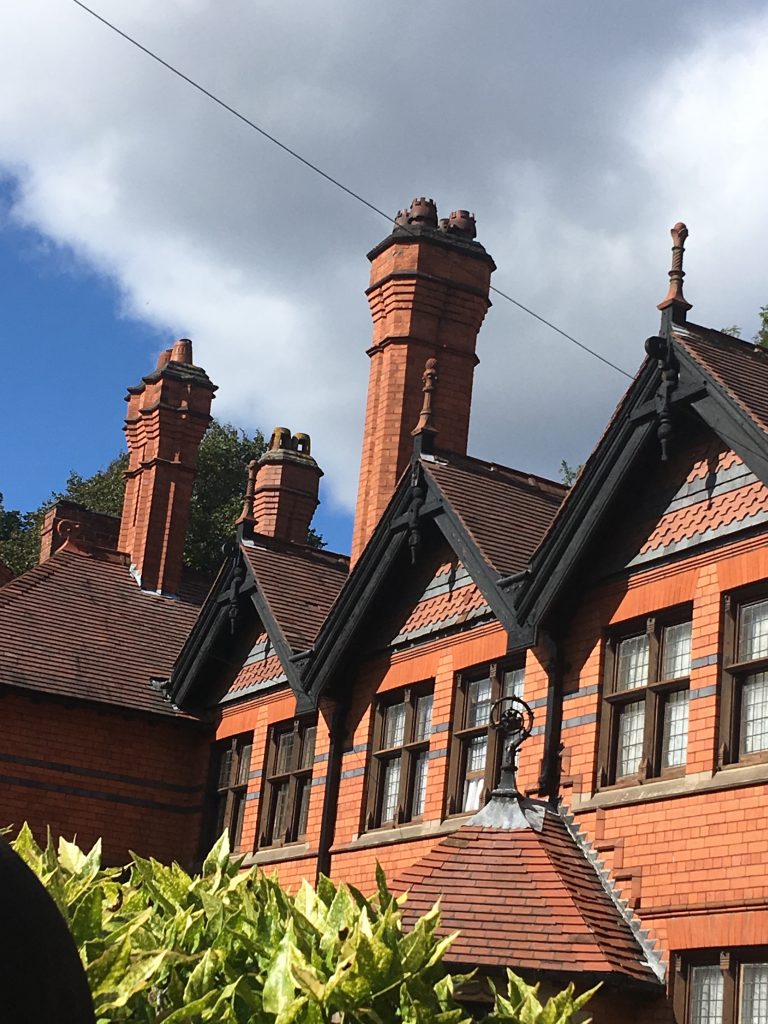
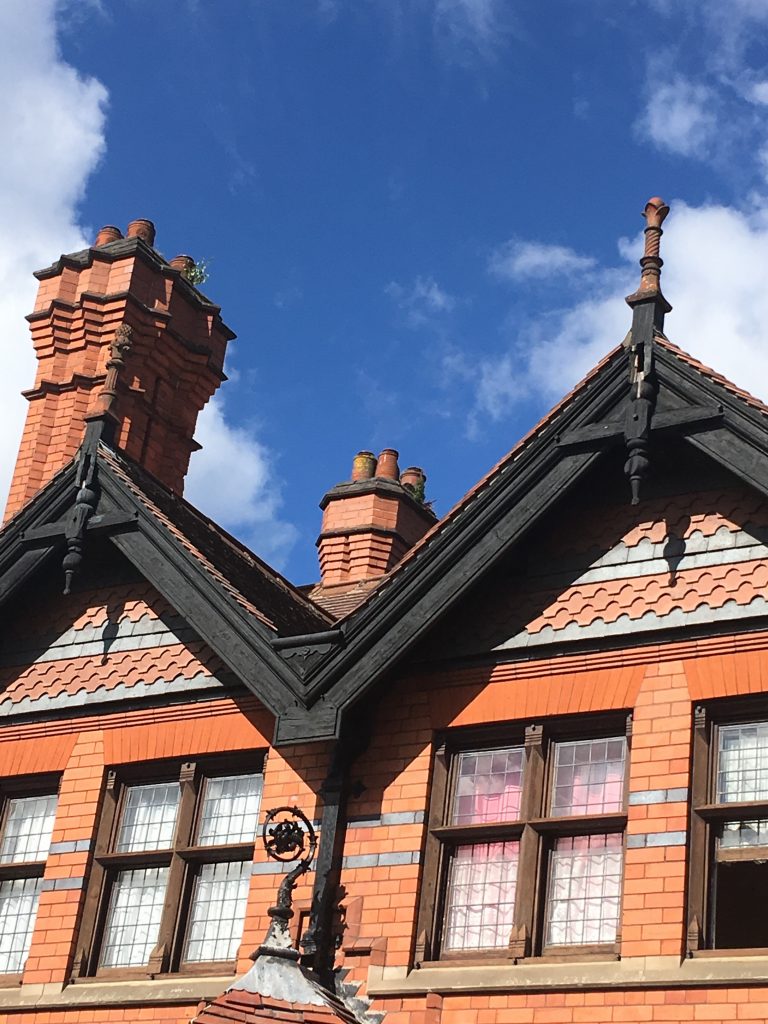
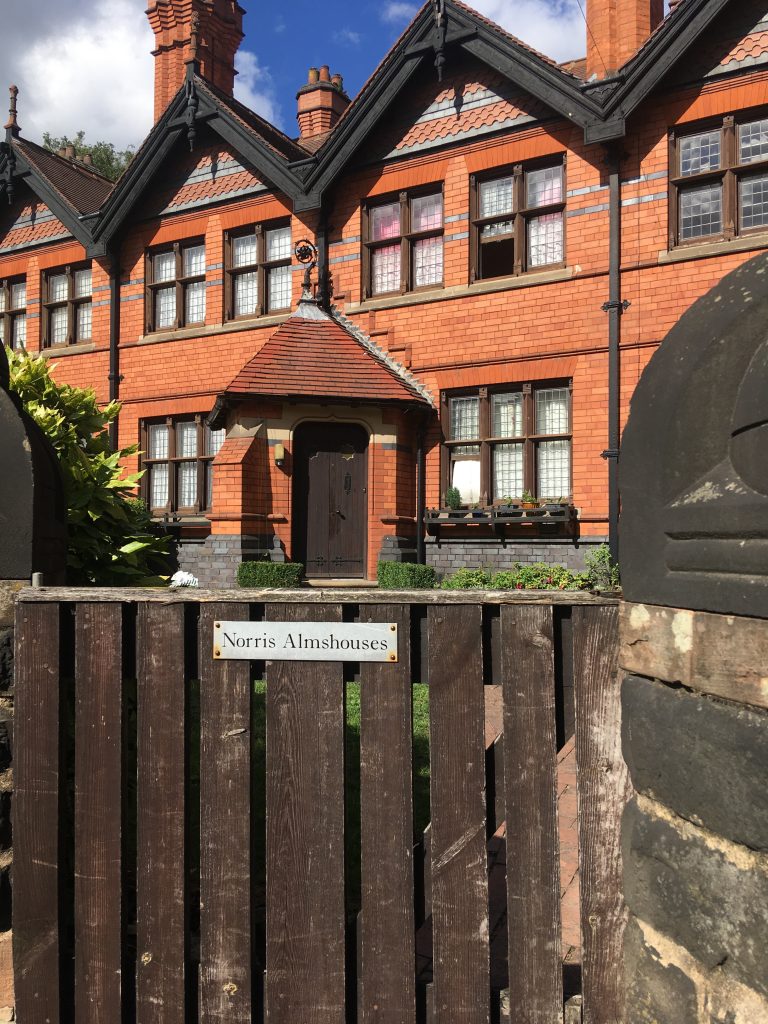
Further up Sherwood Rise, on the end of Berridge Road, we come to The Norris Homes (A56). Described in the catalogue as “Eight Ladies’ Homes”, these almshouses were built by Miss Mary Smith in memory of her brother John Norris in 1893. There are eight one bedroom homes in the development.
The Norris Almshouses (Photo: Lucy Brouwer)
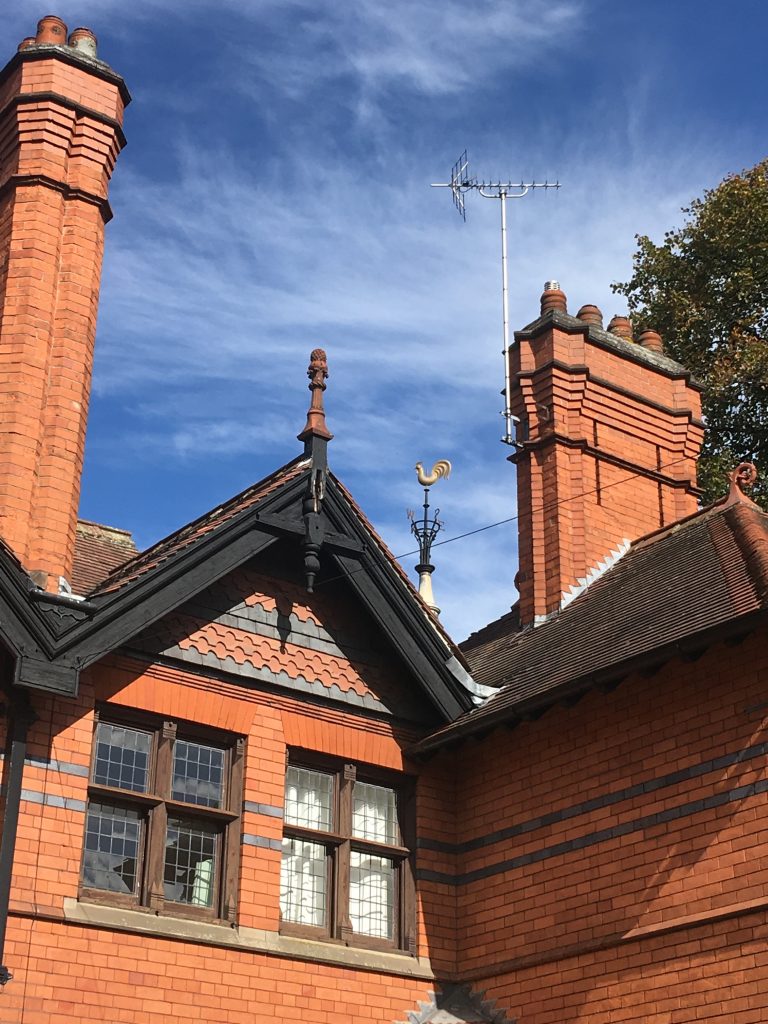
Weathercock, commissioned at restoration in 1991
Sundial, commissioned at restoration in 1991
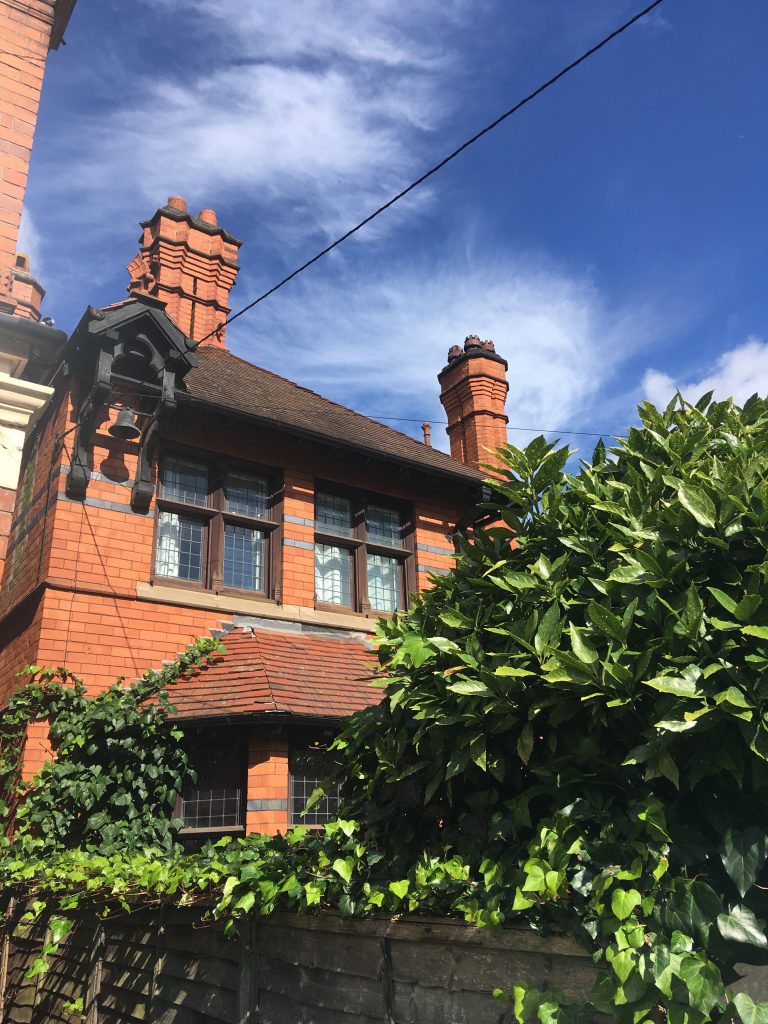
Bell at one corner
Distinctive tall chimneys
Gable detail
The Norris Homes
The Norris Homes are still in use as Almshouses for single women or couples aged over 60 who have lived in Nottingham. The houses were restored in 1991, with the addition of the weathercock, a sundial and a carved dragon.
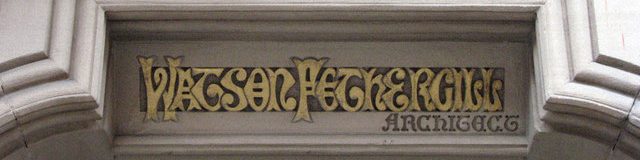
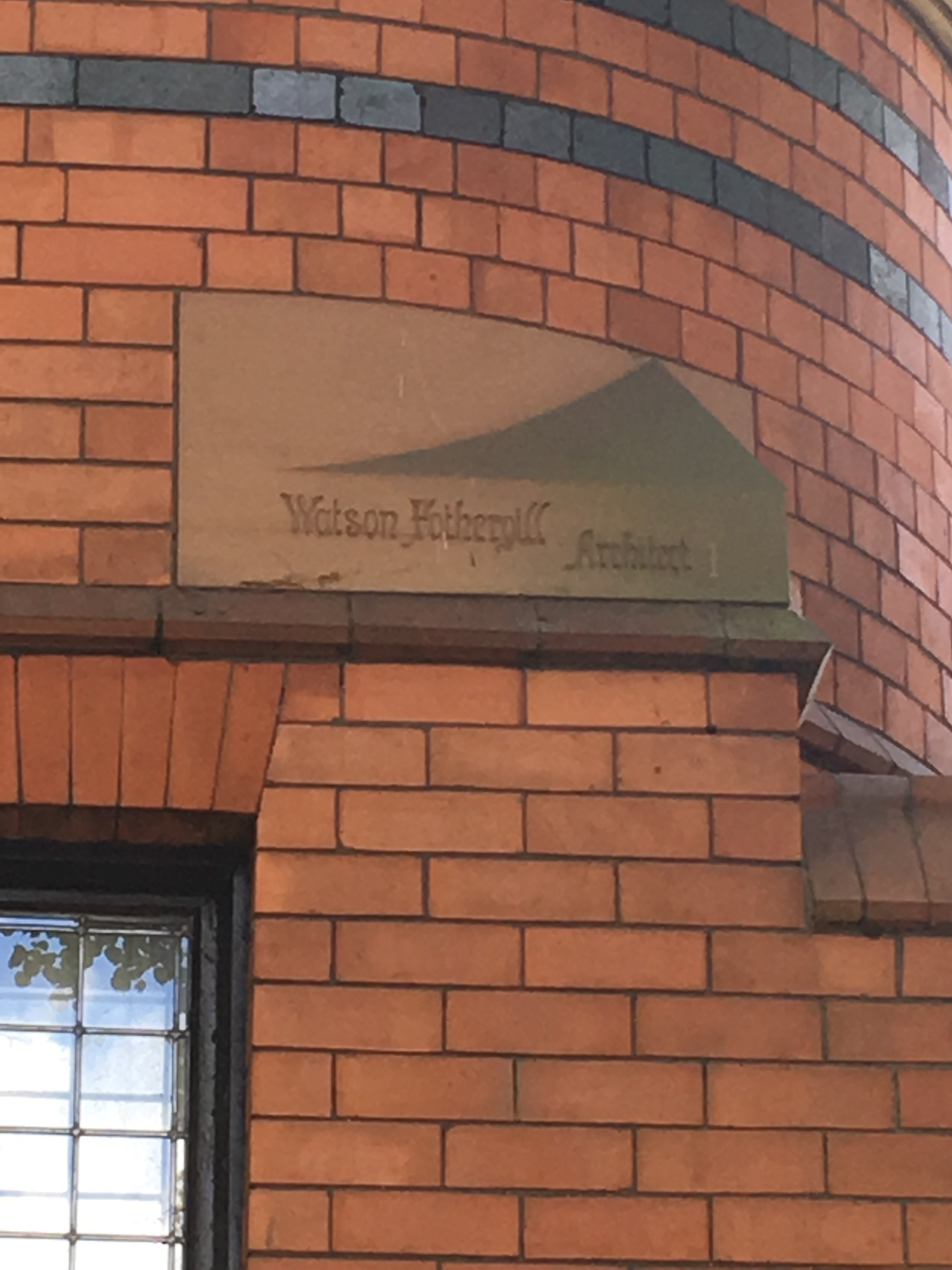
The building is inscribed “Watson Fothergill, Architect”, the first time that his reversed name appears on a structure.
The first time Watson Fothergill’s reversed name was inscribed on one of his buildings.
The client, Miss Mary Smith, of Bluecoat Street, remained a spinster and died in 1909. Fothergill was her executor.
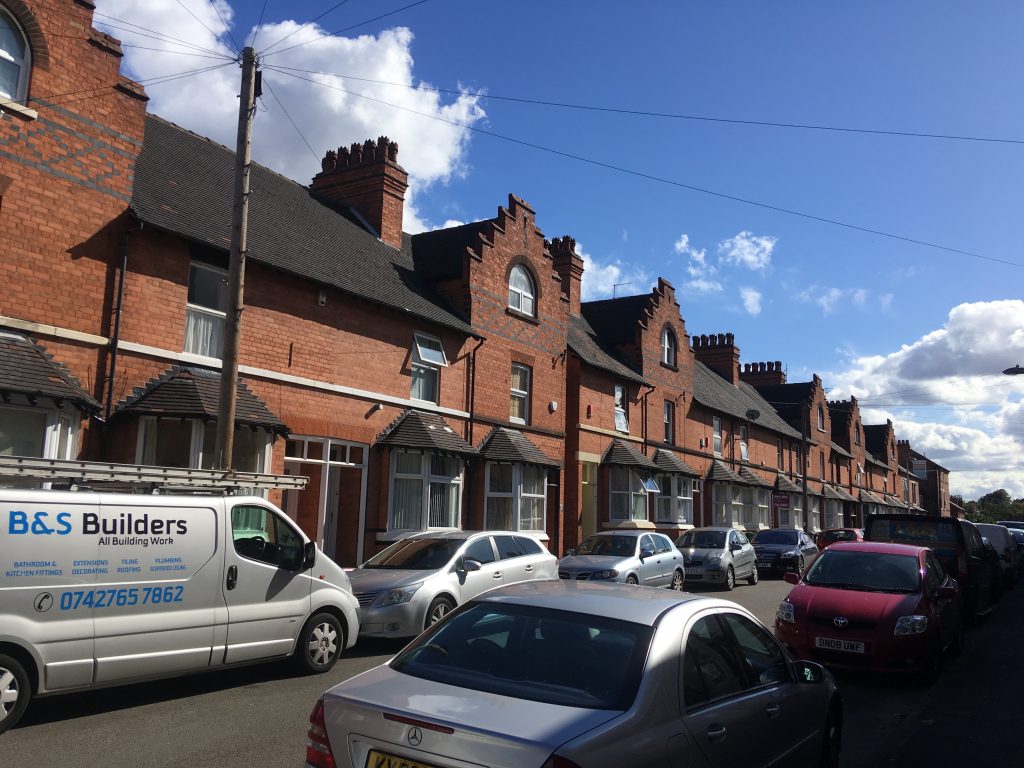
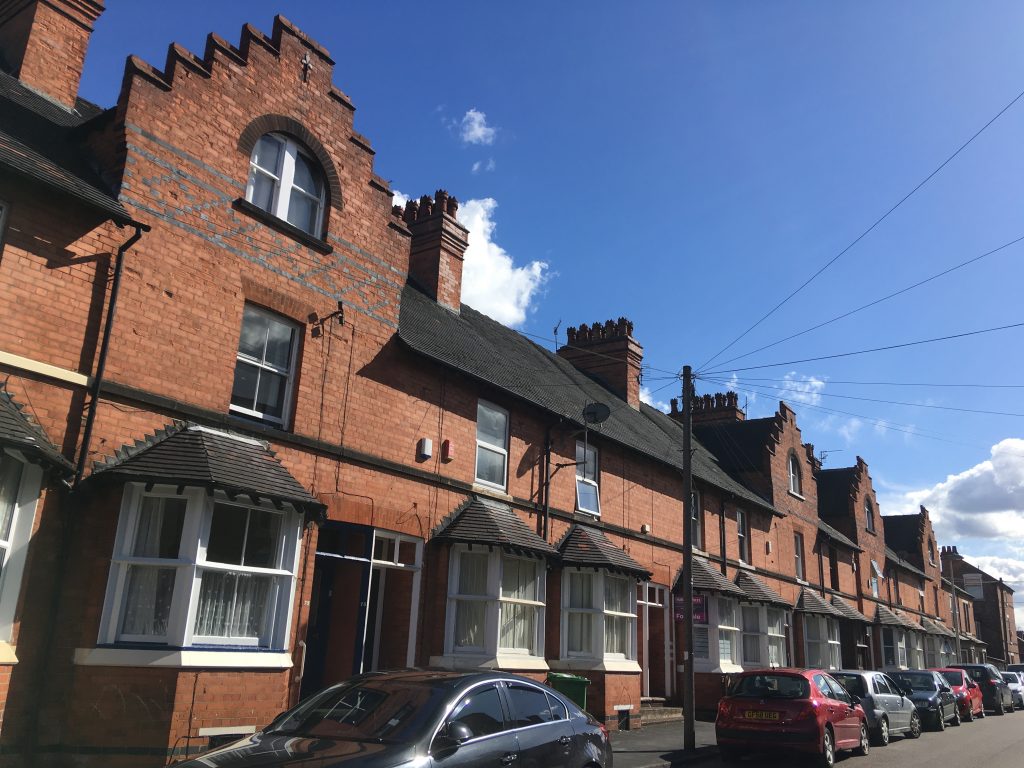
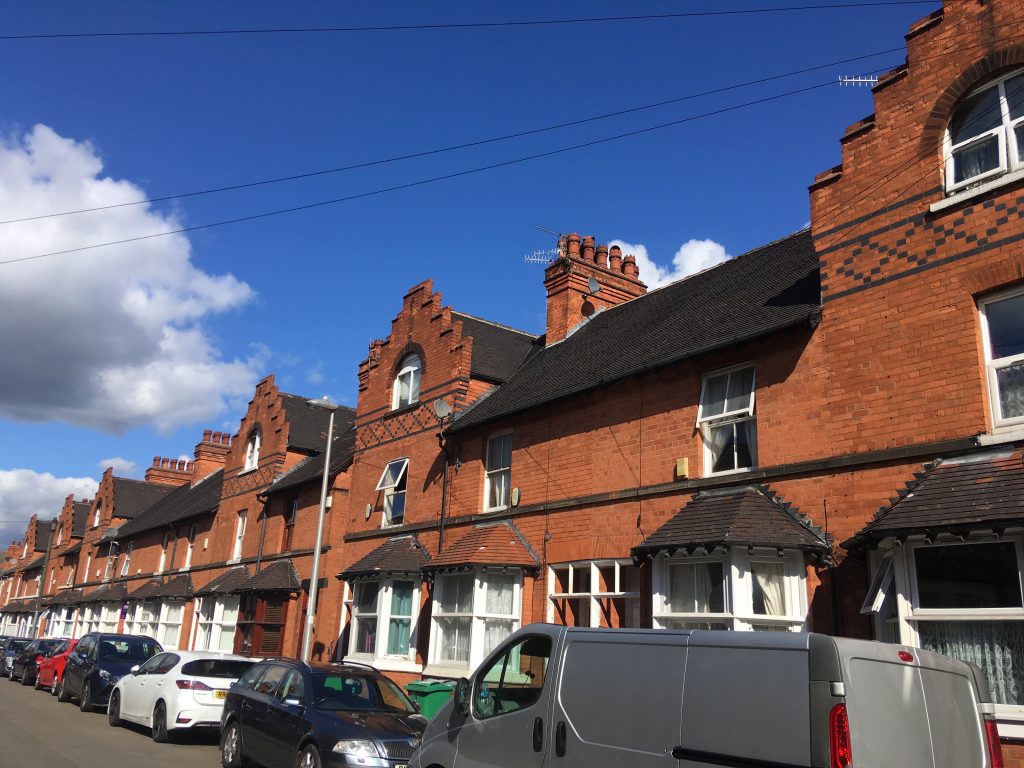
A short walk into the streets off Sherwood Rise leads to Foxhall Road. Here are sixteen houses (A74), for Mr J H Willatt Esq. The planning application was submitted in 1901 and inspections were noted in 1902. The houses are in small terraces of 4 houses each.
Foxhall Road
Foxhall Road houses
Foxhall Road
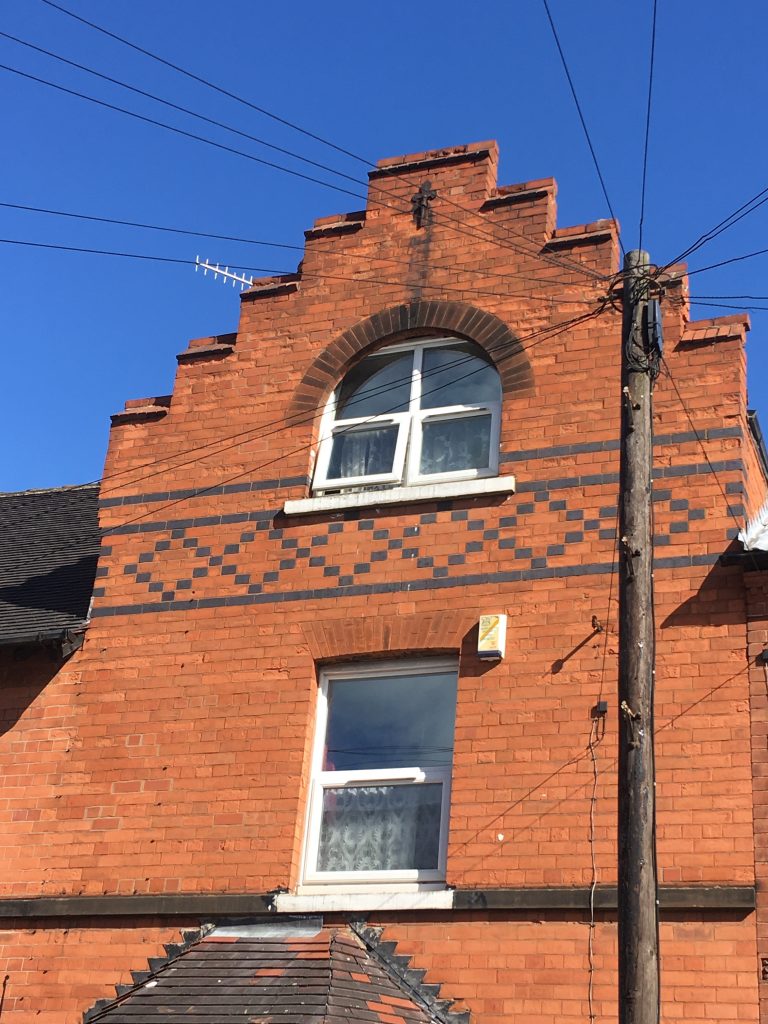
Stepped Gable
The houses stand out from the other terraces nearby, with their stepped gables and a polychrome diamond pattern in the brickwork.
One more installment of this Safari still to come… Meanwhile join me for the latest city centre Watson Fothergill Walks in Nottingham on 30 September 2018 at 10am & 1pm (still a couple of tickets available for 10am).
Starting from Sherwood I decided to explore a few of Fothergill’s buildings on foot… it turned into something of an urban safari. Using Darren Turner’s excellent catalogue of Fothergill’s works as my guide, I wandered down Mansfield Road to get a little closer to some of the houses that remain in the area. (I’ll give the catalogue numbers assigned in the book so you can read along at home…)
Starting from Sherwood I decided to explore a few of Fothergill’s buildings on foot… it turned into something of an urban safari. Using Darren Turner’s excellent catalogue of Fothergill’s works as my guide, I wandered down Mansfield Road to get a little closer to some of the houses that remain in the area. (I’ll give the catalogue numbers assigned in the book so you can read along at home…)
Firstly, what are thought to be be the final works to come out of Fothergill’s office before his retirement in 1906, a terrace of 4 three storey houses on the corner of Mansfield Road and Bingham Road (A77). The date stones are clearly marked but otherwise these aren’t in great condition.
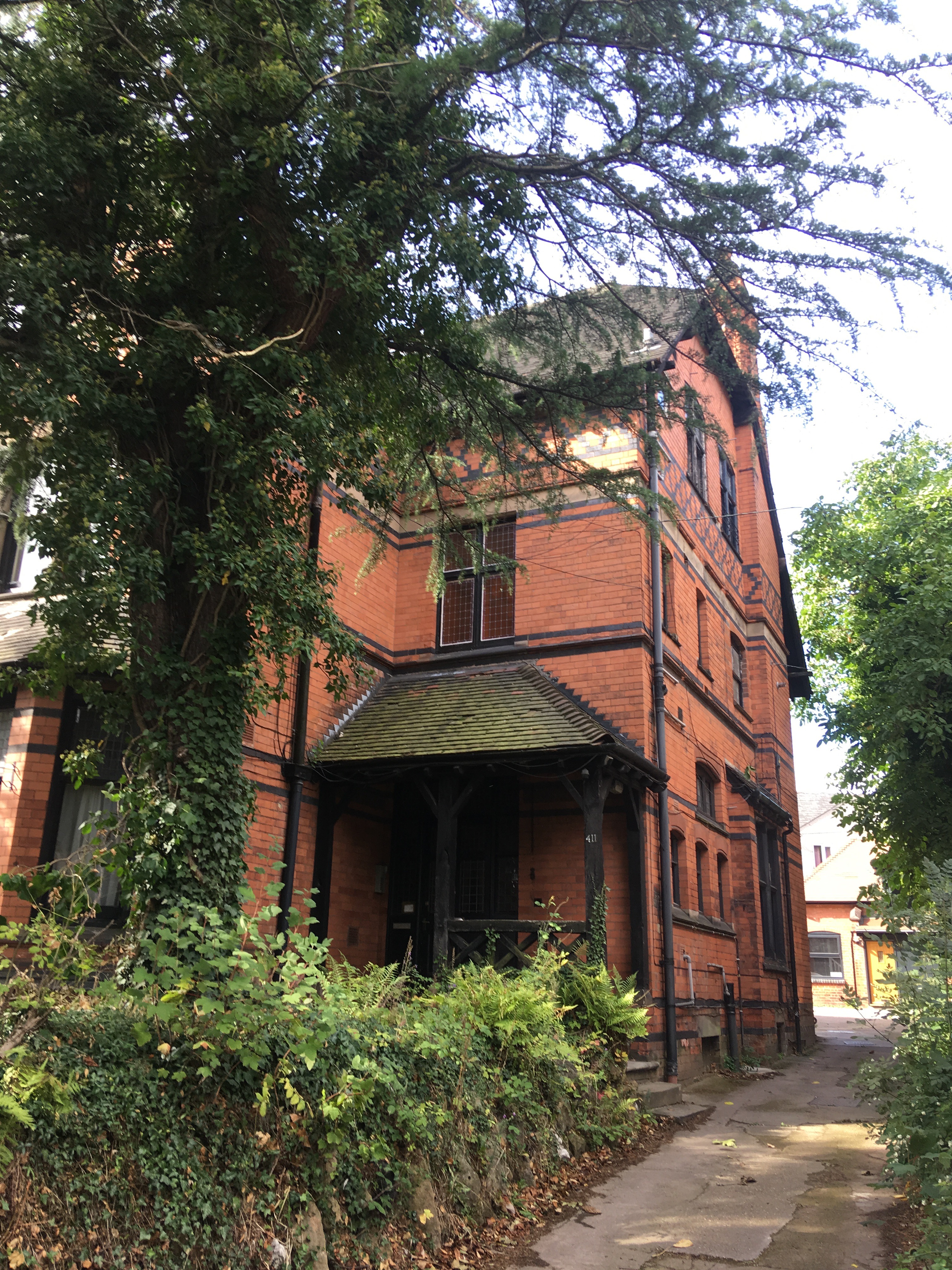
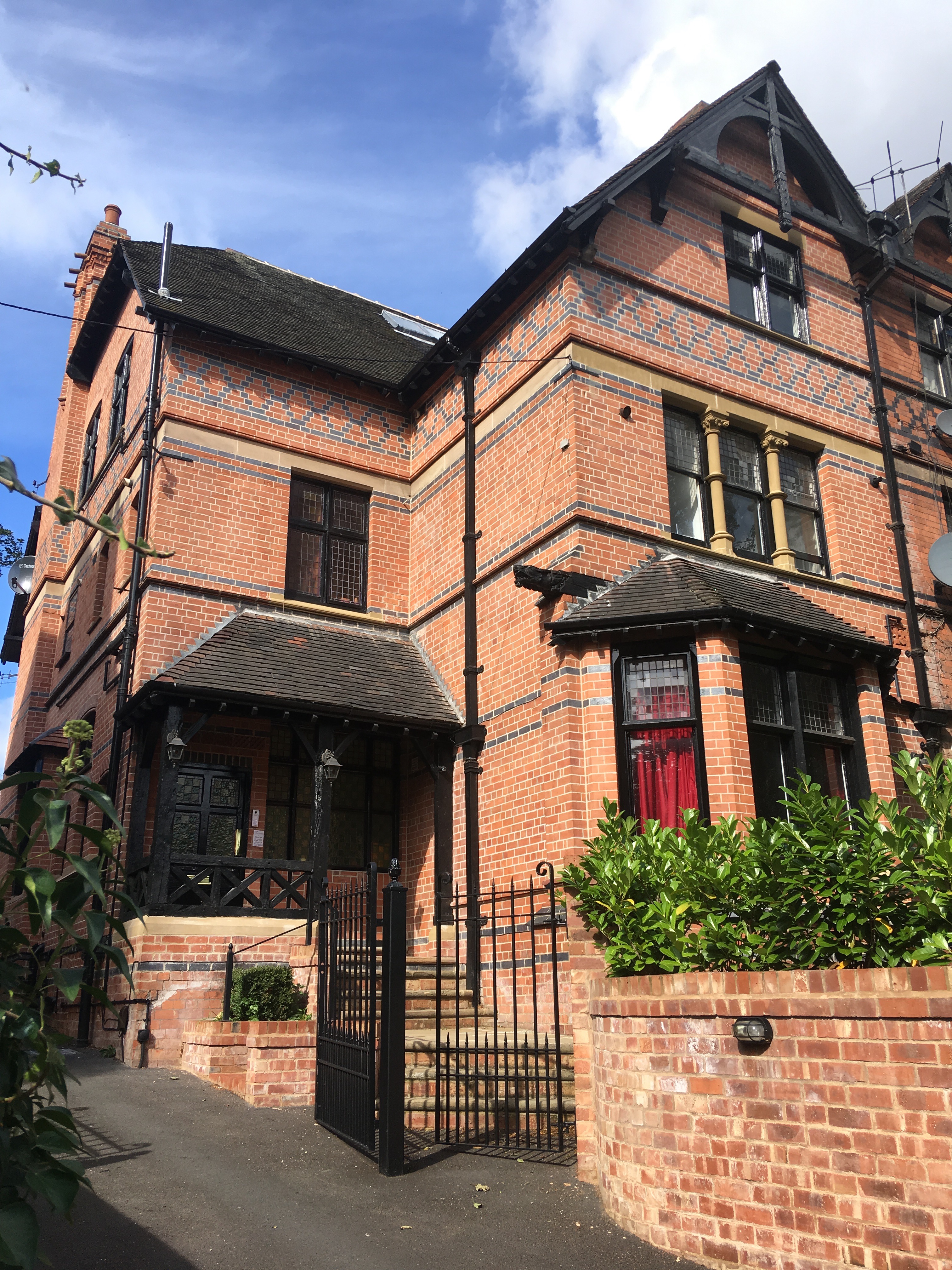
Further down at 409 & 411 Mansfield Road, (A46) is the earlier pair of three storey villas built for Mr JJ Adams in 1886, these are more recognisably Fothergill in look and one has been nicely cleaned. The polychrome brick patterns and the black wooden details are the giveaway. There are a few tiny gothic touches in the windows too that mark them out.
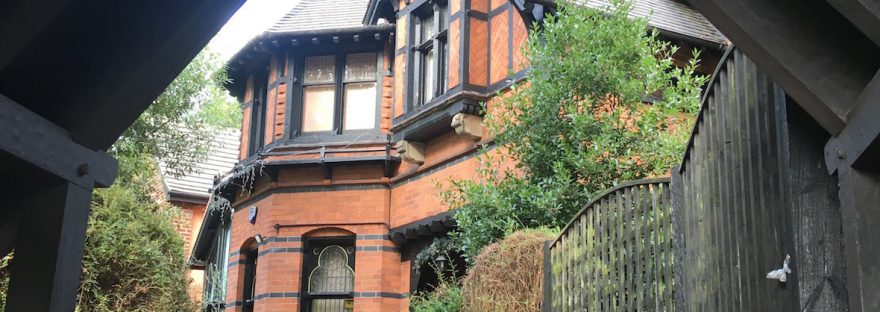
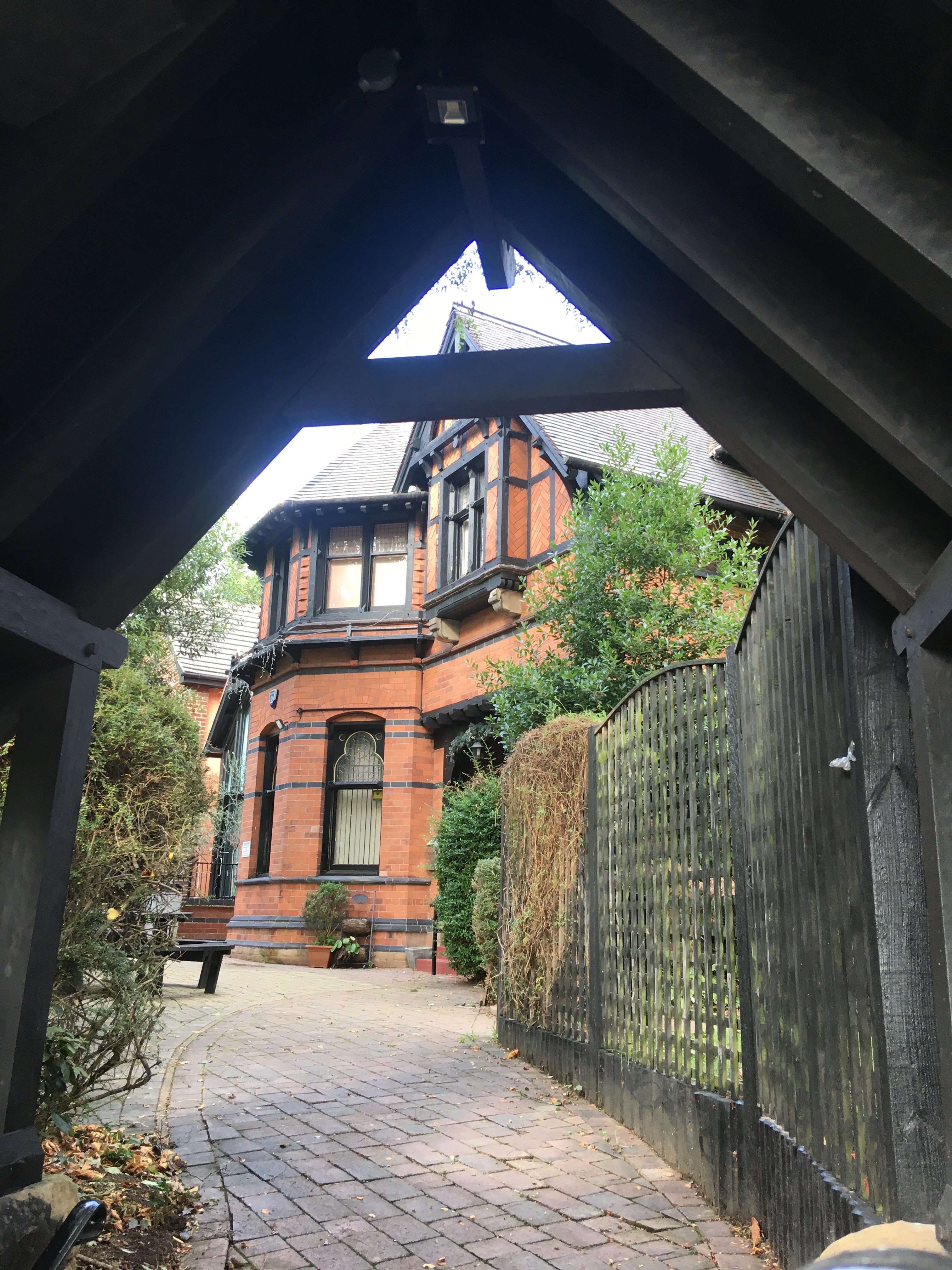
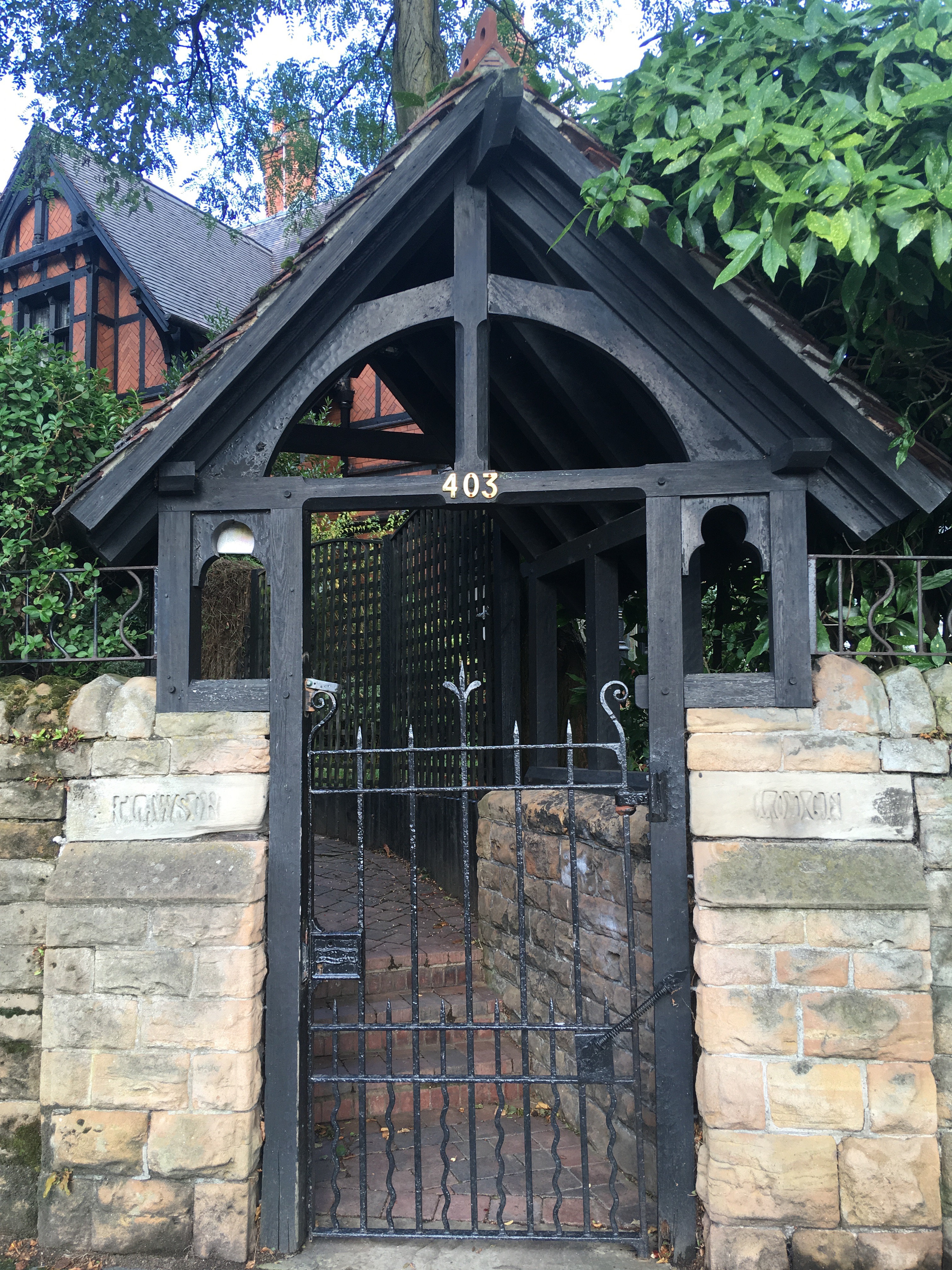
Next on this trail is the impressive Clawson Lodge, now the Ukrainian Centre (A43). A gentleman who was having a tea break out on the drive invited me in for a closer look, and I nervously snapped a couple of photos of the front of the house. Clawson Lodge was built for Mr Francis Adams Doubleday, the lace manufacturer for whom Fothergill also built Milbie House on Pilcher Gate (as visited on the Watson Fothergill Walk).
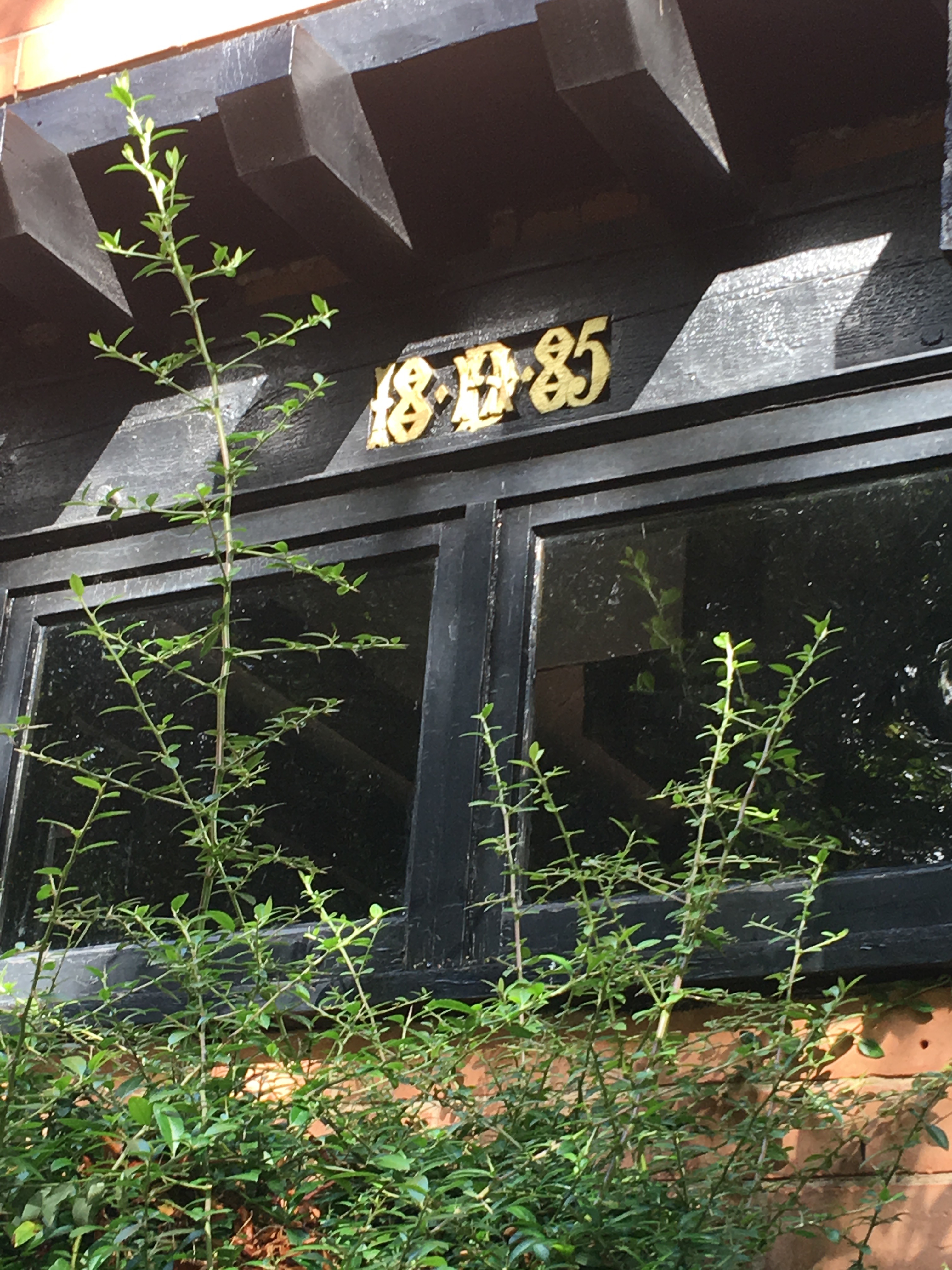
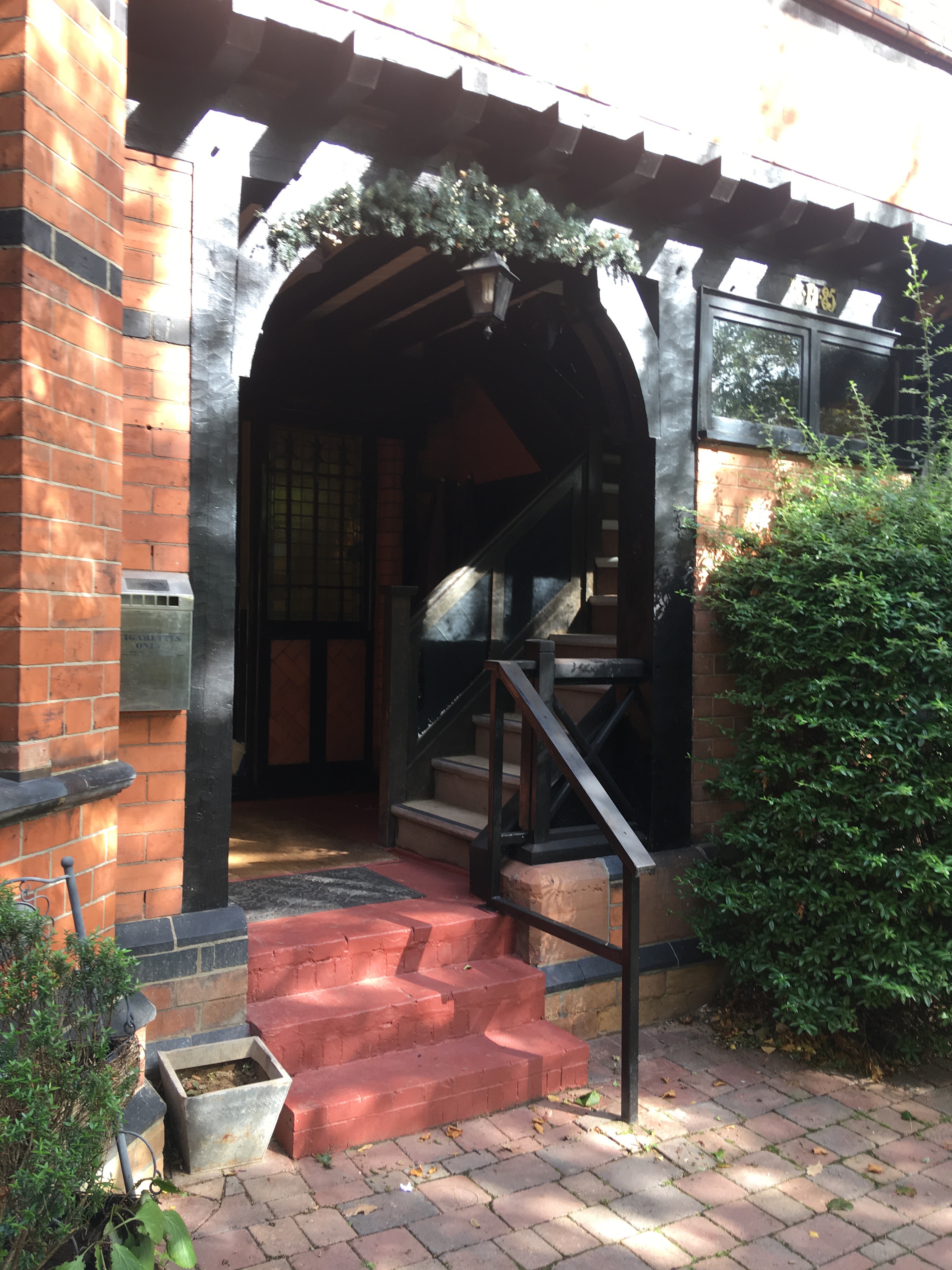
Clawson Lodge was built in 1885, when Fothergill was still Fothergill Watson, working out of his office on Clinton Street. The lych gate and garden wall are also included on the grade II listing of the property. This house already shows some features that would become instantly recognisable as Fothergill touches, including striking black wooden gables with barge boards and brick nogging.
Clawson Lodge through the lych gateLych gate and house name on wallF. A. Doubleday’s initials and date on porchPorch at Clawson Lodge (Photos: Lucy Brouwer)
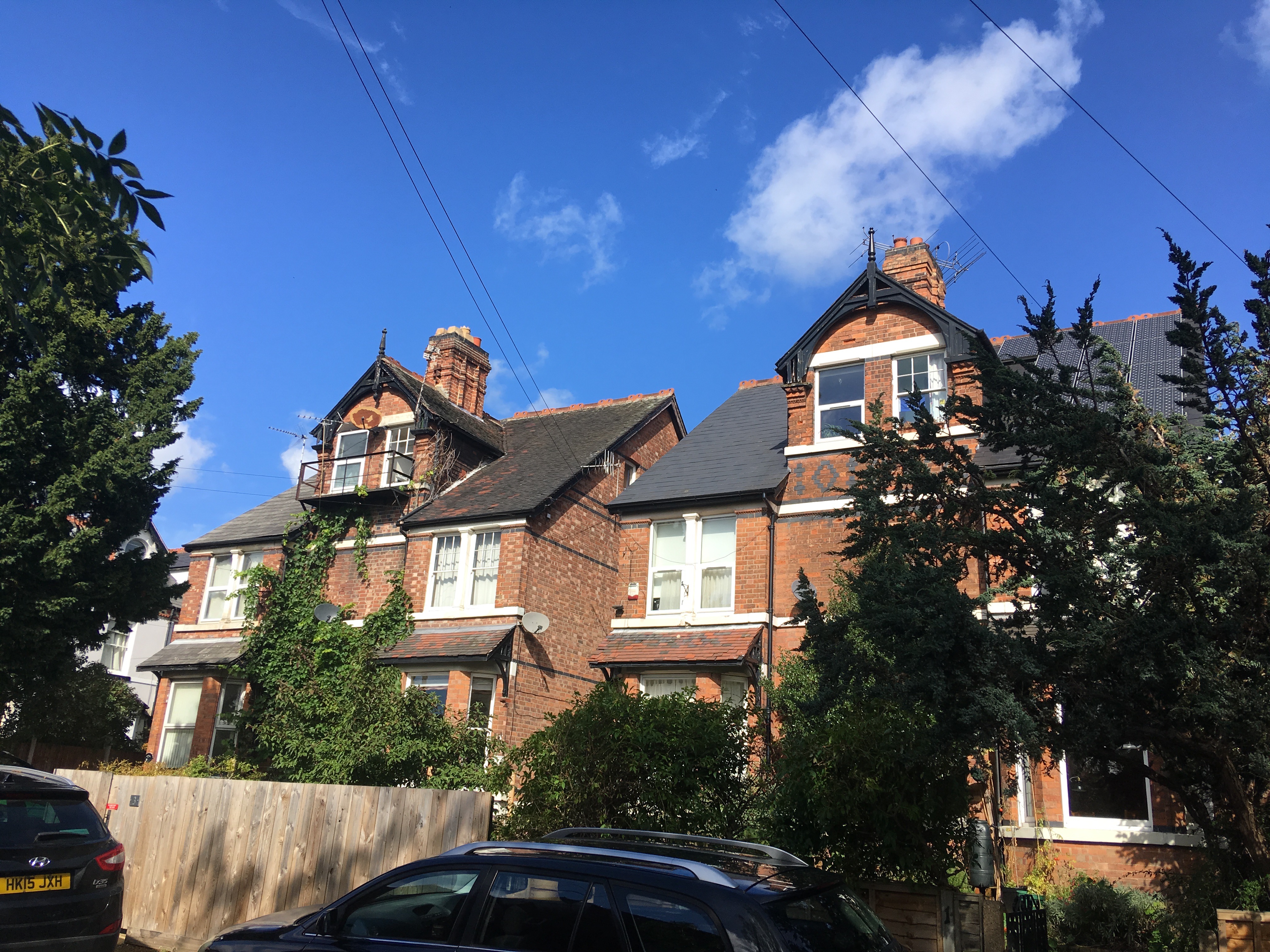
A little further into Carrington, we find Yew Tree Avenue, now a rough track leading to two pairs of semi-detached villas built in 1881, possibly the earliest Fothergill houses still standing in Nottingham (A33). These four houses now seem to have been made into flats. They were originally built for Mr Luke Scatergood. There are some Fothergill hints, the brick patterns and the gabled dormers, but his style isn’t yet quite fully formed.
Yew Tree Avenue (Photo: Lucy Brouwer)
Previously on the other side of Yew Tree Avenue, Fothergill had built another pair of villas (A31, 1881) for Mr Thomas Guy. But these have been demolished and the site is now a carpark/ car dealership. More Fothergills of Nottingham in the next installment!
Meanwhile the next walks, touring the Watson Fothergill buildings of Nottingham city centre, take place on 30 Septmber 2018. There are the last couple of tickets left for the 10am here: EVENTBRITE
A big thank you to everyone who turned out for the second Heritage Open Days tour, Beauty in the Details, on Sunday (16 September 2018). Several people have asked if there will be more short tours like this and I’m looking at making it a more regular thing. Meanwhile if you’re interested in the architecture (and history) of Nottingham’s Lace Market, and would like to commission a short tour, please contact me, Lucy Brouwer. I’m interested in exploring more opportunites and formats. More news as it happens!
Thanks to Katie at Debbie Bryan for the photo.
Meanwhile there’s a double bill of Watson Fothergill Walks on 30 September (just one ticket left at time of writing).
I’m hoping to fit another walk in in October… sign up to the mailing list for news of future dates.
Due to the previous walk being sold out, I’ve added another walk in the afternoon on 30 September 2018. Meet for 1pm at Nottingham Tourism Centre, tickets are £12 each and once again the walk will finish at Debbie Bryan with tea or coffee and cake included. Please let us know if you have any special dietry requirements (Vegan, De-caf, Gluten-Free etc all available.)
The 1pm walk is now full but there are 2 tickets open on the 10am HERE
I’ve been asked about accessibility for wheelchairs, mobility scooters and prams – The route is all on pavements and on pedestrian areas. There are some steps into Debbie Bryan’s premises but if these are unmanagable, we can arrange tea outside or help with your needs. Disabled toilet facilities are available at The Kean’s Head (a minute from Debbie Bryan on St Mary’s Gate.). If you have any queries – please email via the Contact page.
Tickets for 30 September are limited so please book in advance. If you wish to pay on the day please email to reserve a place.
For news of future events pleae sign up to the email list – you can unsubscribe at any time.
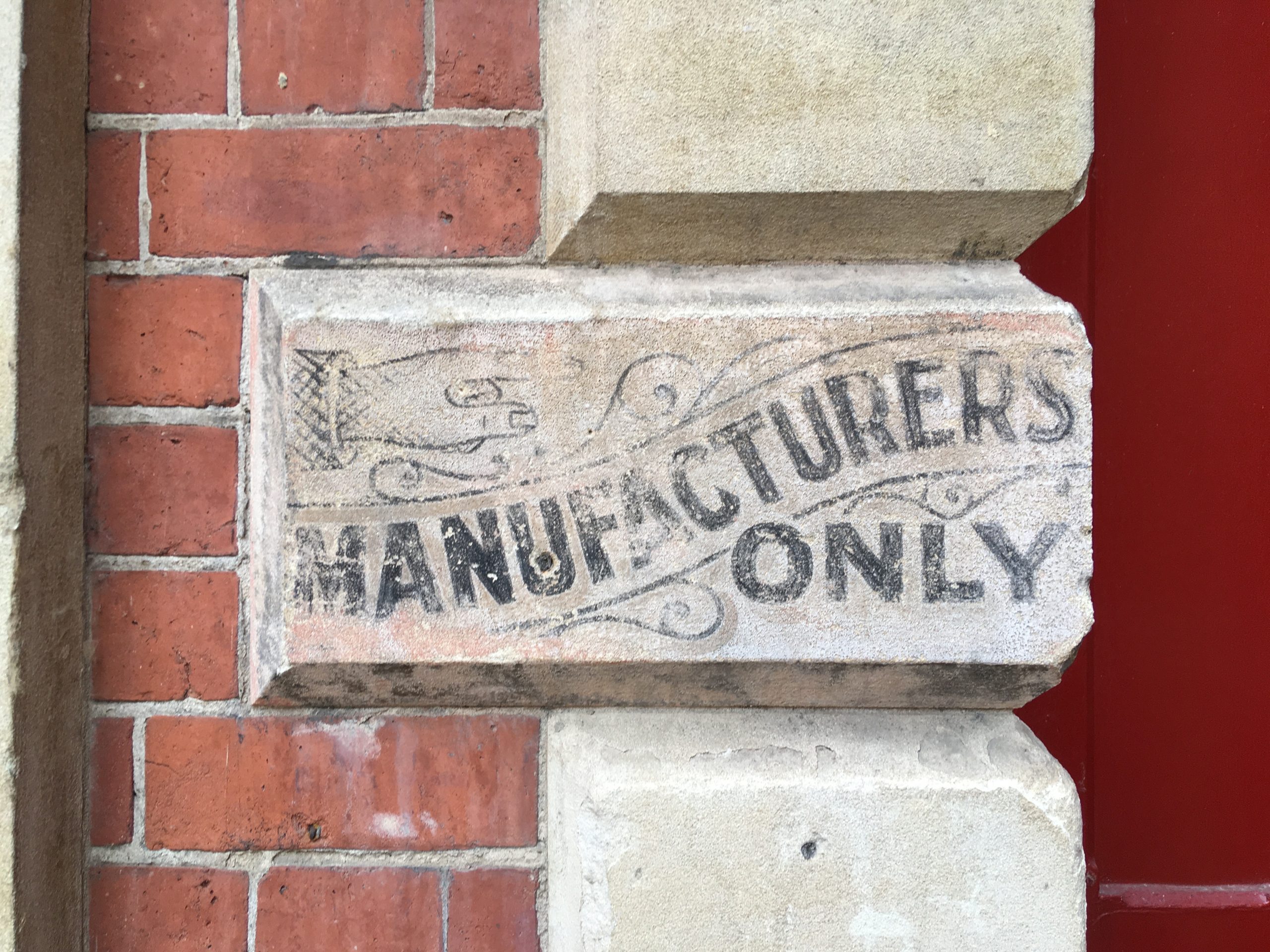
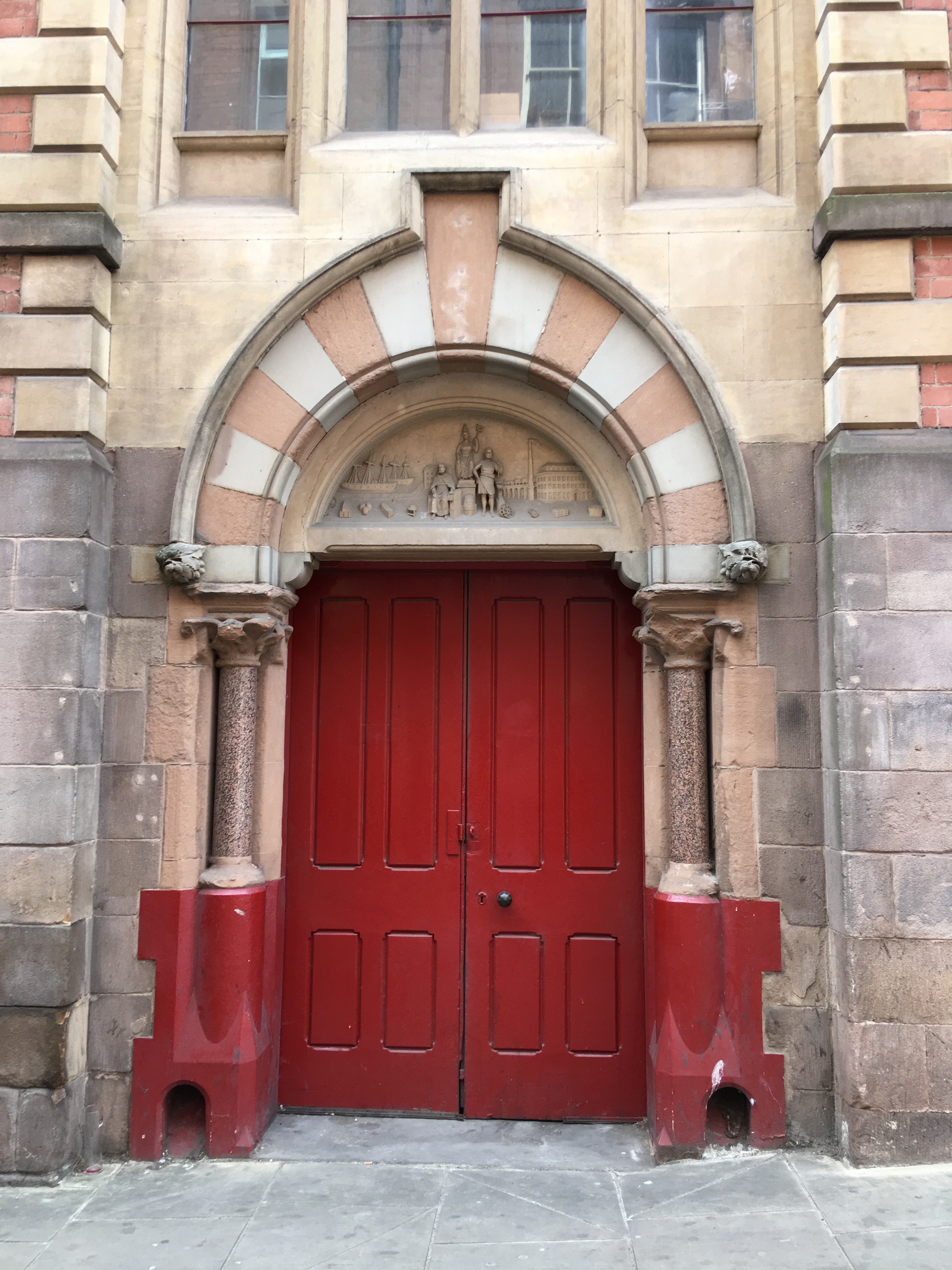
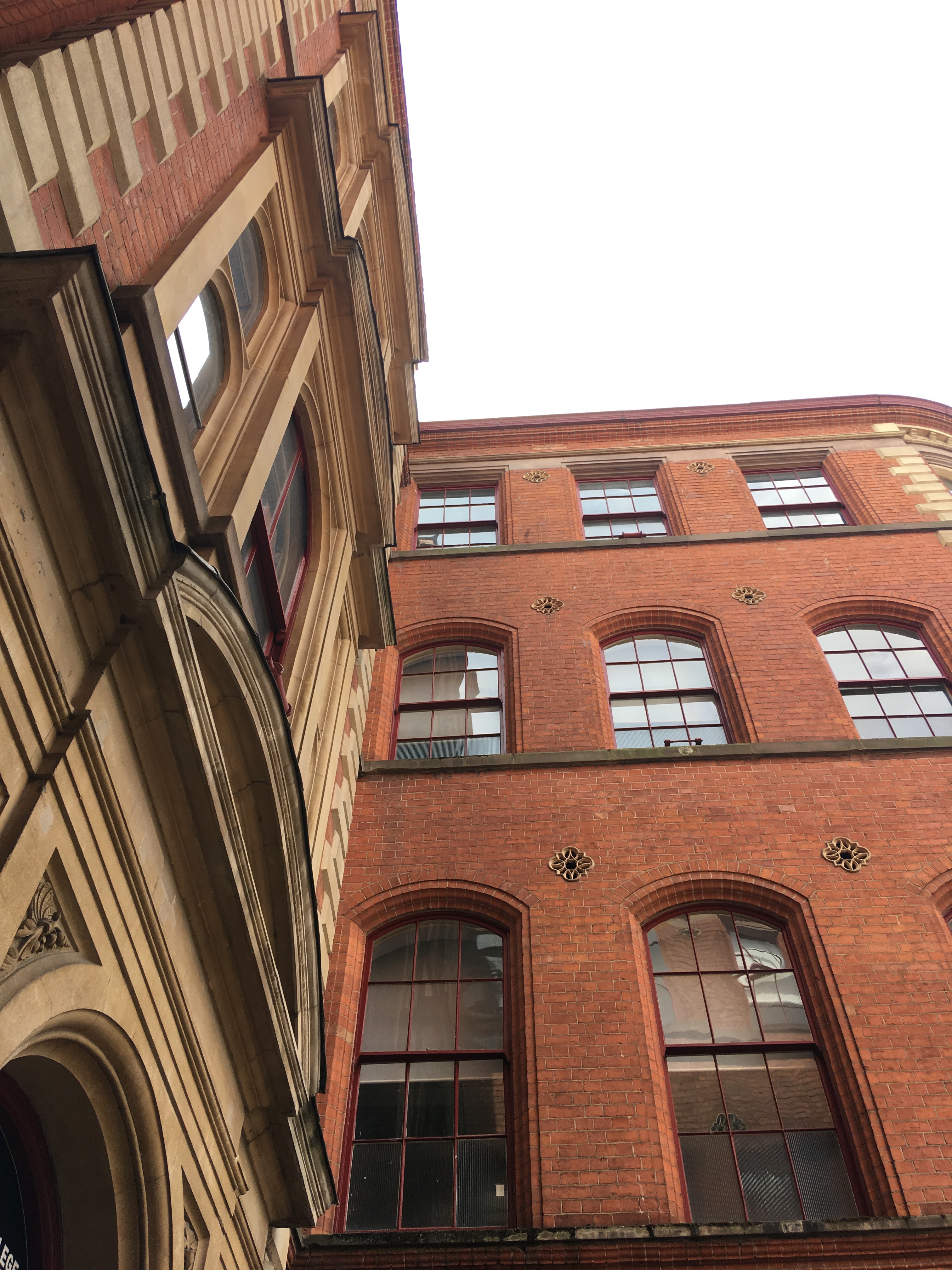
Taking a look around St Mary’s Gate in preparation for my Heritage Open Days walks, I started to notice things about the buildings that I’d never noticed before. How the modern buildings mirror the shapes of the Victorian ones, how the details on each phase of the Adams Building are subtly different, how clean the buildings are compared to when I first saw them. Taking more time to look around, I have noticed details that, when you’re rushing from A to B you often miss.
Door on Warser Gate (Photo: Lucy Brouwer).
Back when I first visited Nottingham as a kid, probably some time in the late 1980s, the Lace Market seemed a rather dark and neglected hinterland. Rarely would a visit into “the citeh” venture beyond the Market Square (or if I’m honest, beyond the food court in the Victoria Centre and later the racks of Selectadisc on Market Street).
Then, the old buildings were dirty, sooty, looming presences with shut up shops and the last remnants of the textile industry.
Returning to Nottingham after only sporadic visits through the 1990s and early 2000s, the conservation of the buildings is the most noticable feature. The colours of the bricks and stones catch the light on sunny days, the details are visible as they might have been when they were first built.
The Adams Building from St Mary’s Gate (Photo: Lucy Brouwer).
Learning about the history of the place and how much it has changed has made me see the beauty in the details.
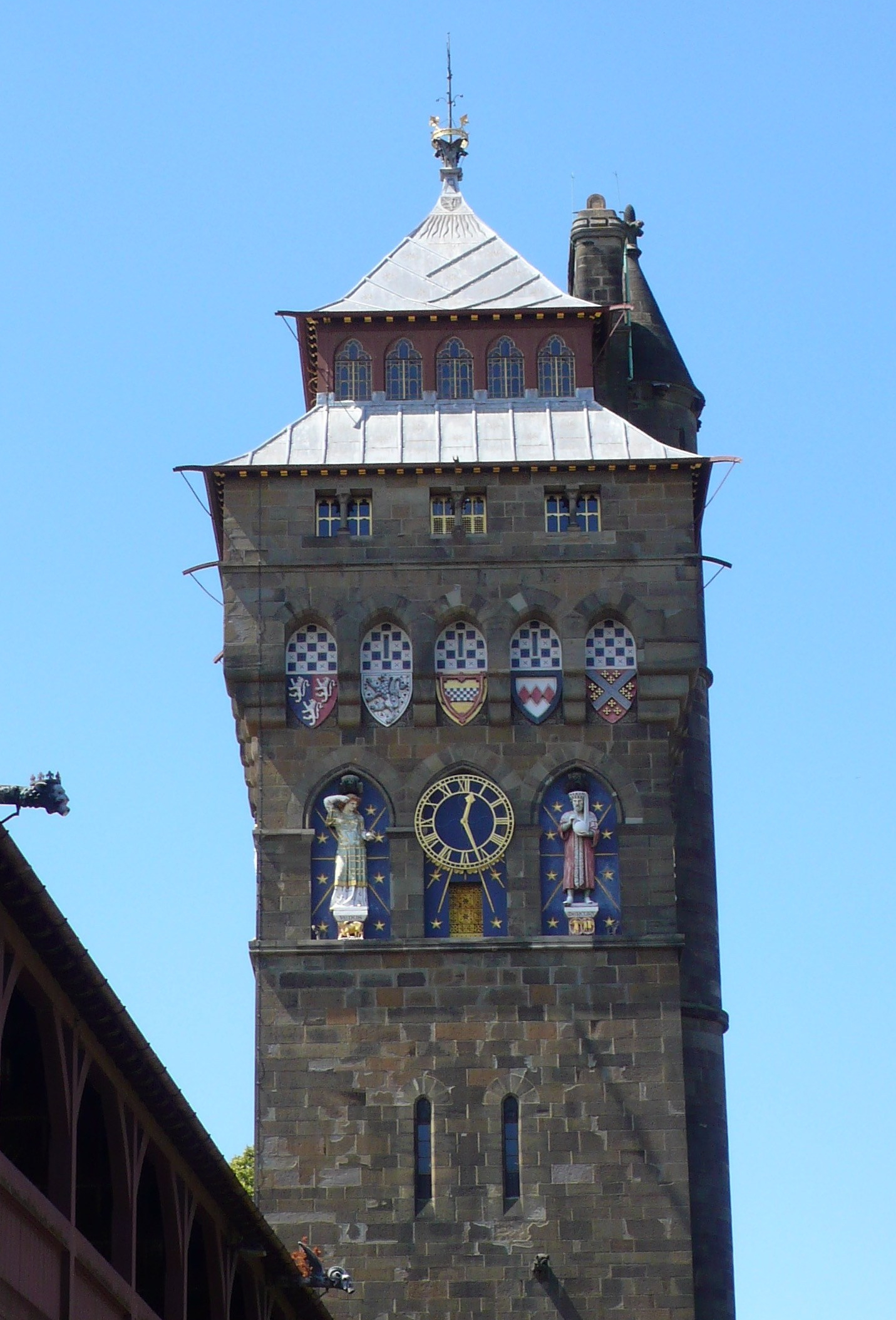
I recently visited Cardiff Castle to see William Burges’ Clock Tower and the fantastical interiors he designed for the Marquess of Bute.
Exterior of the Clock Tower at Cardiff Castle. (Photo: Lucy Brouwer).
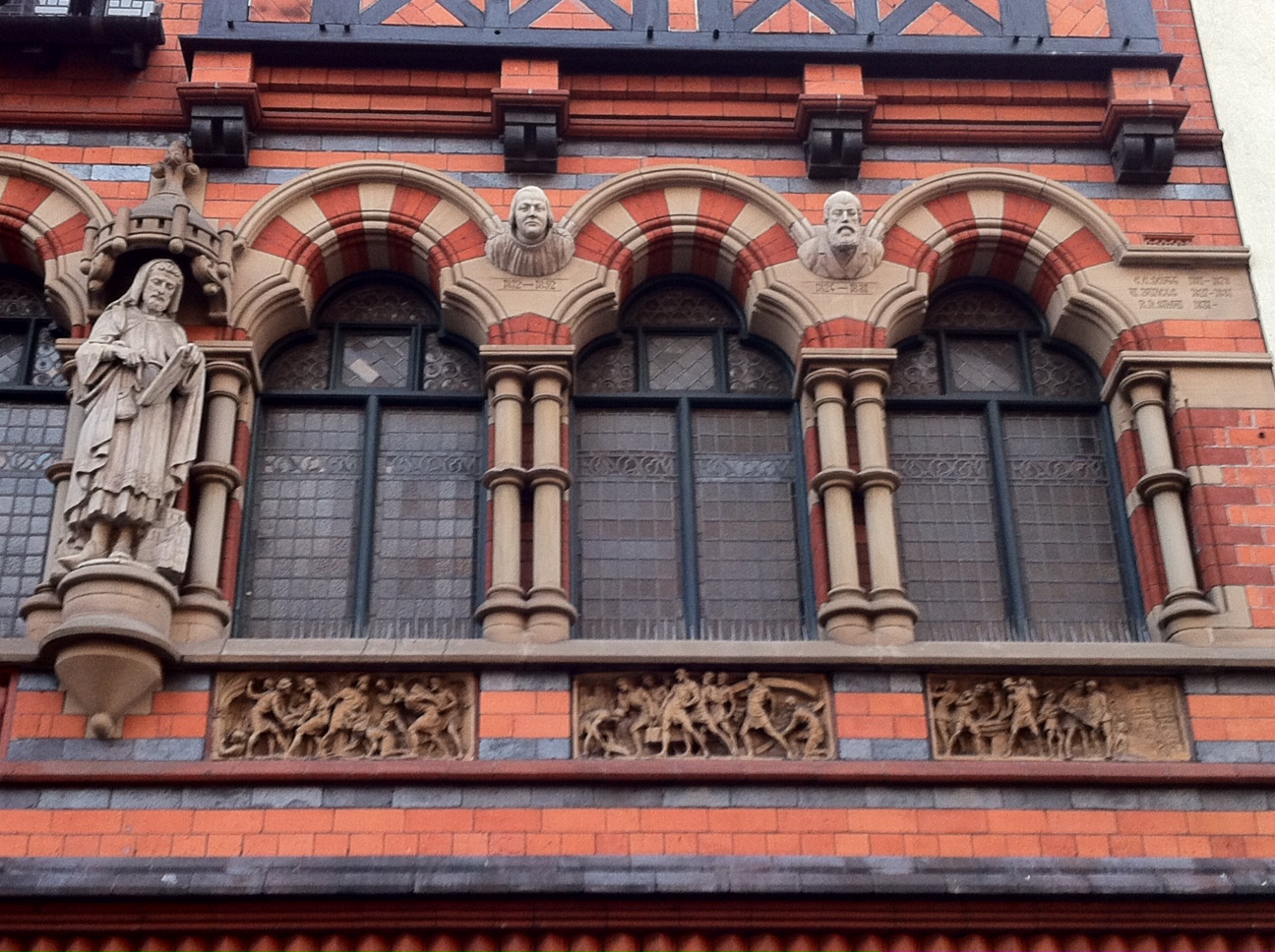
William Burges (1827-1881) was one of Watson Fothergill’s great influences, his name and dates being one of those carved onto the front of Fothergill’s office in George Street.
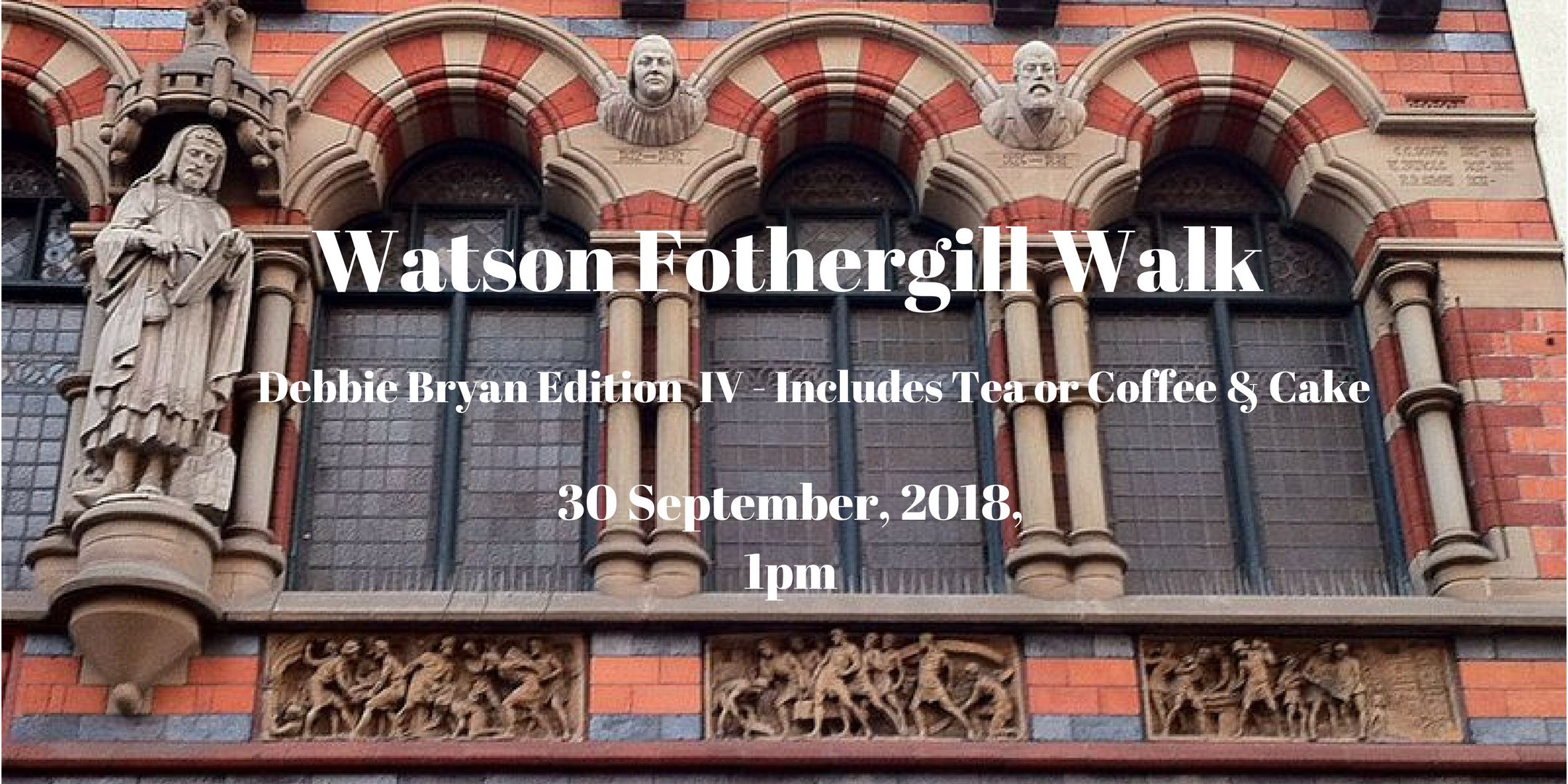
Watson Fothergill’s architectural heroes appear on the front of his office on George Street, Nottingham. The busts depict Augustus Welby Northmore Pugin and George Edmund Street. To the right: the names and dates of George Gilbert Scott, William Burges and Richard Norman Shaw. Fothergill himself is perhaps the inspiration for the medieval architect on the left. (Photo: Wikimedia Commons, Andrewrabbott).
William Burges was perhaps the greatest of the Victorian “art-architects” who sort to re-establish the architectural and social values of a utopian Medieval England. His work stands as the apex of the Gothic Revival, along with the work of the Pre-Raphaelites and it heralds the Arts and Crafts movement.
In Burges’ short but illustrious career, some of his most spectacular work was done for the “richest man in Victoria’s Empire”, the 3rd Marquess of Bute. In particular his Clock Tower at Cardiff Castle, and the lavish interiors that he produced in the tower and in the main building.
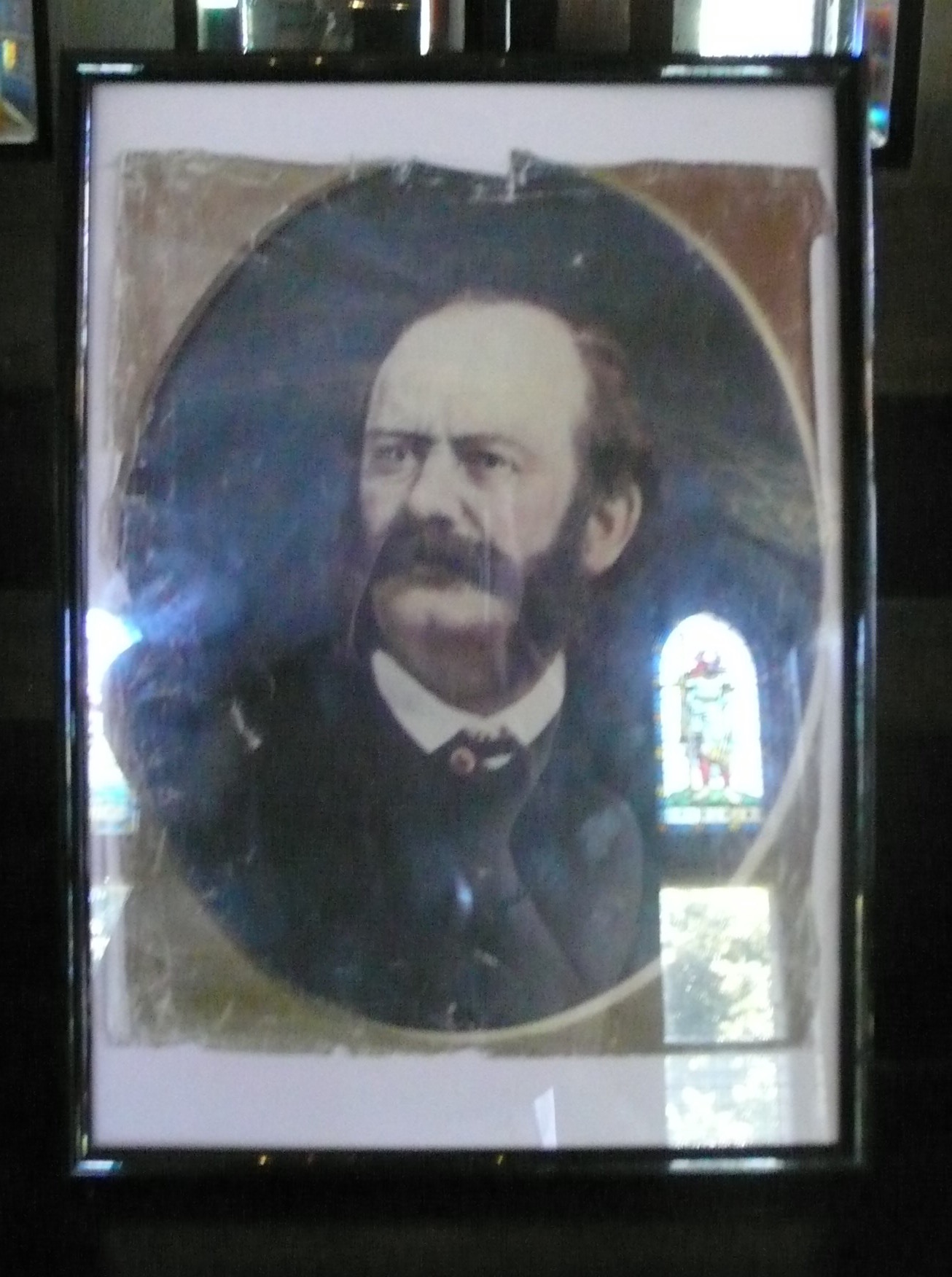
William Burges, photo portrait to be seen in the Winter Smoking Room of the Clock Tower, Cardiff Castle. “Ugly Burgess who makes beautiful things… isn’t he a duck,” wrote Gwendoline, Marchioness of Bute.
Burges was an eccentric genius, with a wild imagination fueled by smoking opium. He produced architecture, furniture, jewellery and objects which Bute’s wealth was able to indulge on the highest level.
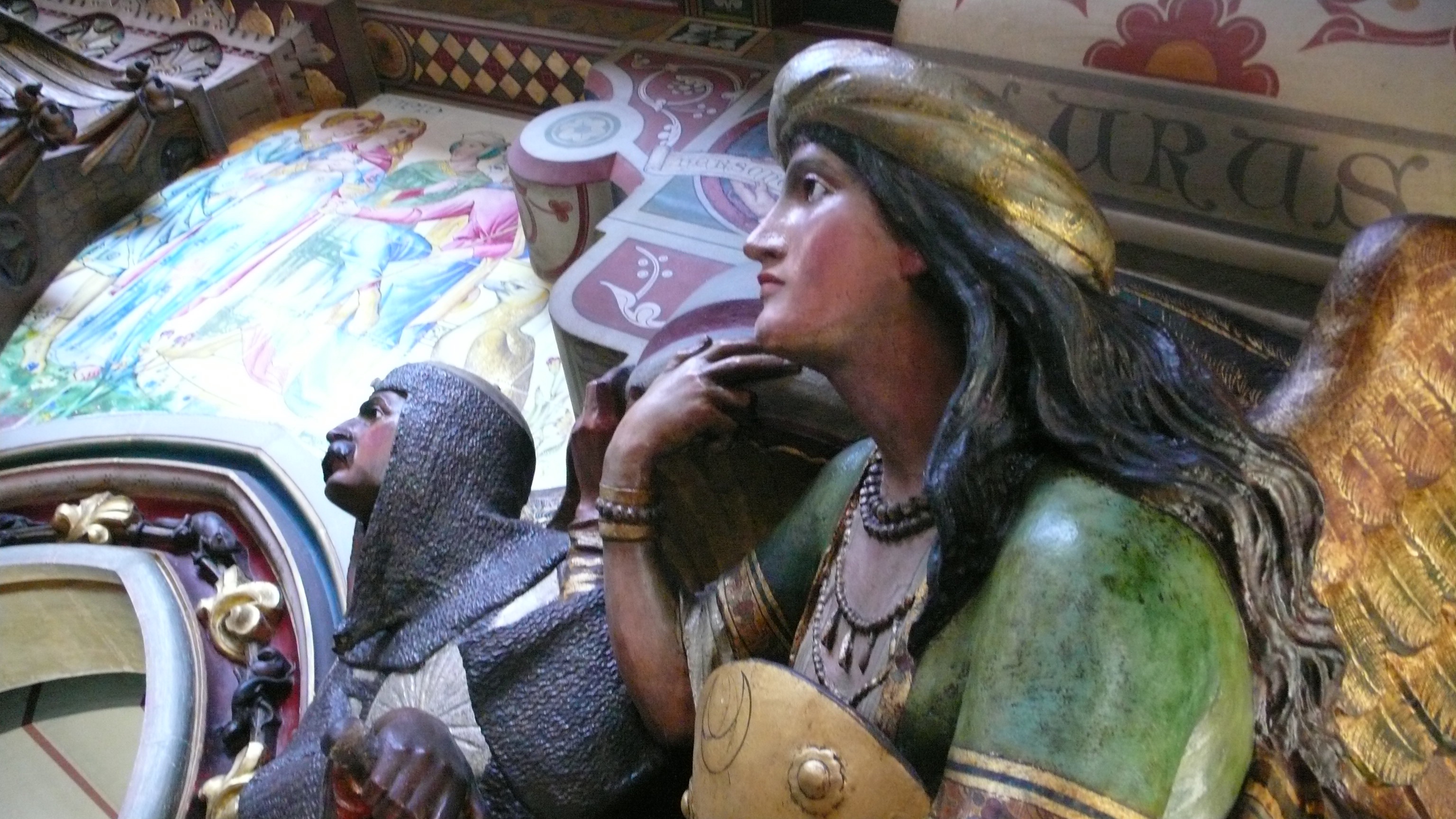
The Clock Tower contains two smoking rooms, for winter and summer, all sumptuously decorated in rich colours.
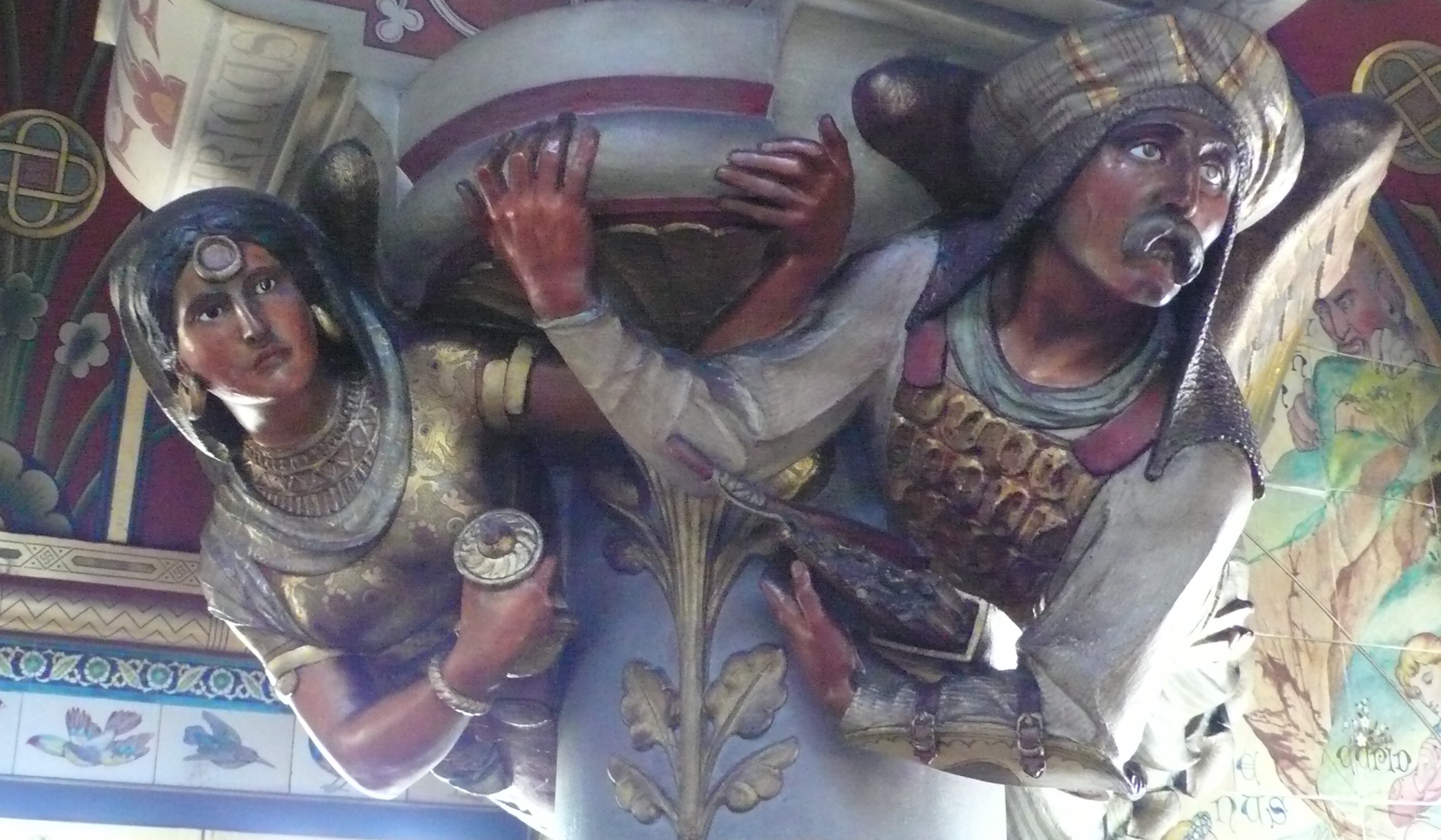
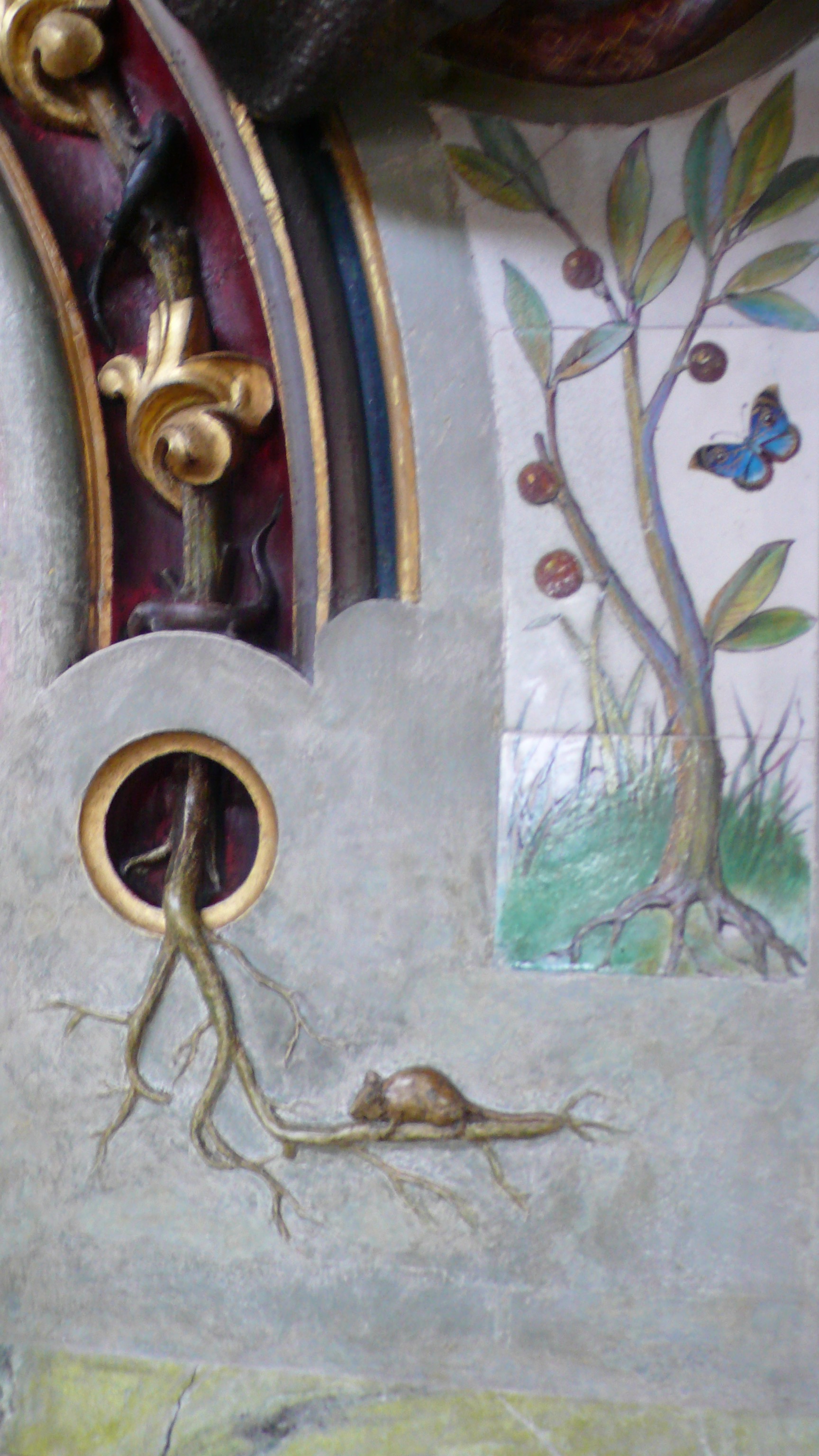
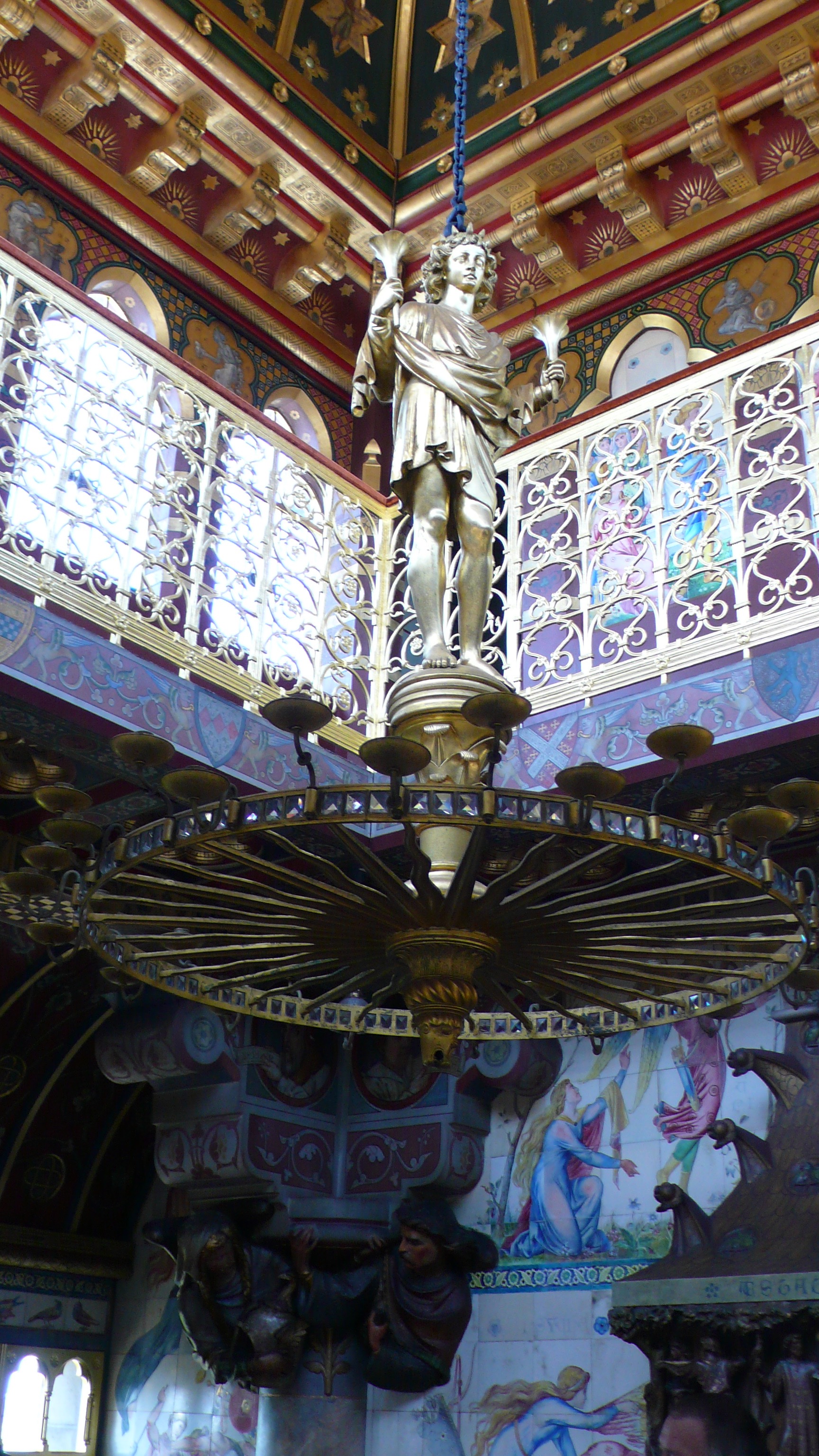
Figures of the Four Winds, Summer Smoking RoomFigures of the Four Winds, Summer Smoking Room.Every inch is covered in details, Summer Smoking Room.Lamps to light the Summer Smoking Room. (Photos Lucy Brouwer.)
See more of Burges’ work for Bute in this documentary on BBCiPlayer.
Burges’ influence on Fothergill can be seen in the animals and mythic creatures he attaches to his buildings, as well as the Gothic Revival flourishes that became part of his architectural style.
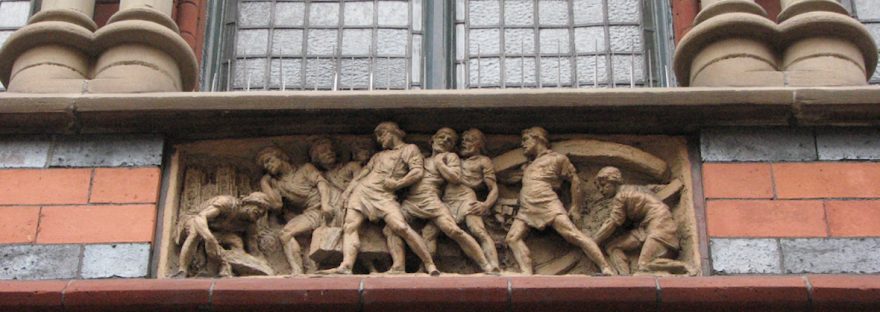
One of the most interesting discoveries I’ve made while researching the buildings of Watson Fothergill is the identity of the sculptor of the terra cotta panels on two of his Nottingham city centre buildings.
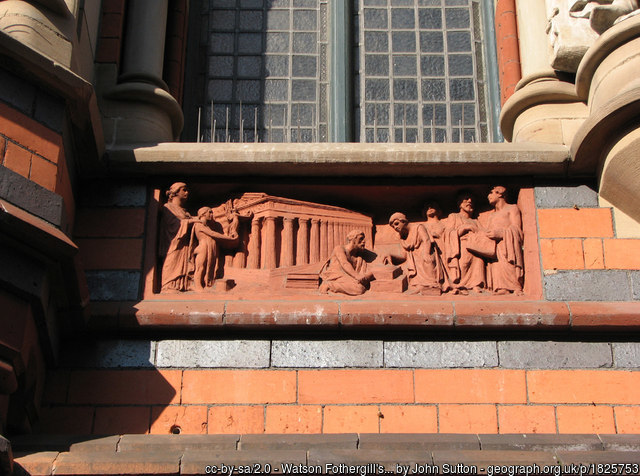
It turns out that the panels on the Parliament Street side of Furley & Co. grocers (now Lloyds Bank) and Fothergill’s Office on George Street were both created by Benjamin Creswick (1853-1946).
Creswick was born in Sheffield in 1853, the son of a spectacle frame maker. He was apprenticed to the knife-grinding trade. At the time this was difficult and dangerous work, often leading to lung disease from the inhalation of stone dust or the risk of serious injury (even death) from the breaking or disintegration of the stone grinding wheel.
After showing early signs of lung disease, Creswick visited a doctor. The doctor asked if Creswick had any other skills by which he might earn his living and Creswick produced from his pocket a small bust of Dante modelled in terra cotta. So impressed was the doctor that he ordered a bust of himself from Creswick.
Creswick had been attending sculpture classes at Sheffield School of Art. He also visited the Walkley Museum, the art gallery set up in Sheffield by John Ruskin. The eminent art critic had set out to feed the minds of the working men of Sheffield and the city is still the home of The Guild of St George and a large portion of Ruskin’s collection.
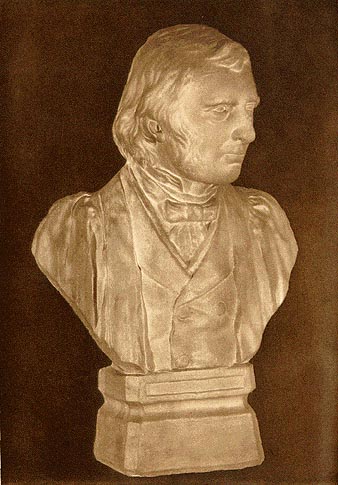
The Walkey’s curators, Henry and Emily Swan, persuaded Creswick to exhibit his work in 1876. Ruskin was encouraging and the Swans lent Creswick a photograph of the art critic and from this is was able to model a small portrait bust. Impressed by this, Ruskin invited Creswick to his home at Brantwood in Cumbria to model a portrait bust from life.
Ruskin continued to help Creswick, connecting him with employers in Bewdley and supporting his family by paying for lodgings and a studio at Coniston. Ruskin helped to teach Creswick and sought patrons and commissions for him. His aim was to make buildings “sparkle with interest,” and he went on to create sculpture for several buildings, including a bust of Thomas Carlyle which is still attached to the philosopher and historian’s house in Cheyne Row, London. He also created portrait busts of Homer and Dante for Leeds City Library.
Creswick became a teacher at Birmingham Municipal School of Art, furthering Arts and Crafts ideals. He continued to develop his career as a sculptor for thirty years.
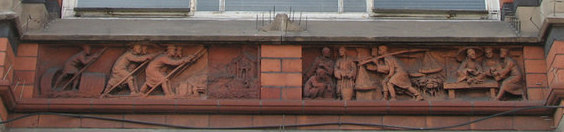
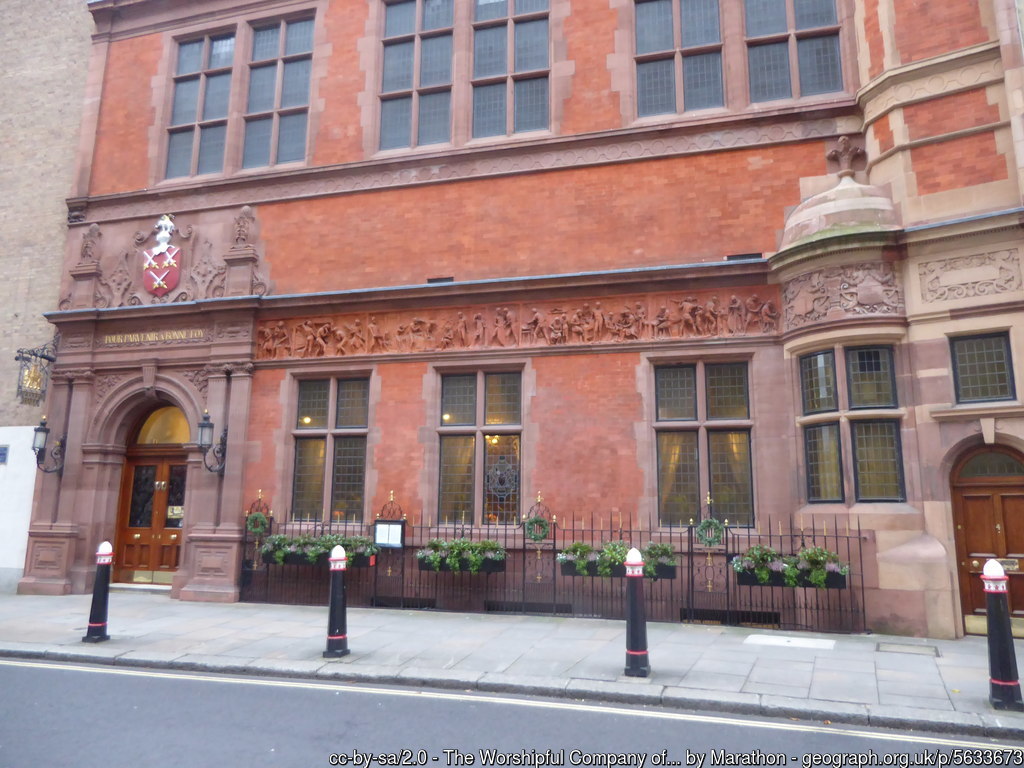
One of Creswick’s major commissions was for the frieze on the Cutlers’ Hall, in London (1887). Possibly his best known work, it depicts the various stages of the cutlery manufacturing process, with particular attention to the harsh working conditions which the artist himself had experienced working at the grindstones. Other notable Creswick sculptures (just about) survive in Birmingham on the Bloomsbury Library and the Handsworth Library.
Little is known about his association with Watson Fothergill. I contacted Annie Creswick Dawson, the sculptor’s great granddaughter who has been researching Creswick’s story for many years. She has travelled the world searching archives and libraries to find out about the artist’s life and to locate all of his surviving works – these include carvings, terra cotta sculptures, bronzes, friezes, wall decoration and metalworks.
Annie confirmed that the Nottingham terra cottas are indeed Benjamin Creswick’s work, but that they had been mistakenly cited in a study as being located in Northampton, so it had taken a while for her to find them. Consequently they are not mentioned in her book on Benjamin’s Creswick’s life and work and we can only surmise how Creswick came to work on Fothergill’s buildings. Did Fothergill have any connections with John Ruskin and the Arts and Crafts movement?
From 1895-7 (the period when Furley & Co shop and Fothergill’s Office were being built) Creswick was working in Birmingham and was Professor of Sculpture at the Art College. Did Fothergill come across Creswick’s work through artistic connections? Perhaps we shall never find out, but if anyone has any information please get in touch with Dr Stuart Eagles, a companion of The Guild of St George, who has taken over the Benjamin Creswick website from Annie.
Many thanks to Annie Creswick Dawson for her help and thanks to The Guild of St George for the copy of her book (with Paul Dawson), “Benjamin Creswick”.
Discover Benjamin Creswick’s terra cottas on Watson Fothergill’s buildings on The Watson Fothergill Walk or contact me to book a private tour for a small group.