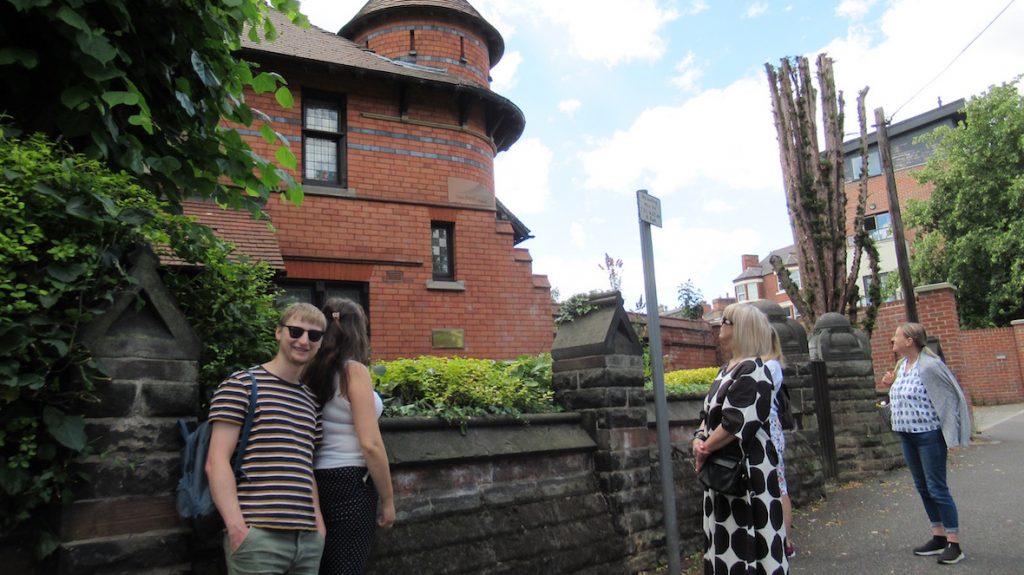
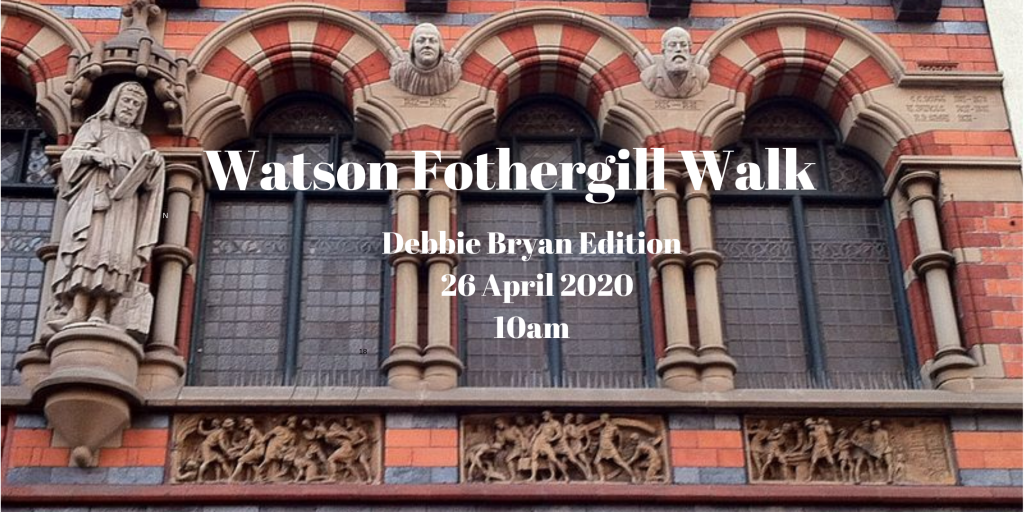
At last! The walks are returning with added social distancing! Having completed the preparation for Visit England’s We’re Good To Go mark, I am now delighted to invite groups of up to 5 people (maximum groups are 6 so that includes your guide!) to accompany me on The Watson Fothergill Walk, tour of Nottingham city centre.
As groups have to remain small for now, I am offering private tours for groups of up to 5 people. Please contact me if you can make up a group of 5 or are happy to join another small group to make up a tour. The walk takes 2 hours and is best at quiet times of day.
I am also scheduling Sunday morning walks… the first will start at 10am, on 2 August 2020. Tickets are £12 each.
The next will be on 16 August 2020, 10am. Again tickets are £12.
NEWS FLASH! These have filled up very quickly so I have added more and will add more as demand dictates. If you can do weekdays please let me know as with small groups it might be possible to conduct tours at quieter times. TICKETS for all forthcoming dates (August 2, 16, 23, 30) are on Eventbrite.
If you would like to organise a walk for up to five people, please contact Lucy to select a suitable date and time.
At the moment I am only able to take groups of up to 6 (including me!) so there are just 5 tickets for The Carrington Crawl on 15 August 2020.
NEWS FLASH! The first walk is already full! But I have added more dates (Aug 20, 11am & Aug 22, 2pm): Tickets for all forthcoming walks are available on Eventbrite.
If you have a group of 5 people or less and would like to arrange a time to do the walk then please get in touch. (I can also do walks on weekdays.)
We successfully tried out the walk with social distancing in place and so I’d like to try more dates.
Thanks to the Promenaders for trying out The Carrington Crawl!
The Carrington Crawl looks at the domestic architecture of Watson Fothergill and his assistant LG Summers at Mapperley Road, Sherwood Rise and Carrington.
While I’m unable to take walks to look at buildings, I thought I would talk to some of the people who I’ve connected with through a mutual interest in Fothergill and the buildings of Nottingham.
In this installment I talk to Jo Ackroyd, a Pre Construction professional at Willmott Dixon Construction. I helped Jo with some research on a Watson Fothergill building for a project on Conservation and Heritage. Jo and his colleagues gave me some great professional insight into Fothergill’s techniques and use of materials when I took them on a tour of Nottingham.
Lucy Brouwer:Can you briefly tell me about your professional interest in architecture and building conservation?
Jo Ackroyd: There are fewer and fewer people who have an understanding of the skills and trades of yesteryear. As these skills are lost, the industry is replacing them with poorly judged and ill placed modern materials. I see these incompatible materials and cheap attempts to repair historic fabric and find myself wondering why and how are these seen as acceptable? To learn about these old buildings means to study both the architecture and the skills required to construct them.
As with Alice, the more you learn, the more the rabbit hole opens and you find yourself sucked into a fascinating and detailed world. Moreover, the people involved are usually, ‘individuals’!
It is also an aspiration that following a specialism such as this will enable me to move away from modern construction.
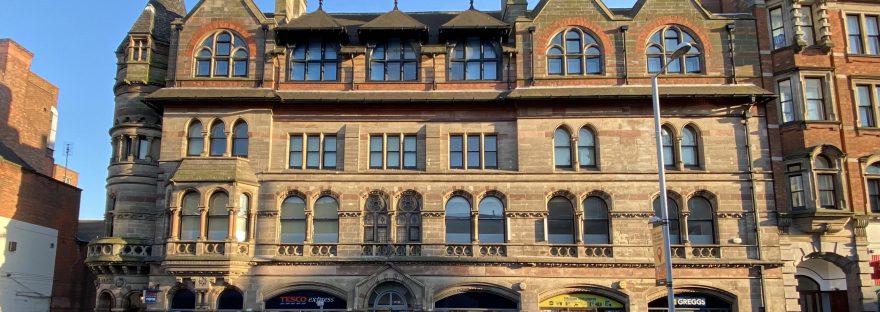
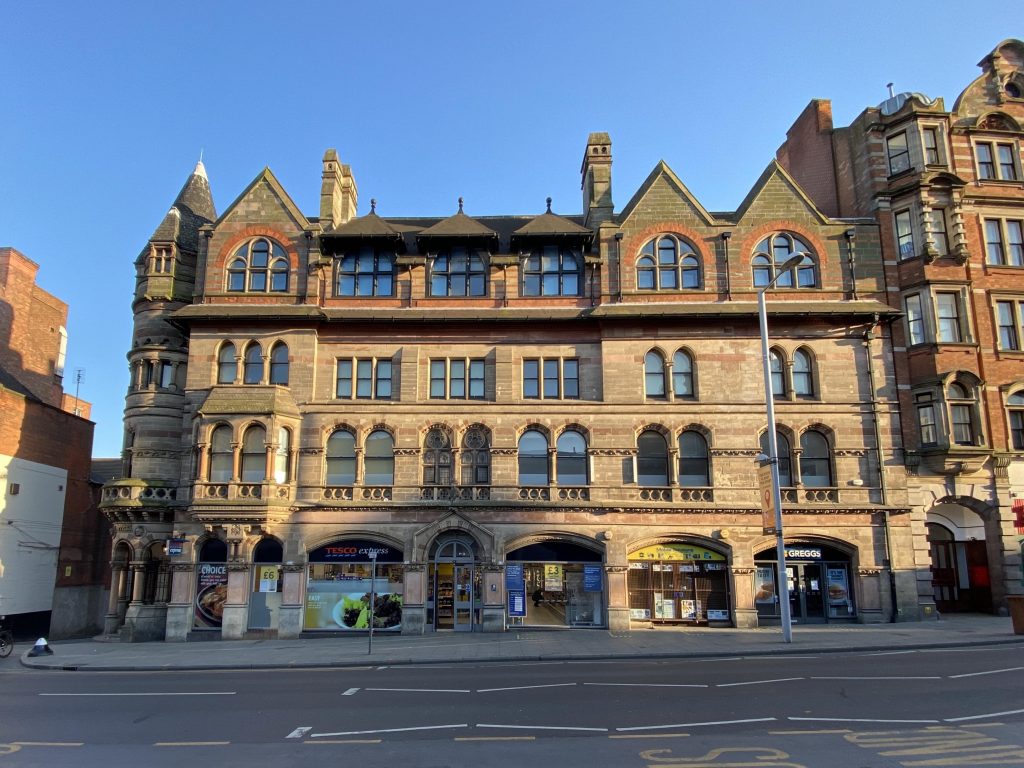
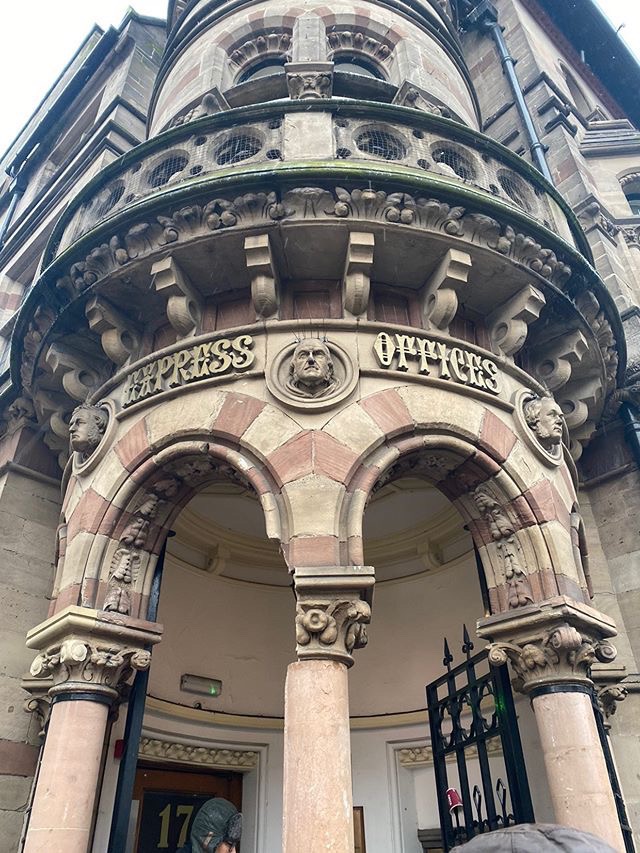
Express Chambers, Nottingham, April 2020, Photo: Dan Simpkin
LB:You did a project on Watson Fothergill’s Express building – what drew you to that building in particular?
JA: It is one of Fothergill’s significant buildings. Significant by its size, position in the city, use of materials and its history of adaptions.
I needed a building with a rich history and many of his other works are relatively small by comparison.
As I discovered more about the building, I found errors in texts, stories of the building’s development and use, the influence of technological change and how the building reflected societal development. Essentially the buildings of the age performed many functions and assisted the growth of individual businesses and the development of the city as a whole. The investors were very canny about spreading the assets uses to decrease risk.
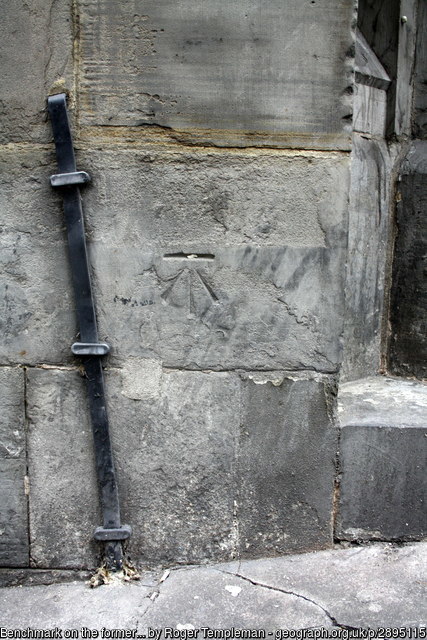
I also found an otherwise unmentioned Newlyn Datum. An important mark which hitherto had not been mentioned in the texts and reflected the status of the building and the importance of its position.
LB: Do you have a favourite building in Nottingham? Which one and why?
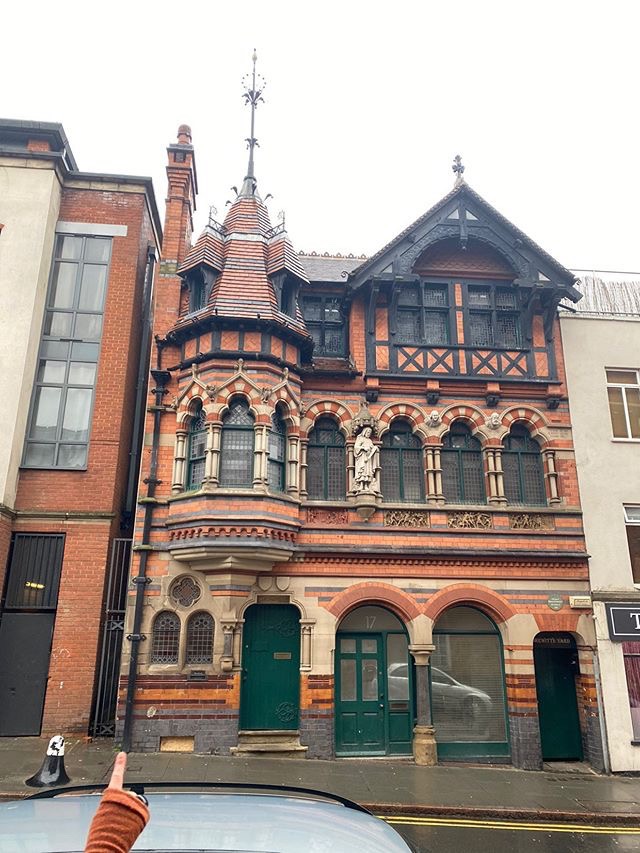
JA: I do like the old Fothergill former NatWest Bank. It’s a deviation from his usual style and materials and the way it was extended is astounding.
There’s also a form of Ghost Sign on the front façade, as the old NatWest sign was removed its left an urban mark behind, which I intend to discuss in my next paper.
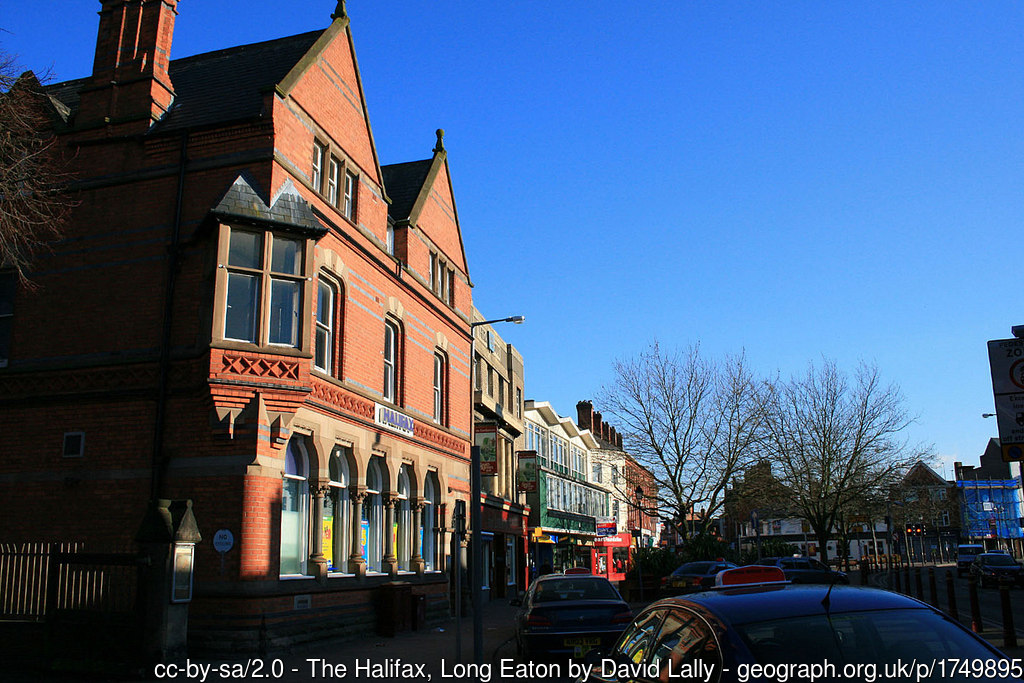
By comparison, I also like the Halifax Bank in Long Eaton, it’s a stand alone Fothergill of some status.
It uses all his usual hallmark materials and designs and is set in quite a unique way to augment its proportions.
Halifax/ former Smith & Co Bank, Long Eaton. Photo: David Lally
LB: From a builder’s point of view, what’s special about Fothergill’s architecture and the way he uses materials?
JA: I don’t believe his approach was unique. I do think the way he reused his elements was straight from a pattern book.
This in itself isn’t new, Robert Adam had the same approach, but Fothergill mixed the colours and textures very well to create a unique aesthetic.
He obviously used the same materials, skill and trades, the same individuals on each of his projects.
I suspect that’s how he died a millionaire! I assume his supply chain was very tight and he benefited greatly from this.
Not least because he acted as architect, project manager and quantity surveyor.
These elements now stand out in Nottingham as many other forms of architecture lack the polychromatic tracery, the ornate and intricate carvings and the shear willingness to build a spire which has absolutely no use whatsoever!
Many thanks to Jo for taking the time to answer my questions. And thanks again for all the insights into building – I incorporate a lot of them into my tours! If you’d like to join me for a walk when we are able to get out again, then you can purchase a gift voucher to redeem against future events.
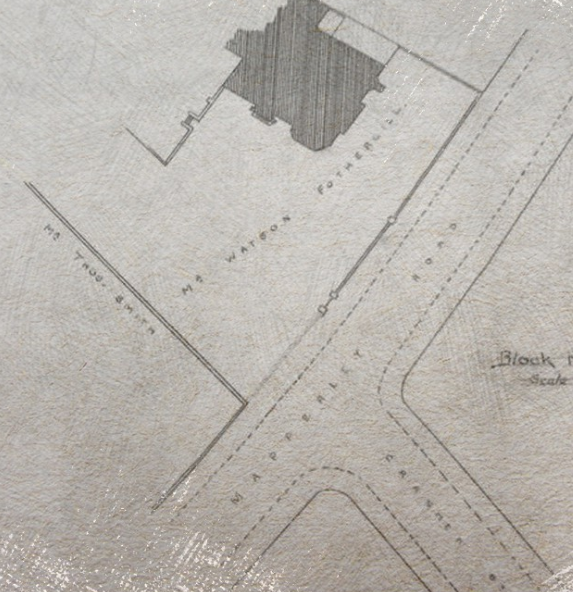
The earliest house that architect Watson Fothergill (born Fothergill Watson, 1841) is known to have built is the dwelling he designed for himself and his family, which stood at 7 Mapperley Road, Nottingham.
Fothergill noted in his diary in 1870: “This Autumn after searching all over town for a site we liked I bought a piece of land on the northern side of Mapperley Road in Mr Patchitt’s estate.” Edwin Patchitt (1807-1888) was a solicitor and also a member of the Notts County Cricket team; he was Mayor of Nottingham for two terms between 1858 and 1860 and was the Secretary to the Enclosure Commissioners. He owned a triangle of land between Woodborough Road, Mansfield Road, Redcliffe Road and Elm Bank. Costing Fothergill £375, the land comprised 1,250 sq. yds and had a frontage of 105ft to Mapperley Road.
Site of Mr Fothergill’s house, digital sketch from plans for extension held in Nottinghamshire Archives.
The first brick was laid on 3rd March 1871, and the Fothergill Family, which at this time comprised Fothergill, his wife Anne and their daughters Marion, Annie Forbes, and Edith Mary, moved from the house they had been renting on Hampden Street on 26th March 1872, “though the workmen were not yet out of it.”
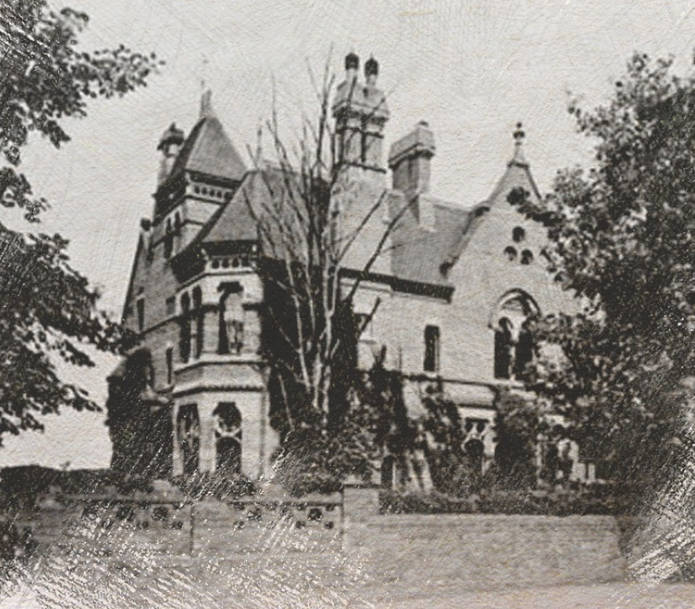
Digital sketch of photo of 7 Mapperley Road based on photo Bedford Lemere photo held by Historic England archives.
No drawings are known to survive of the original plan for the house, and there are few photos. I asked Nottingham-based architect and historic building consultant Peter Rogan to help me imagine what the house would have been like…
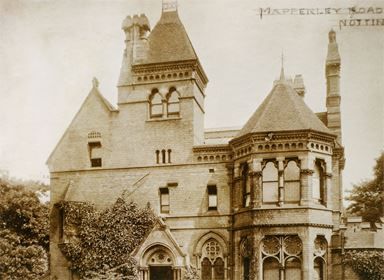
The house reflected High Victorian style with its asymmetry, individualism and accentuated features: brick with terracotta and stone details, prominent tall chimneys, and a four storey tower with decorative brickwork and a steep pitch roof. The house had an eclectic mix of window types: some sashes with stone lintels, bays and some with tracery. An entrance porch on the south-western side had slender decorative columns, above it an archway with a stone tympanum pieced by a window in the form of an eight-pointed star. On the side facing the road: trefoil decorations, circular windows and possibly a date stone. The gables made for broken rooflines creating a picturesque effect, capturing the light and shade that Fothergill found so alluring about the Gothic style.
South-west front of the house on Mapperley Road, from Picture Nottingham
In June 1872, Fothergill’s fourth child, Eleanor, was born: his three subsequent children, Samuel Fothergill 1874, Harold Hage 1877 and Clarice 1879, were also born here.
“The snuggest of houses! That is what we aimed at. Comfort, not great cold rooms, but gems of art sparkling round, an inviting home.”
Fothergill Family Record 1892.
Fothergill described the various features of the interior – sculptures, stag’s heads, green wallpaper in the style of Pugin, velvet curtains and tablecloths, and “modern” paintings on the walls. A brown wooden ceiling with gold details and floral decorations inscribed with a motto: “He that striveth for the mastery is temperate in all things.” (1 Corinthians 9:25) A portrait of Dr John Fothergill, his Quaker ancestor looked down on them from over the archway, and this was just the hall…
The rooms were adorned with brown silk and blue velvet, green walls and carpet, carved woodwork and decorated ceilings, but “everything is but a ground on which to display the pictures and the china” Among Fothergill’s collection of art works: a water colour interior of Salisbury Cathedral by JMW Turner and a St Cecilia by George Romney. (Links are guesses at the possible pictures, Fothergill is mentioned in catalogues of various exhibitions as he lent out the paintings, but I’ve got more research to do here!)
Around 1899 Fothergill added electric light and more bay windows to the house to provide light for displaying his collections of porcelain and Venetian glass.
“Indeed there is no doubt that the mediaeval style, call it old English if you will, in which both house and furniture are designed, does particularly lend itself to a home-like effect. It lacks but age, with a few ancestral traditions attached to it, to render it dear to us – no it cannot be more dear.”
Fothergill Family Record 1892.
In 1901, Fothergill purchased the adjacent land extending down to Chestnut Grove, from the lace merchant Thomas Birkin, it cost just over £1000. This became an ornamental garden and a tennis court.
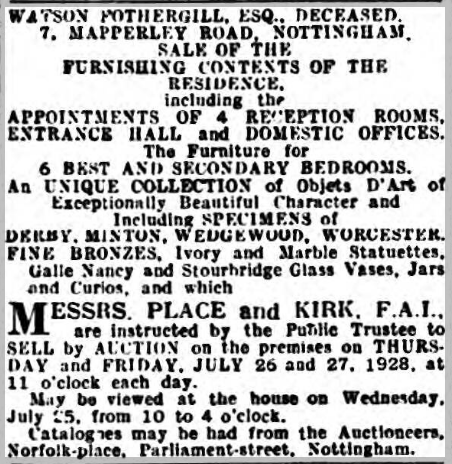
When Fothergill died aged 87 in 1928, the house was sold and his art collection and the furniture was put up for auction, presumably so proceeds could be split between his five daughters, both his sons having failed to outlive him.
Nottingham Journal, 14 July 1928, announcement of the auction of the contents of 7 Mapperley Road. British Newspaper Archive.
In the 1940s and 1950s, it appears that Councillor (later Lord Mayor) John Edwin Mitchell, lived at no. 7, then known as Park House (but I’m not 100% sure, as the numbering of the street has been altered).
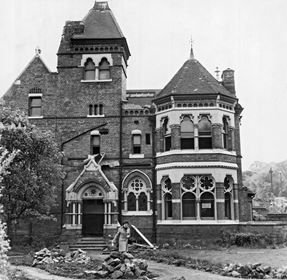
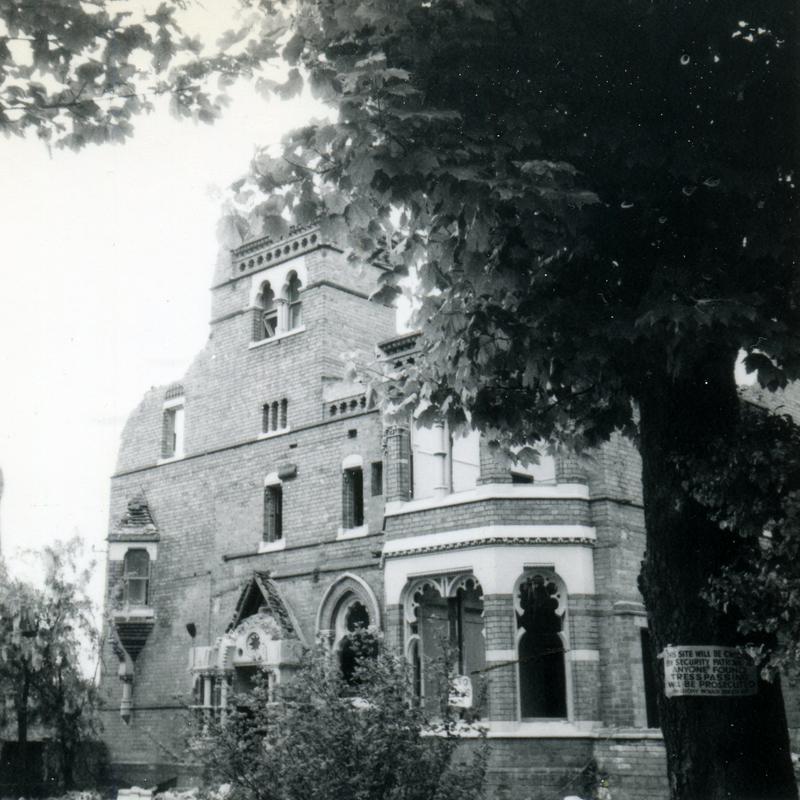
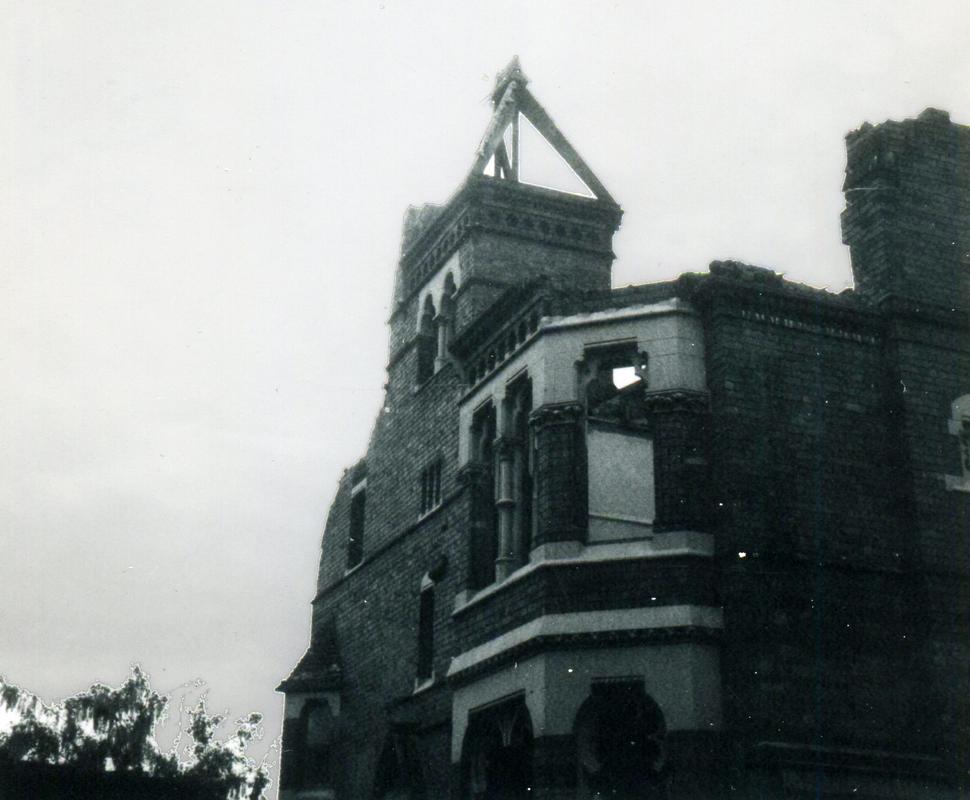
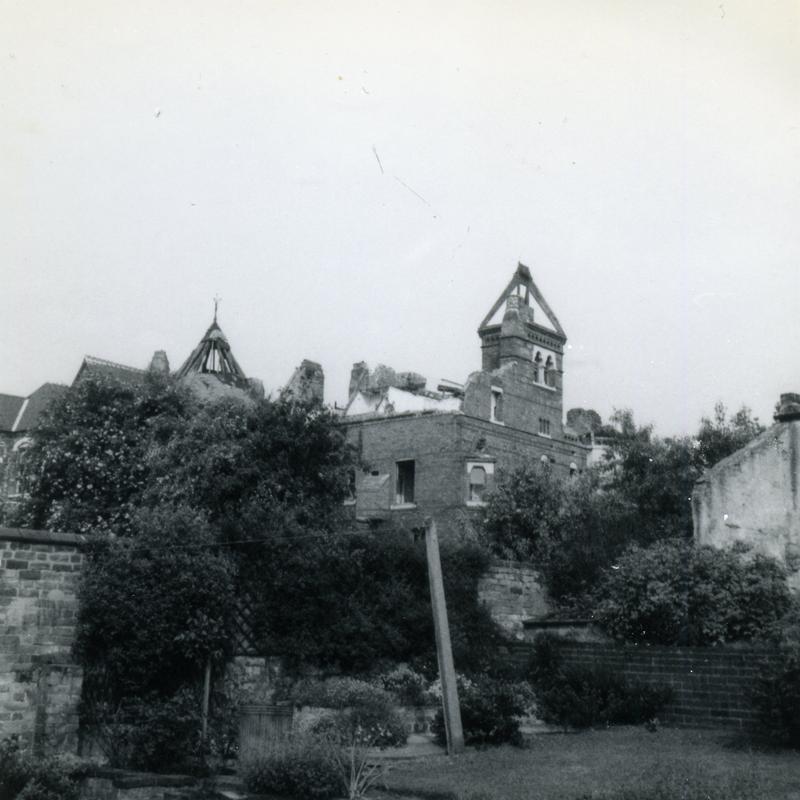
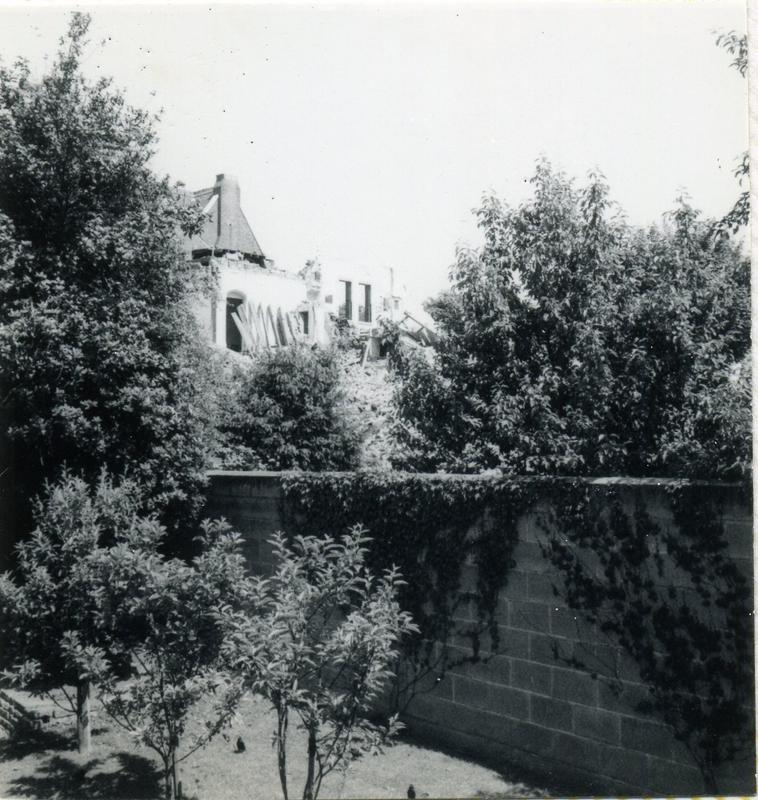
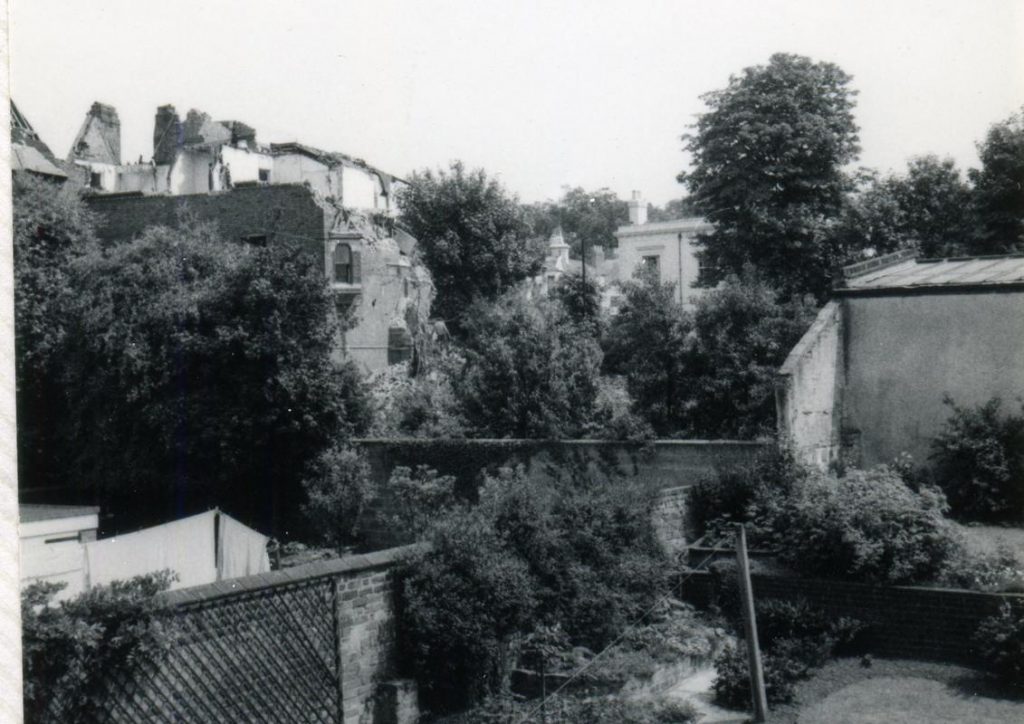
Eventually the house was turned into flats, but it was demolished in 1968 – the value of the land too tempting to prevent developers from building many more dwellings on the site.
Circa 1968, when the house was about to be demolished. Picture Nottingham.
The house being demolished circa 1968. Photos from Nottstalgia (I’ve tried to track down the person who took them to no avail!)
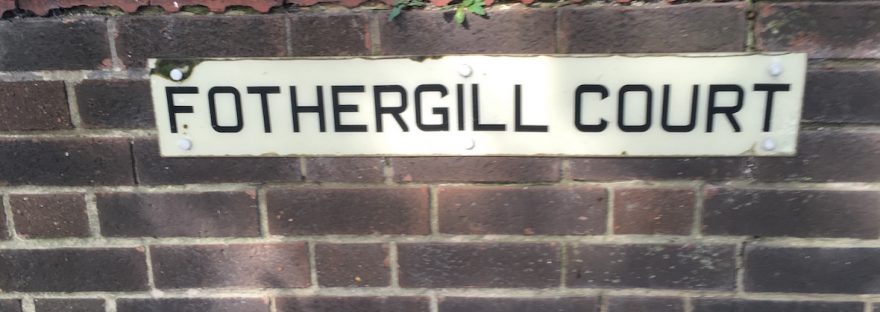
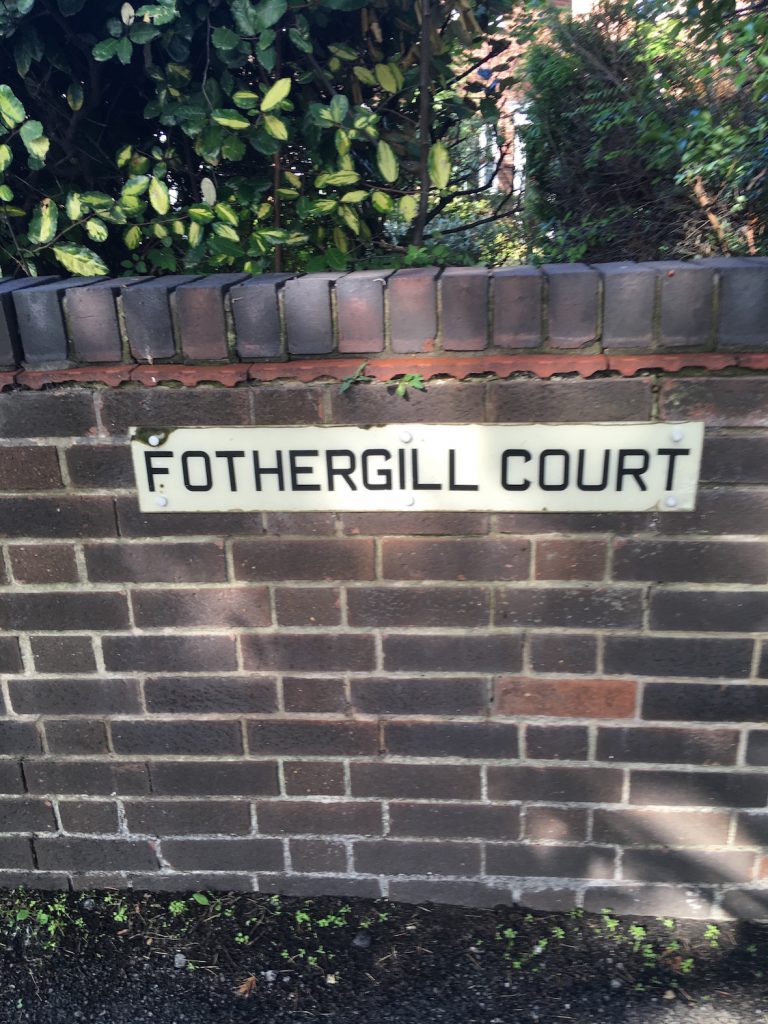
The present houses on the site were developed in the 1970s. They’re considerably less spectacular, but the development is at least called Fothergill Court!
The site of Fothergill’s house and more of his buildings in Mapperley Park, Sherwood Rise and Carrington will feature in my new walk, The Carrington Crawl. Dates will be announced as soon as the global situation allows… Meanwhile you can buy gift vouchers for yourself or friends and redeem them against future Watson Fothergill Walks with tour guide Lucy Brouwer.
For a while now I’ve been working on a walk to look at some of Watson Fothergill’s domestic archtecture, and I’m happy to say that The Ukrainian Cultural Centre at Clawson Lodge have invited me to bring the new tour to their building on Mansfield Road, Nottingham.
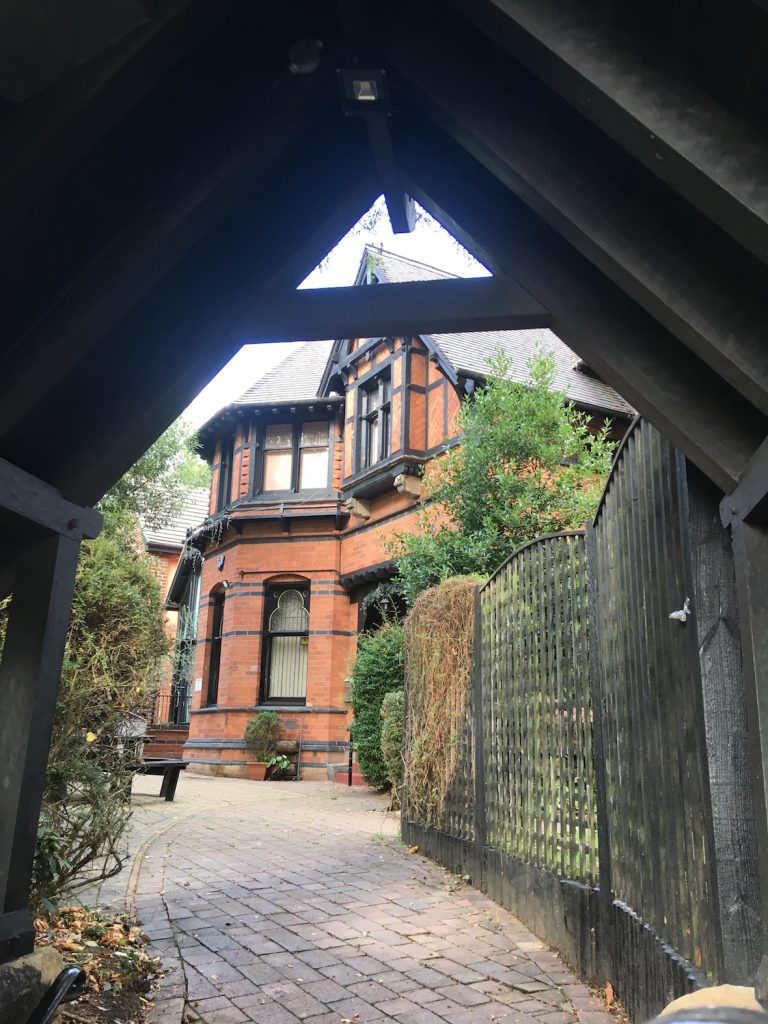
A chance to go inside Clawson Lodge, a house designed by Fothergill on Mansfield Road.
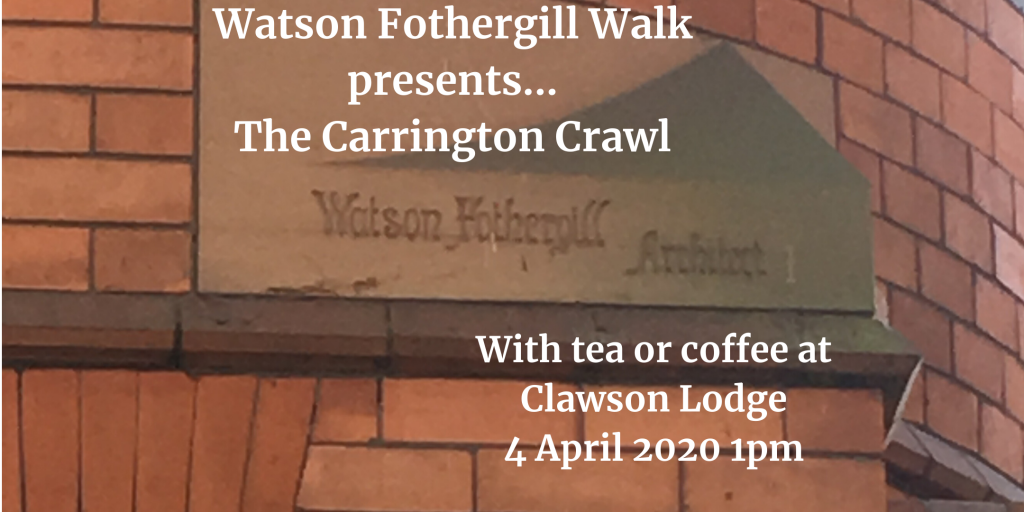
Presenting The Carrington Crawl: a look at houses by Fothergill and his chief assistant Lawrence G. Summers in Mapperley Park, Sherwood Rise and Carrington, finishing with a chance to visit Clawson Lodge, where tea and coffee will be served.
The first of these new walks will take place on 4 April 2020, starting at 1pm.
A NEW WALK FOR 2020 from the producer of the Watson Fothergill Walk and the Hine Hike.
The Carrington Crawl: Victorian
Nottingham’s most flamboyant architect not only helped shape the city centre
with commercial landmarks, he also designed dwellings. Explore some of the
domestic architecture of Watson Fothergill and his assistant Lawrence G.
Summers with tour guide Lucy Brouwer. Discover more about the buildings, those
who built them, and the lives of the people who lived in them.
This walk will begin at the junction of Mansfield Road and Mapperley Road, outside St Andrew’s Church, it will then look at some of Fothergill’s houses in Mapperley Park, including the site of his own family home, continuing to Sherwood Rise, then return to Carrington to finish, after a walk of approximately 2 hours / 3km, at Clawson Lodge on Mansfield Road, where tea and coffee will be available.
Participants are asked to come prepared
for appropriate weather eventualities and to wear footwear suitable for city
walking.
Meet for 1pm start on Mapperley Road near the junction with Mansfield Road, outside St Andrew’s Church, Nottingham.
Advanced booking is essential as places are limited.
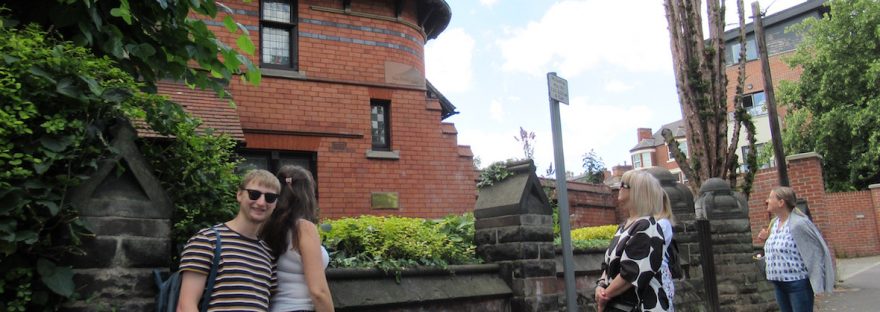
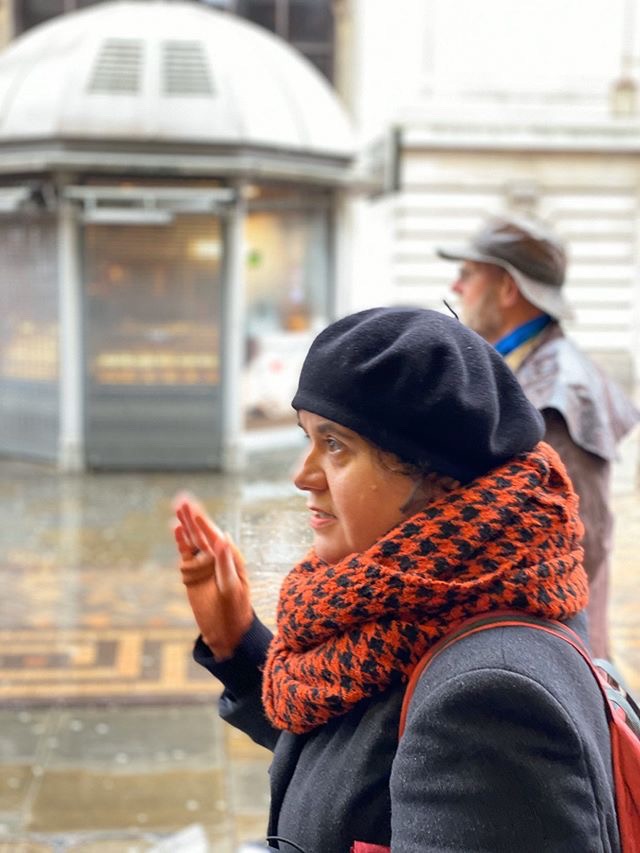
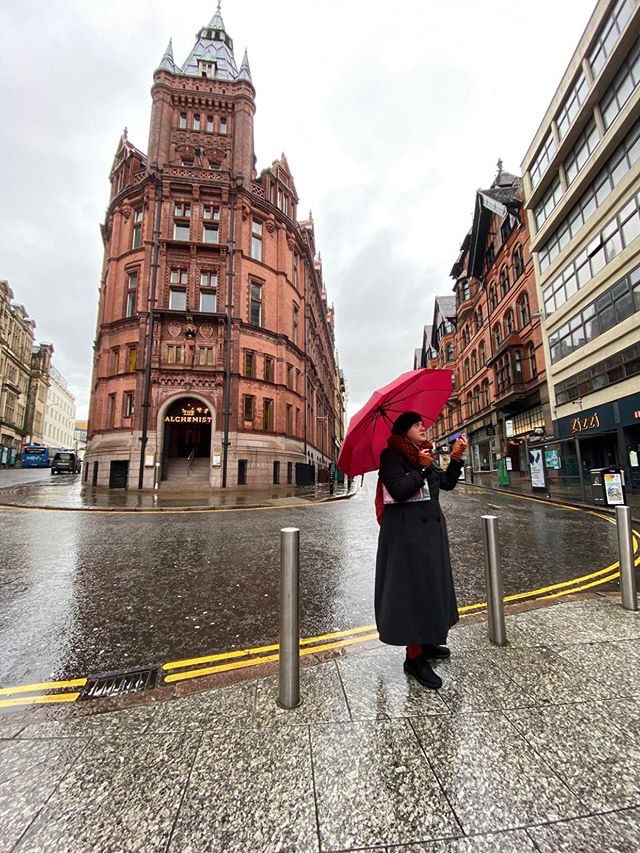
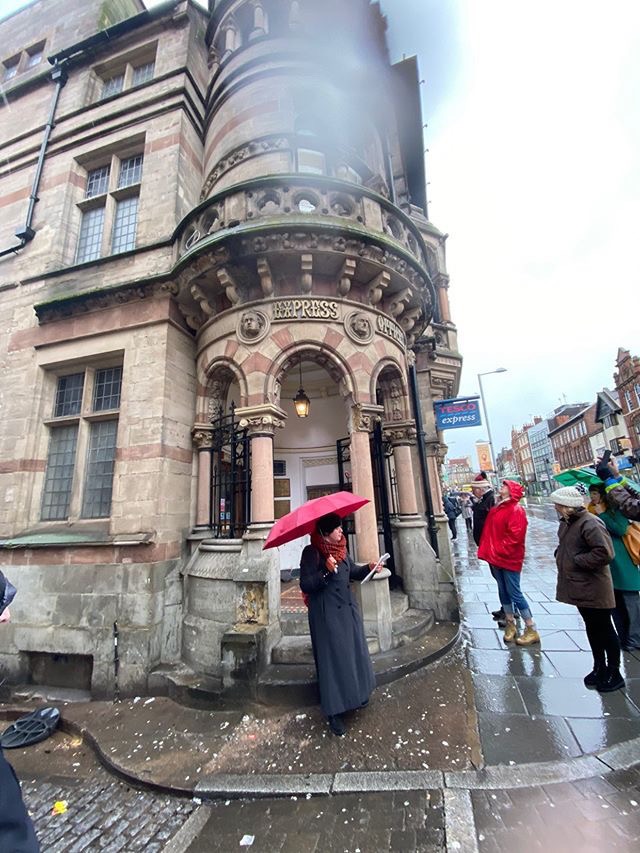
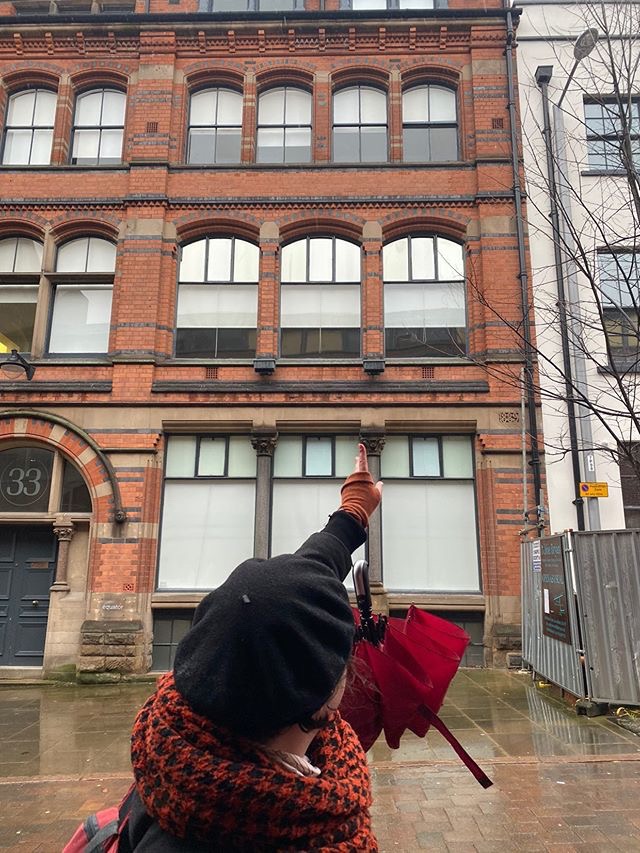
Some great photos of Lucy in action during a wet but enjoyable Watson Fothergill Walk on 16 February. It was great to see people so keen to join in the first public tour of the year! Photos by theparkestate on Instagram (follow them for some great photos of houses by Fothergill, Hine and other Nottingham architectes in Nottingham’s Park Estate).
16 February 2020 Watson Fothergill Walk. Lucy guiding in the rain! Thanks to theparkestate for the photos.
I’ve been busy reading, researching and thinking about new walks and talks for the new year. But I’m ready to get out walking again, so I’ve set up some dates for The Watson Fothergill Walk in February and March 2020.
The first walk, which will start at 10am outside Nottingham Tourism Centre and finish at Debbie Bryan on St Mary’s Gate, will take place on 16 February. Tickets are £12 each and include coffee or tea and cake at the end of the walk.
It is once again likely that I will be adding afternoon walks to these dates if there is sufficient demand, so if you prefer to start at 1pm, please get in touch to express an interest…
There are a handful of tickets left for the 21 July evening walk and you can get tickets here. Also, I will be conducting some more Watson Fothergill Walks in August 2019.
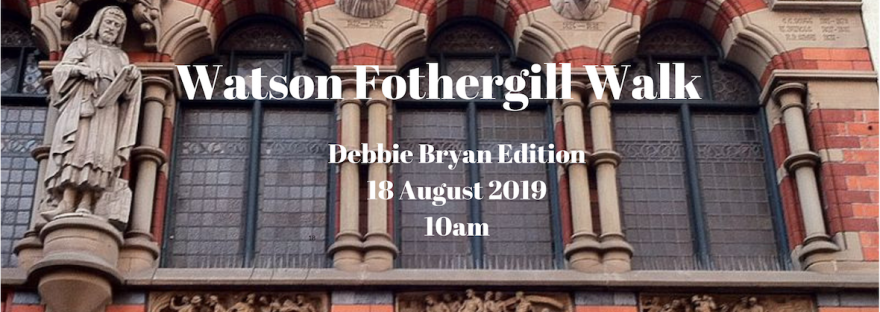
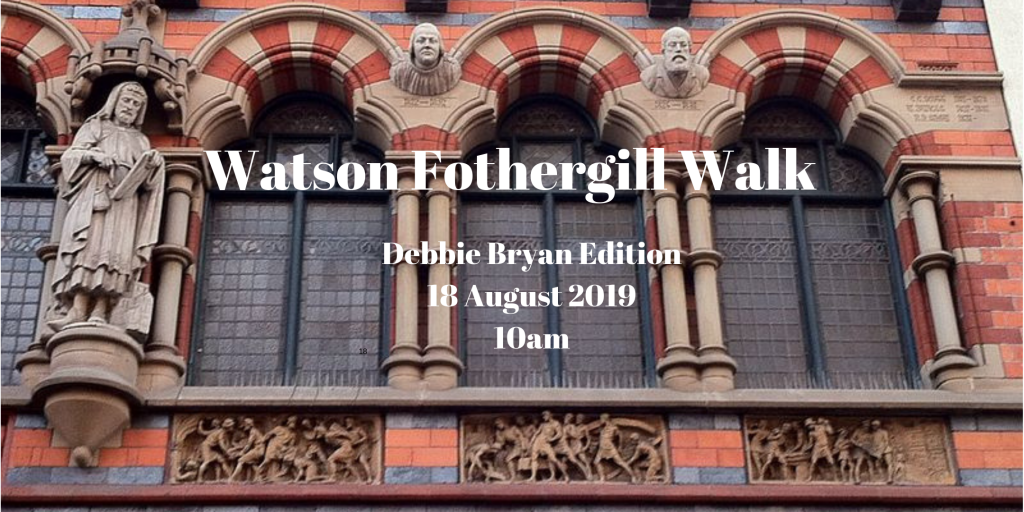
First up, 18 August sees another Sunday morning walk starting at 10am, which will conclude at Debbie Bryan with tea and cake. Tickets here.
Another chance to try the Watson Fothergill Walk. Tickets here.
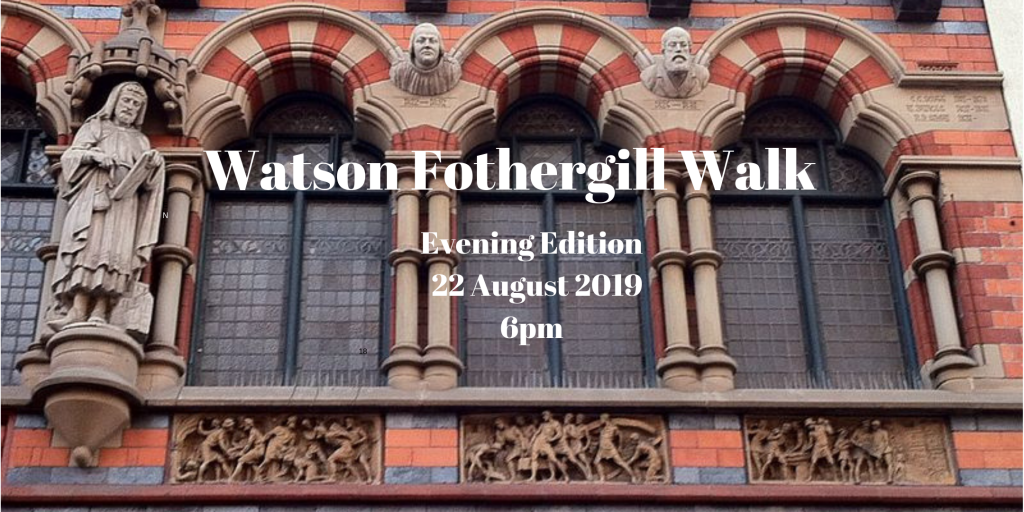
I will also be walking in the evening of 22 August, starting at 6pm and finishing up at Fothergill’s pub (for optional food and drinks). Tickets here.
I try to keep the walks to small groups of around 20 people, so if they fill up and you miss oout on tickets, please sign up for the mailing list and try again or think about booking me for a private group tour – I’m interested in taking groups of between 6 and 20 people around Nottingham at times to suit them. Get in touch!
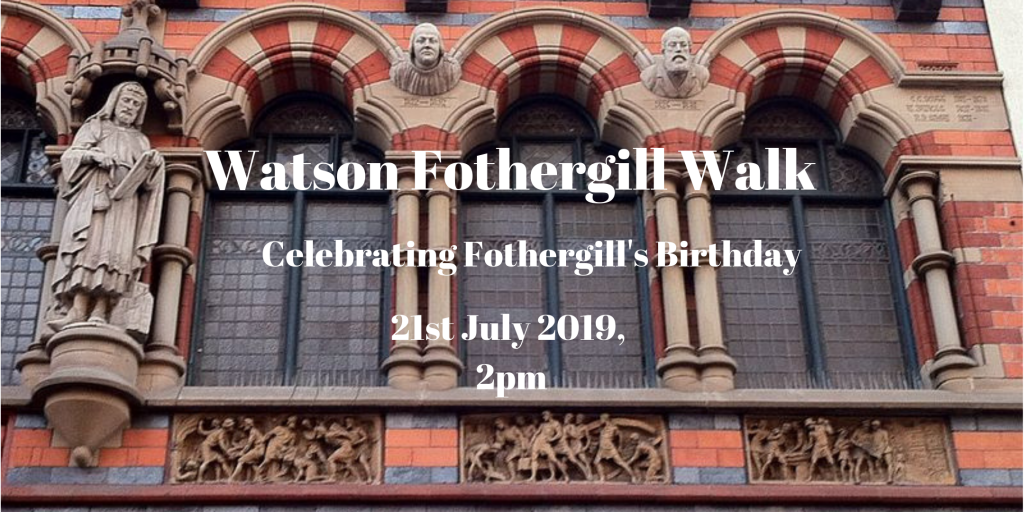
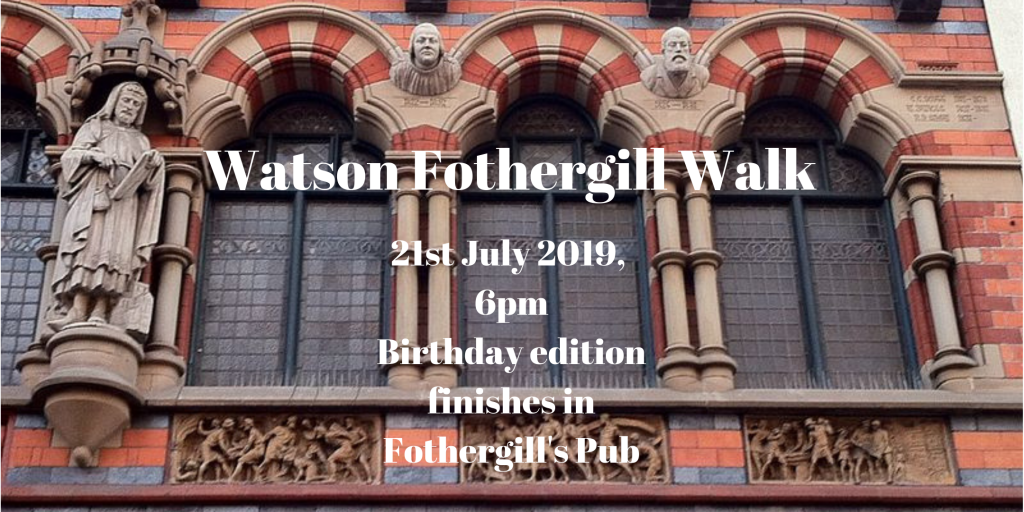
July sees the 178th anniversary of Fothergill’s birth, so it seems fitting to offer more chances to explore his Nottingham buildings on The Watson Fothergill Walk.
The next dates will be two walks on 21 July 2019:
Join Lucy to explore Watson Fothergill’s Nottingham, includes tea or coffee and cake at Debbie Bryan. Tickets here.
The first will be in the afternoon at 2pm, ending at Debbie Bryan with drinks and cake. Tickets here.
The evening walk will finish at Fothergill’s pub. Tickets here.
(Watson Fothergill’s birthday is actually 12th July but I can’t do a walk that day!)
If you can’t make either of these but are still interested in joining the guided tour you can either arrange a private walk for you and your group (minimum 6, maximum 20 people) contact Lucy for details. Or sign up to the mailing list to get the latest dates sent to your inbox.
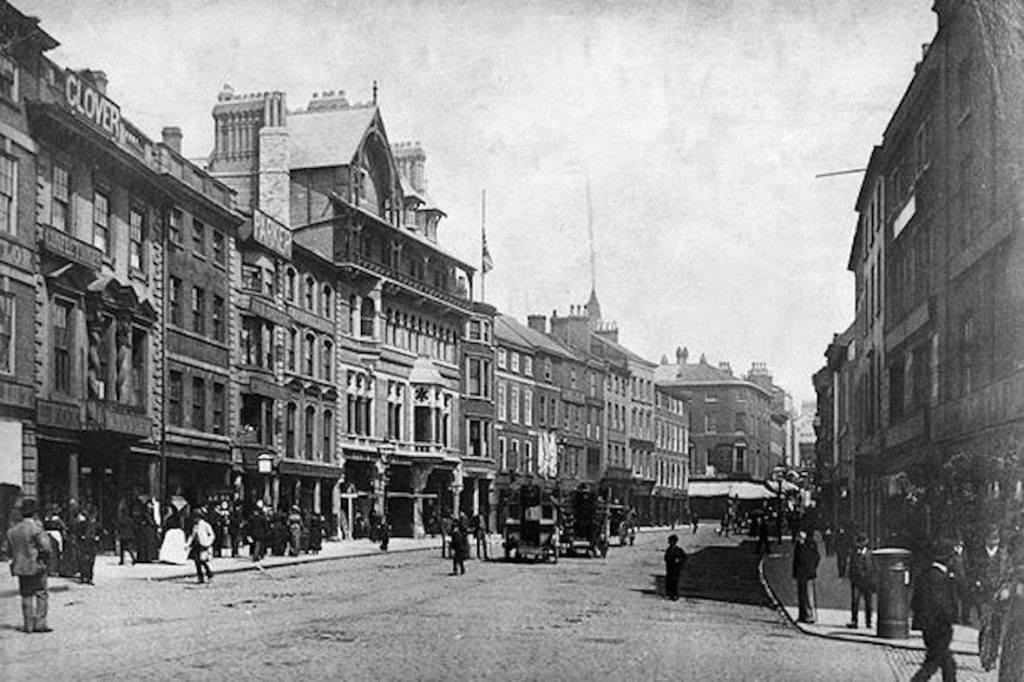
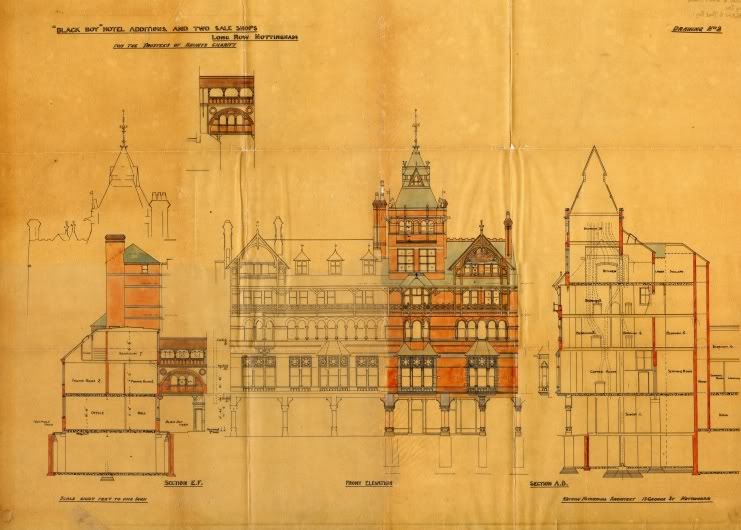
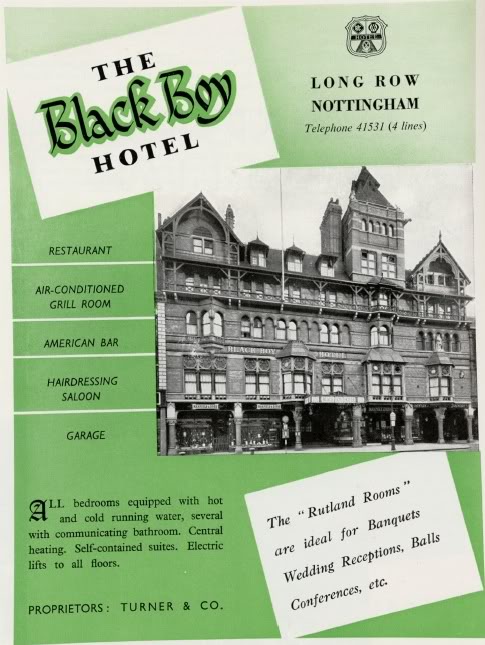
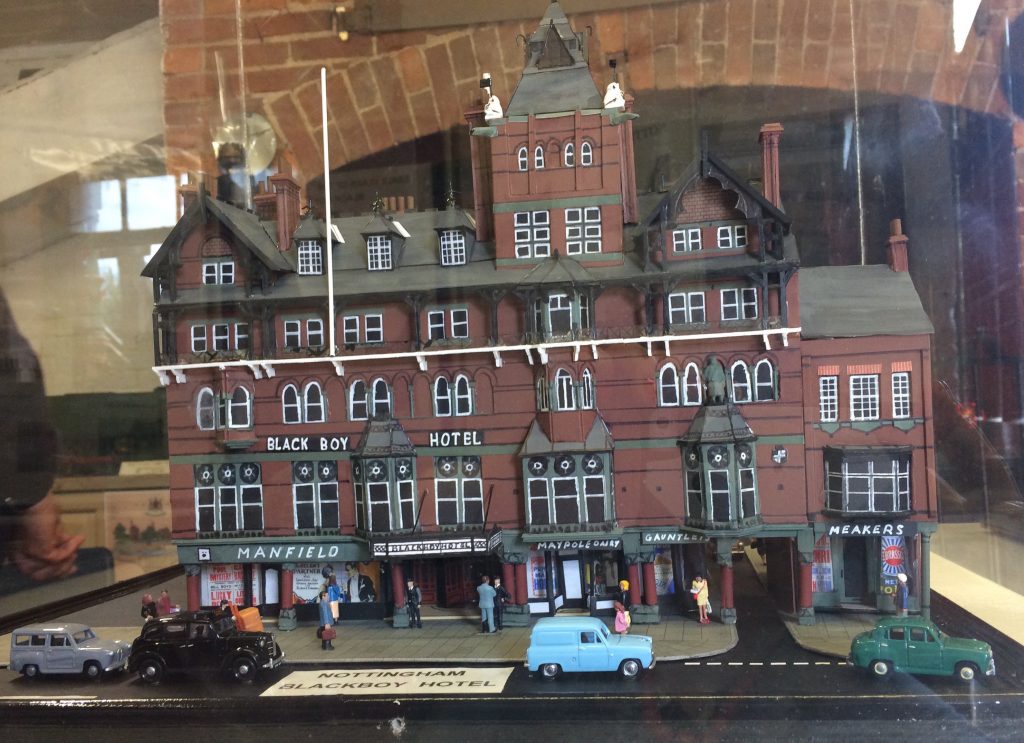
One of the best known building associated with Watson Fothergill in Nottingham is one that is no longer standing, The Black Boy Hotel on Long Row, which was demolished in 1970. As a few folks on the Watson Fothergill Walk have asked for pictures, I thought I’d collect together some images and thoughts on the building here.
Fothergill worked on The Black Boy Hotel throughout his career, beginning with buildings in the yard to the rear in 1869, while he was still in the employ of Issac Gilbert. The land on which the hotel was built belonged to the Brunts’ Charity. Fothergill’s association with the Black Boy would last until his retirement as the charity’s surveyor in 1910. In 1874 Fothergill worked on a carriage house or stock room, again in the yard.
The Black Boy Hotel before the central tower was built in the 1890s. Nottingham Post.
In 1878 he rebuilt part of the premises on the eastern side of the yard (Jessops shop), these were in turn demolished in 1897 when the hotel was reconstructed and Fothergill built a large department store for Jessops on King Street. In 1886 there was a more major rebuilding of the Long Row frontage and shops, as the top part of the old building had become uninhabitable. Fothergill opted to rebuild rather than restore the 200 year old building, planning 5 floors.
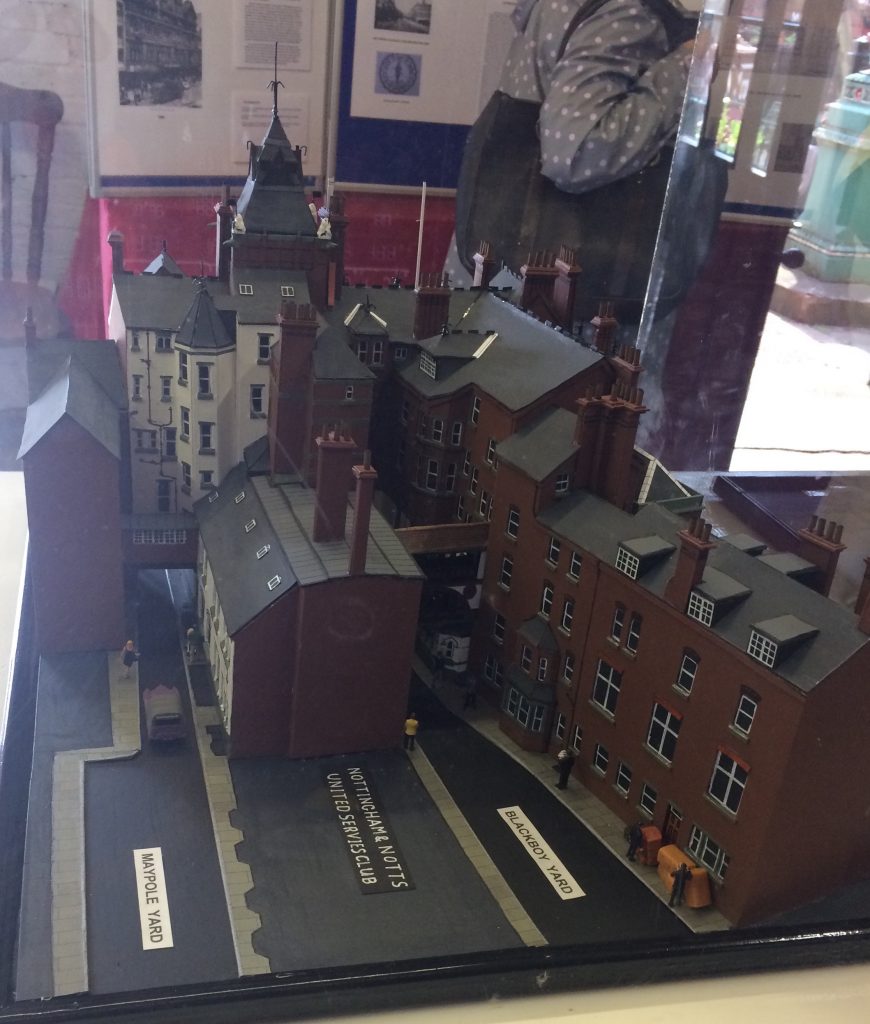
In 1892 he rebuilt the back wing of this part of the hotel adding a bar, a luggage room, a smoking room, a billiard room and 13 more bedrooms. The first major project to witness the reversal of Fothergill’s name to Watson Fothergill was an additional story on the stable block in 1893.
Advert for the Black Boy Hotel circa 1950s. Model of the Black Boy Hotel from Richard Upton’s exhibition, The Black Boy Hotel: Gone But Not Forgotten, at the Nottingham Industrial Museum. (Photo: Lucy Brouwer).Back view of the model, showing many additions and alterations. (Photo: Lucy Brouwer.)
Find out more about The Black Boy Hotel and the buildings of Watson Fothergill that are still standing in Nottingham on The Watson Fothergill Walk, tickets available for 12 June, 6pm and 30 June, 1pm.